Posts tagged satisfaction
12 Inspiring Quotes of the Year That Will Make You Feel Hopeful

This is a wonderful time to reflect on the past twelve months before the new year begins. In 2025, we had emotional, enriching, and deep conversations on the blog.

We walked together, shared tumultuous times, made exciting discoveries, and navigated life balance. In our free-flowing exchanges, insights, new perspectives, and hope emerged.


Meaningful Conversations

Our conversations about life balance, change, clutter, letting go, time management, motivation, organizing, hope, and more brought comfort, connection, learning, and joy.

Thank you for being part of this community. You inspire me to show up, write, think, and engage.


Deepest Gratitude

I am profoundly grateful for your thoughtful words and generous sharing. Based on your comments this year, I curated twelve of my favorite insights from you. Thank you, Diane Quintana, Ellen Delap, Hazel Thornton, Janet Barclay, Jill Katz, Jonda Beattie, Julie Bestry, Kim Tremblay, Melissa Gratias, Sabrina Quairoli, Seana Turner, and Yota Schneider.

You are consistent voices and participants who bring our conversations to life. I am grateful to you and to everyone who reads the blog, contributes to our discussions, or shares the posts. You infuse this community with hope, humor, curiosity, perspective, and learning.

Enjoy the year in review, one quote at a time!


12 Inspiring Quotes from Our Conversations This Year That Will Make You Feel Hopeful


1. Fresh Start | 3 Ways to Take a Slow Exhale & Refocus Energy for a New Fresh Start

Giving yourself permission to downshift, reset, and refresh is the best way to pave the way for the next project.
— Ellen Delap
Change can be hard. Focusing on one small thing at a time can help.
— Kim Tremblay
I was just in the middle of talking myself out of doing something because of uncertainty. Okay, time for a deep breath and some rational thinking.
— Melissa Gratias
People are more likely to let go of items if they know they are going to a good place.
— Jill Katz
Focusing only on the next step keeps me from becoming overwhelmed by decluttering and other large projects.
— Janet Barclay
As for productivity, no, it isn’t a dirty word, but neither is setting it aside for a while. I get a lot of satisfaction from completing my to-do list and from giving myself to the activities that soothe my spirit.
— Yota Schneider
Waiting to feel motivated never works for me. It’s more like I start, and then the motivation catches up.
— Seana Turner
I have my people to call for different types of help – the ones who just let me vent, the ones who want to help me brainstorm and plan, and the ones who are on my doorstep almost immediately.
— Jonda Beattie
Virtual organizers can pull out the essential steps and manage them, helping the client feel more in control of their time during this stressful moment.
— Sabrina Quairoli
I love reframing! One of my favorites is this: Instead of thinking ‘I’m anxious,’ or nervous to do something, think ‘I’m excited!’ to do it.
— Hazel Thornton
Tolerating discomfort, in particular, means that waiting is so much easier when you can focus on the fact that any uncomfortable situation is temporary.
— Julie Bestry
I love the idea of embracing fun! It’s easy to get bogged down by the minutiae and to forget to look outside our to-do list and notice things around us.
— Diane N. Quintana


Past Reflections and Future Possibilities

What was most significant to you this year? Which quote resonates most? What do you want to focus on in the New Year? I’d love to hear your thoughts. I invite you to join the conversation.


How Can I Help?

Let’s make 2026 a fabulous year! Do you want support in creating a better balance, letting go of what no longer serves you, or getting more organized? I’m ready to help. Virtual organizing is an extraordinary path forward - Local feel with a global reach.

Let’s connect! I’m easy to reach.

Getting organized is possible, especially with support.
I wish you a happy, healthy, organized, and joy-filled New Year!


5 Life Lessons I Learned About Patience and Promising Progress

Recently, I reread the first blog post I wrote on waiting. As humans, waiting is something we do, yet we’re not always happy about it. We want things to happen quickly, effortlessly, and painlessly. However, things don’t often go that way. Our patience gets tested as waiting can be a challenging experience.

Maybe you’re working toward a big goal that might take months, years, or even decades. Perhaps your energy is low, and progress looks different from what it did earlier in your life. You might also lack clarity about your goal or what your next step will be.

Developing your internal resources, including patience, resilience, and agency, can be beneficial. You can also enlist help from external resources, such as haulers, handymen, trade specialists, a coach, a therapist, or a professional organizer like myself.

Progress is possible. Reaching your goals is doable. Gathering the resources to get there is essential.

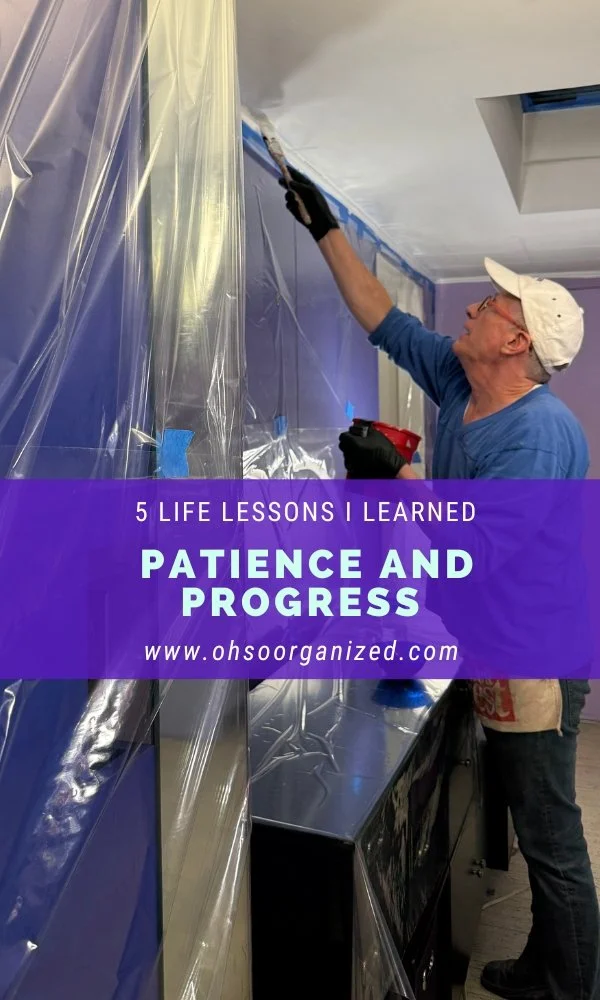
Over the past few months, my husband and I have been working on some home projects. They have taken different amounts of time to complete, and some are still ongoing. The biggest obstacles were setting priorities and managing time constraints. To finish these projects, we had to decide that they were still important enough to pursue. Once we agreed on that, we scheduled the time to complete them. The scheduling was pivotal. Without planning and scheduling, nothing would have happened.

During the process, I reaffirmed and learned a few things. Hopefully, some of these will resonate with you and be useful as you pursue your goals and projects.


5 Life Lessons I Learned About Patience and Promising Progress

Life Lesson #1:  I can tolerate discomfort.

I love the final result when we improve our home. It’s hard for me to tolerate the temporary chaos that happens. Stuff gets pulled out of place, messes spread to multiple areas, and order and organization are disrupted.

I often tell my clients that things usually get worse before they get better. When you’re organizing a closet, for example, and things are pulled out, it doesn’t look great. But as you start editing, rerouting, discarding, and donating, clarity begins to emerge. Once you organize the “keepers,” everything looks and feels better. However, there's a tipping point in the middle of the project where discomfort can surface.

Even though I’m happy when we’re fixing things, I tend to feel more anxious and stressed when we’re in reno mode. That discomfort motivates me to finish what we started as soon as possible. Interestingly, I can easily handle disorder in spaces I don’t live in. But in my own home, I prefer a certain level of order, calmness, and predictability.

Although I prefer not to be uncomfortable, I am capable of tolerating discomfort. This is especially true when it’s temporary or for a good reason. Acknowledging this made me feel less stressed and more accepting of the chaos.


Life Lesson #2: I can transform temporary chaos into an opportunity to reimagine.

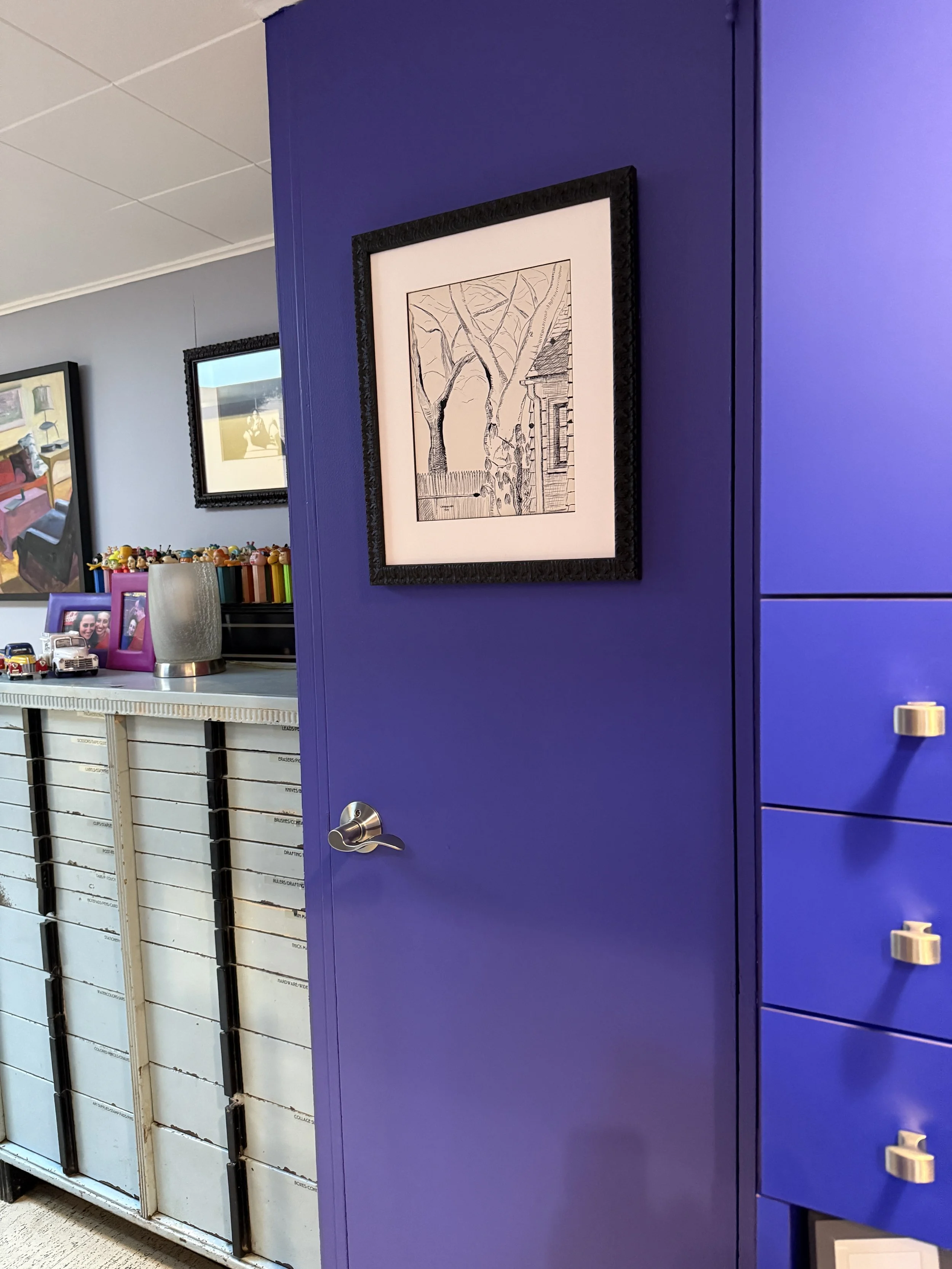
One of the benefits of taking things apart is having time to edit, question, and reimagine. We recently disrupted our entryway to spackle, paint, and do some electrical work. Doing that allowed me to let go of some things and reimagine the placement of certain items, like my Pez collection and one of the rugs.

I also felt inspired to repaint three of the cabinets. One is a big project, which I’ll wait to do in warmer weather. The other two cabinets will be done soon. Without being open to chaos and committing to the entryway project, these other projects might not move forward.

Chaos doesn’t have to be negative. It can be an opportunity to bring positive changes. The temporary chaos stirred my creativity and desire to make more improvements.


Life Lesson #3: I can finish what I start when I prioritize and plan.

This might seem obvious, but when you want to accomplish something, whether it’s organizing, home improvement, or changing a habit, dedicating time and energy to it is essential.

Deciding that something is a priority is the first step. This may involve temporarily setting other things aside while you focus your resources on the main goal. After all, you can accomplish a lot, but not all at once. Something has to give.

Once you've identified your priority, the next step is to schedule and plan dedicated time to work on it. For us, that meant working several evenings and weekends. Again, without blocking out specific calendar dates, it would not have been completed.

I can wish all I want, but without making it a priority and including it in a scheduled plan, it’s unlikely to happen. There is great potential and power in recognizing what I’m capable of when I prioritize and plan.

I can tolerate discomfort.
— Linda Samuels, CPO-CD®, CVOP™

Life Lesson #4: I can feel the joy and satisfaction that come with progress.

Done is great, but so is progress. No goal happens with one step. Progress happens one step, one action, and one commitment at a time. When working on the renovation projects, Steve and I took a moment to appreciate the progress along the way.

Momentum is a powerful force. Taking action motivates you to do more. Experiencing progress encourages further movement. Progress is satisfying and joy-inducing.

Steve and I made sure to see, feel, talk about, and celebrate the progress we've made. It was no small feat to get some of these projects started. We embraced the positive feelings that came with making progress.

Do you know the expression, “Stop and smell the roses?” For this one, let’s pause and celebrate the progress. You took action and worked hard. Now, enjoy it!


Life Lesson #5: I can be awed by my bad-ass husband.

After 42 years of marriage, I am still amazed by my husband. He is a talented man who, among his many skills, knows how to cook, play the drums, coordinate large-scale architectural woodworking projects, and handle almost any type of home improvement or repair project. He’s also a devoted volunteer, a great listener, a wonderful father, and an incredible husband and life partner.

Whether he was finishing the glass tiles in the bathroom, doing electrical work, plumbing, cutting through walls, spackling the ceiling, or painting surfaces, he not only knew what to do but also had the right tools to do it. He also taught me how to do some things, so we could work together on projects. I love that!

I am constantly inspired by Steve’s work ethic, humanity, skills, design sense, dedication, and talent. He was willing to let go of perfection to do his best and finish projects. I’m grateful for and in awe of the incredible human he is. Thank you, Honey!


How Do Patience and Progress Manifest for You?

Patience, or the lack of it, is part of being human. In fact, impatience can sometimes drive progress. When you feel stuck, progress may seem out of reach. However, leaning into that urge to move forward and pushing your patience to its limit can be one way to make progress. Prioritizing and planning are also helpful. What helps you move ahead?

Which ideas resonate most with you? I’d love to hear your thoughts. I invite you to join the conversation.


How Can I Help?

Are you ready to make progress? Do you feel overwhelmed, stuck, or disorganized? I’m here to help! Virtual organizing is an extraordinary path forward – Local feel with a global reach.

Let’s talk. I’m easy to reach.

Getting organized and making progress is possible, especially with support.
 
 
7 Powerful Motivation Quotes to Make You Feel Inspired When You Need a Boost

Motivation. Where is it when we need it? Where does it come from? You’ve probably experienced times when you felt highly motivated. On the other hand, you’ve likely gone through periods of low motivation.

There is a motivation spectrum, and it’s helpful to recognize that:

  • Motivation isn’t guaranteed.

  • Motivation needs to be cultivated.

  • Motivation goes through cycles.

  • Motivation thrives on clarity.

  • Motivation isn’t always instant.

  • Motivation responds to progress.

  • Motivation can be intrinsic, extrinsic, or a mix of both.

  • Motivation strengthens with purpose.

  • Motivation is restored by pauses.

  • Motivation can be reactivated.

  • Motivation flourishes with satisfaction.

  • Motivation grows through resilience.

Based on my personal experiences and working with my virtual organizing clients, I have identified five factors that most often disrupt motivation. They are:

  • Feeling overwhelmed.

  • Lacking clarity.

  • Being exhausted.

  • Having unrealistic expectations.

  • Not having support.

When you face a motivational challenge, use this list of quotes and ideas to help identify what you need at that moment.


7 Powerful Motivation Quotes to Feel Inspired When You Need It Most

1. Motivation needs to be cultivated.

You may experience a burst of energy, providing the motivation to get started. However, that’s not enough. Developing consistent habits encourages progress and increases motivation.

As Jim Ryan says, “Motivation is what gets you started. Habit is what keeps you going.”


2. Motivation thrives on clarity.

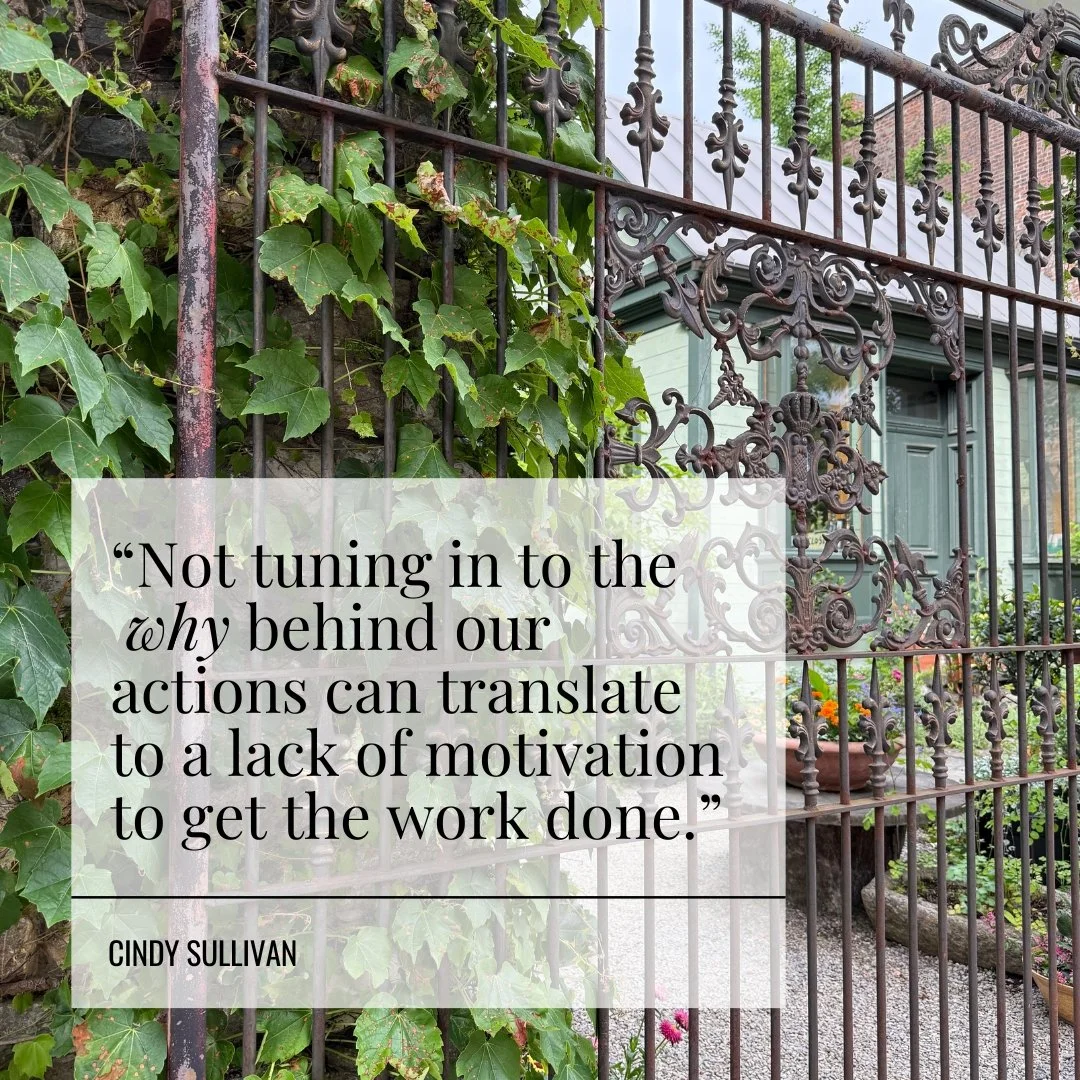
One of the most common motivational challenges is not being clear about the driver behind your actions. Without defining your ‘why,’ it becomes difficult to build and maintain motivation.

Cindy Sullivan says, “Not tuning in to the why behind our actions can translate to a lack of motivation to get the work done.”


3. Motivation responds to progress.

Don’t underestimate the power that making progress has on increasing your motivation. Redefine what progress means. It can include taking small steps, getting support, and acknowledging your wins.

Greg McKeown says, “Research has shown that all forms of human motivation, the most effective one is progress.”


4. Motivation strengthens with purpose.

Striving to reach a goal can be either motivating or de-motivating. If the goal is unreachable, you’ll probably feel less motivated. If your goal is right-sized, doable, purposeful, yet challenging, it will strengthen your motivation.

Ari Tuckman, PsyD, says, “Goals that feel impossible are de-motivating. Much better is a goal that may feel like a stretch, but is still possible – and actually worth the effort.”


Motivation responds to progress.
— Linda Samuels, CPO-CD®, CVOP™


5. Motivation can be reactivated.

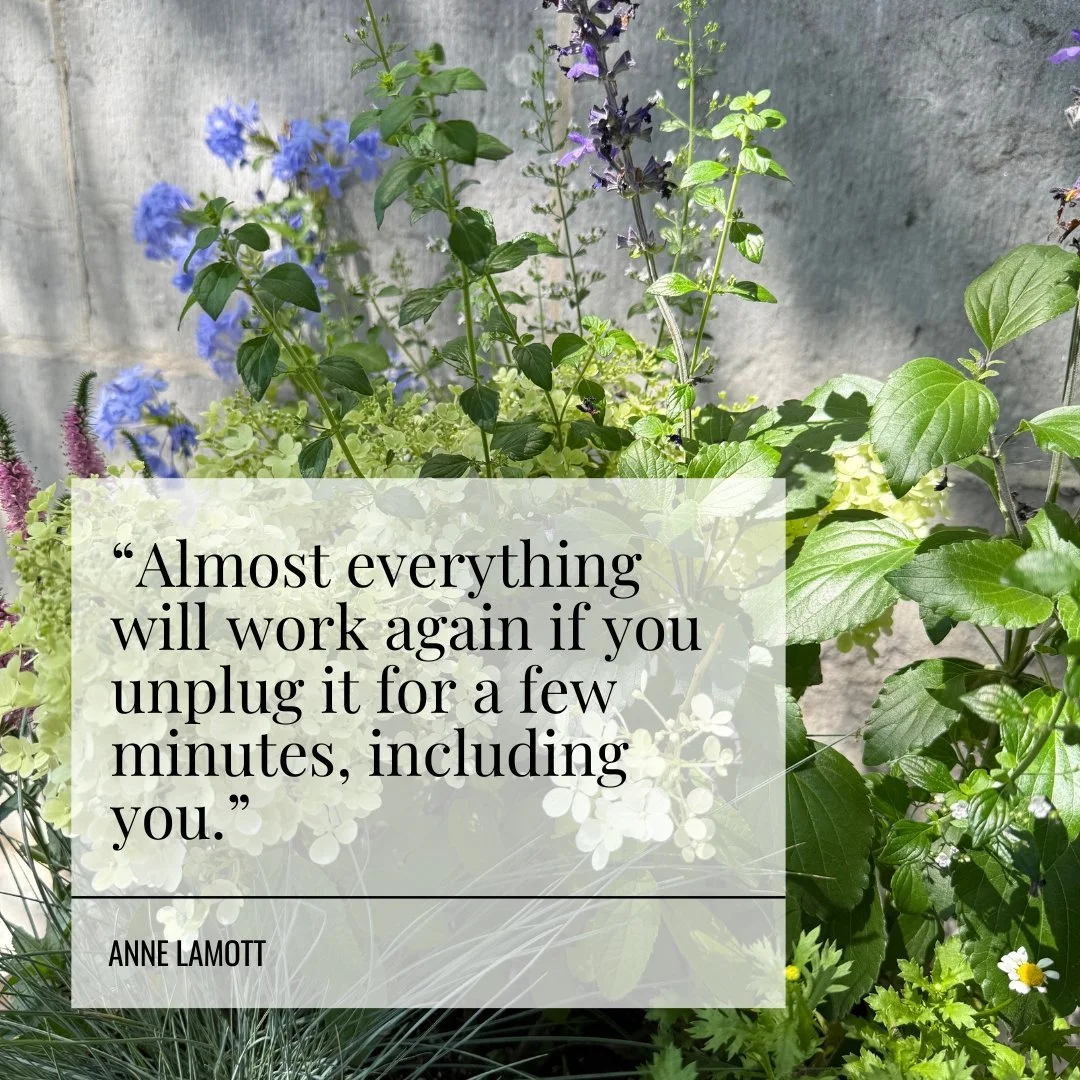
Exhaustion and overwhelm can derail motivation. The good news is that pausing and stepping away from your task to reenergize can reignite your motivation. Struggle no more. Is it time to take a quick break?

Anne Lamott says, “Almost everything will work again if you unplug it for a few minutes, including you.”


6. Motivation flourishes with satisfaction.

Have you considered how satisfaction influences motivation? There is joy and gratification in reaching your goals. This pursuit, along with the positive results you experience, nourishes your motivation.

Cassie Holmes, Ph.D., says, “Being a goal-driven species, we aren’t motivated merely by pleasure itself; we also gain pleasurable satisfaction from our accomplishments.”


7. Motivation grows through resilience.

No journey or pursuit happens without challenges. There will be hiccups and obstacles along the way. Keep pushing forward despite setbacks. Your motivation will grow stronger because of your resilience.

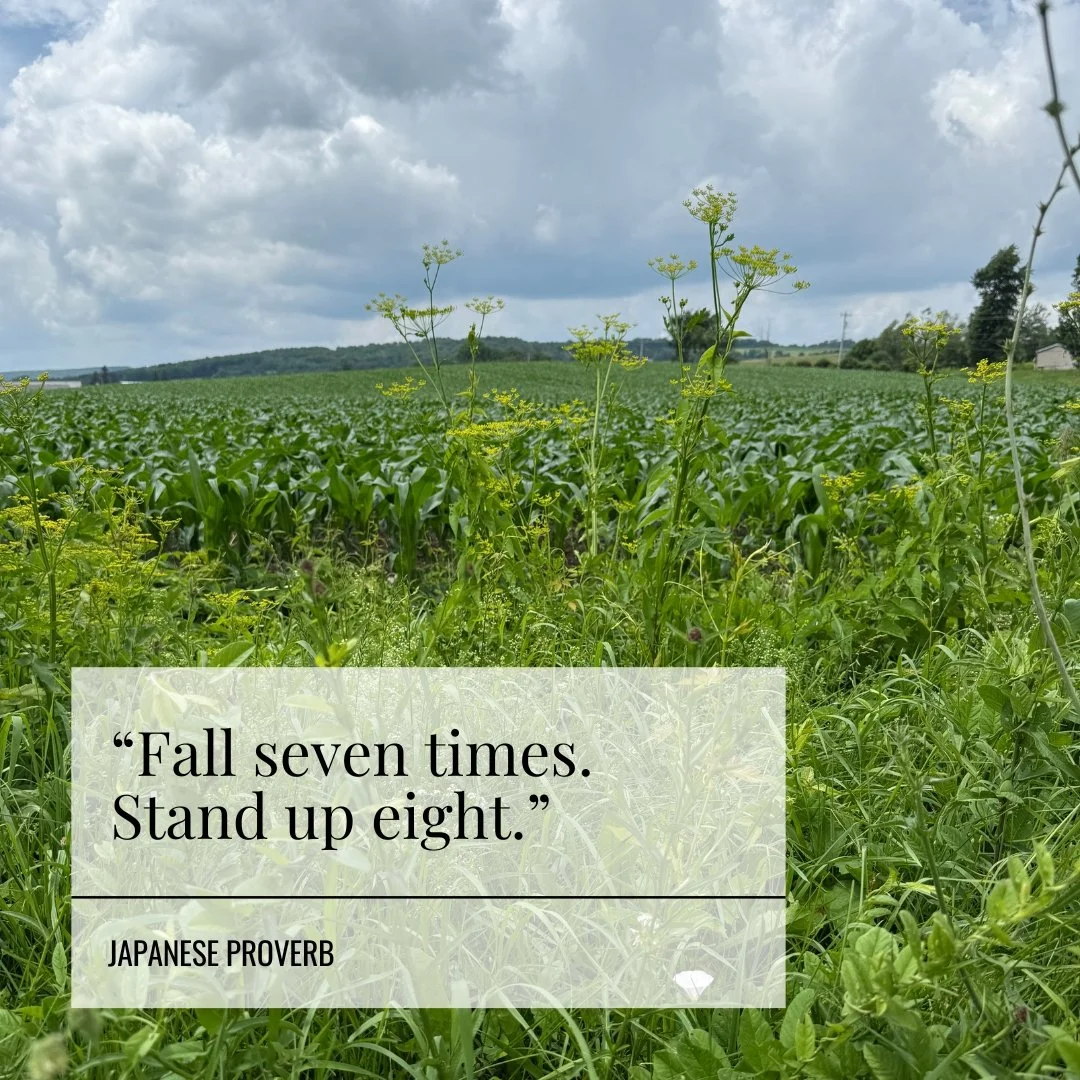
Japanese proverb says, “Fall seven times. Stand up eight.”


Why Does Motivation Matter?

Motivation comes in many strengths, from low to high and everything in between. When your motivation is fully in gear, it can feel like you’re in a state of flow. Obstacles are non-existent or easily solved. However, when motivation is low, it feels more like you’re walking through molasses. Even taking a small step can feel impossible.

It’s helpful to understand and develop motivation strategies. What inspires you most when your motivation is low? Which idea or quote resonates most with you?

I’d love to hear your thoughts. I invite you to join the conversation.


How Can I Help?

Do you need support with motivation, activation, or organization? I’d love to help! Virtual organizing is an extraordinary path forward – Local feel with a global reach.

Let’s talk. You can:

Organizing and sustaining motivation is possible, especially with support.
 
 
How "Time Confetti" is Devastating Your Leisure Time and Ways to Solve It

When you read “leisure time,” what thoughts come to mind? Are you thinking, “What leisure time? I don’t have any free time!” Does downtime feel absent from your life because you’re constantly working, stressing, and feeling overwhelmed? If so, you’re not alone.

In 2014, Brigid Schulte, an award-winning journalist and bestselling author, introduced “time confetti” in her book Overwhelmed: Work, Love, and Play When No One Has the Time. Time confetti refers to fragmented pieces of free time that happen during the day. These moments are too brief to be productive or meaningful, and they spoil the downtime we do have.

Time confetti are “short, unenjoyable moments that end up stressing us out rather than relaxing us.” Frequent interruptions are typically due to technology or multitasking. Even if a disturbance seems minor, it reduces the quality of time off, which can lead to a feeling of constant busyness without a sense of accomplishment.


What is the Antidote to Time Confetti?

Strategies to balance the effects of time confetti revolve around reducing distractions and valuing and creating larger blocks of leisure and downtime. Some of Schulte’s suggestions include:

  • Identify where time gets spent

  • Prioritize what matters, including more leisure activities

  • Lessen digital distractions

  • Stop multitasking

  • Delegate and share household responsibilities

  • Schedule and protect leisure time

  • Shift perception of busyness and success


What Does Leisure Time Look Like?

Several years ago, I jotted down a list that I rediscovered recently called “Help for those who do too much.” What’s interesting is it doesn’t specify what not to do. Instead, it focuses on creating more time to enjoy life. The list is relevant to this discussion, so I included it.

Siblings - Tod Machover and Linda Samuels

Help For Those Who Do Too Much:

  • Taking time off

  • Biking

  • Connecting with family

  • Kayaking

  • Going to the beach

  • Sleeping

  • Waking up naturally (no alarms)

  • Losing track of time (no watches)

Schedule and protect leisure time.
— Linda Samuels, CPO-CD®, CVOP™

In the spirit of leaning into more downtime, I reserved two full days of fun this past weekend, which was so welcome.

Intentional Leisure Time Activities

  • Spending time with family

  • Exploring Manitoga, the house, studio, and 75-acre woodland garden of the mid-century designer Russell Wright

  • Having a picnic

  • Celebrating Father’s Day with my husband (Happy Father’s Day to all the Dads!)

  • Going on a day trip

  • Taking a scenic train ride in the Catskills (ice cream included)

Happy Father’s Day!

If your days and downtime are disjointed and overwhelming, gift yourself a present of being more intentional and protective of your leisure time. Eliminate distractions that disrupt your focus. Time is precious. Yes, we need to work and handle life’s necessities. We also need balance to the busyness and overwhelm that many of us feel. What helps you carve out downtime? What do you enjoy doing? What gets in your way? I’d love to hear your thoughts. I invite you to join the conversation.

If you want help organizing your time so you can enjoy life more, email me at linda@ohsorganized.com, call 914-271-5673, or schedule a Discovery Call.  A life including downtime and fun is possible, especially with support.
 
 
How can I help?