

Posts tagged moving
12 Inspiring Quotes of the Year That Will Make You Feel Hopeful

This is a wonderful time to reflect on the past twelve months before the new year begins. In 2025, we had emotional, enriching, and deep conversations on the blog.

We walked together, shared tumultuous times, made exciting discoveries, and navigated life balance. In our free-flowing exchanges, insights, new perspectives, and hope emerged.


Meaningful Conversations

Our conversations about life balance, change, clutter, letting go, time management, motivation, organizing, hope, and more brought comfort, connection, learning, and joy.

Thank you for being part of this community. You inspire me to show up, write, think, and engage.


Deepest Gratitude

I am profoundly grateful for your thoughtful words and generous sharing. Based on your comments this year, I curated twelve of my favorite insights from you. Thank you, Diane Quintana, Ellen Delap, Hazel Thornton, Janet Barclay, Jill Katz, Jonda Beattie, Julie Bestry, Kim Tremblay, Melissa Gratias, Sabrina Quairoli, Seana Turner, and Yota Schneider.

You are consistent voices and participants who bring our conversations to life. I am grateful to you and to everyone who reads the blog, contributes to our discussions, or shares the posts. You infuse this community with hope, humor, curiosity, perspective, and learning.

Enjoy the year in review, one quote at a time!


12 Inspiring Quotes from Our Conversations This Year That Will Make You Feel Hopeful


1. Fresh Start | 3 Ways to Take a Slow Exhale & Refocus Energy for a New Fresh Start

Giving yourself permission to downshift, reset, and refresh is the best way to pave the way for the next project.
— Ellen Delap
Change can be hard. Focusing on one small thing at a time can help.
— Kim Tremblay
I was just in the middle of talking myself out of doing something because of uncertainty. Okay, time for a deep breath and some rational thinking.
— Melissa Gratias
People are more likely to let go of items if they know they are going to a good place.
— Jill Katz
Focusing only on the next step keeps me from becoming overwhelmed by decluttering and other large projects.
— Janet Barclay
As for productivity, no, it isn’t a dirty word, but neither is setting it aside for a while. I get a lot of satisfaction from completing my to-do list and from giving myself to the activities that soothe my spirit.
— Yota Schneider
Waiting to feel motivated never works for me. It’s more like I start, and then the motivation catches up.
— Seana Turner
I have my people to call for different types of help – the ones who just let me vent, the ones who want to help me brainstorm and plan, and the ones who are on my doorstep almost immediately.
— Jonda Beattie
Virtual organizers can pull out the essential steps and manage them, helping the client feel more in control of their time during this stressful moment.
— Sabrina Quairoli
I love reframing! One of my favorites is this: Instead of thinking ‘I’m anxious,’ or nervous to do something, think ‘I’m excited!’ to do it.
— Hazel Thornton
Tolerating discomfort, in particular, means that waiting is so much easier when you can focus on the fact that any uncomfortable situation is temporary.
— Julie Bestry
I love the idea of embracing fun! It’s easy to get bogged down by the minutiae and to forget to look outside our to-do list and notice things around us.
— Diane N. Quintana


Past Reflections and Future Possibilities

What was most significant to you this year? Which quote resonates most? What do you want to focus on in the New Year? I’d love to hear your thoughts. I invite you to join the conversation.


How Can I Help?

Let’s make 2026 a fabulous year! Do you want support in creating a better balance, letting go of what no longer serves you, or getting more organized? I’m ready to help. Virtual organizing is an extraordinary path forward - Local feel with a global reach.

Let’s connect! I’m easy to reach.

Getting organized is possible, especially with support.

I wish you a happy, healthy, organized, and joy-filled New Year!


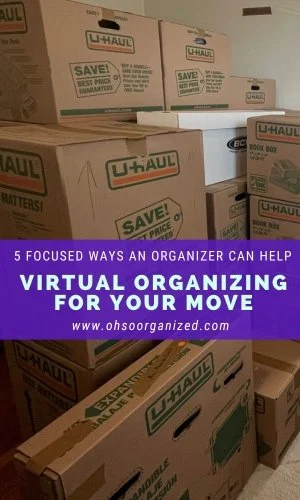
5 Focused Ways a Virtual Professional Organizer Can Help During a Move


In the northeast, the leaves are changing, and it’s a season of transition. Is fall the unofficial moving season? It seems so, especially since many of my clients and kiddos are in the process of moving, downsizing, right-sizing, or transitioning.

Moving involves many decisions and plans, which can be overwhelming. The good news is you don’t have to do it alone. Reduce your stress and enjoy the benefits of getting help from a virtual professional organizer like me.

Depending on your stage in the moving process, motivation can vary significantly. For example, if you're moving within a month because your lease is ending or your house was just sold, the limited time creates pressure that boosts motivation. However, if you're planning to move years from now or moved several years ago but haven't fully unpacked or settled, your motivation might feel important but less urgent.

No matter what stage of moving you’re in—pre-move, during, or post-move—having the right support makes an enormous difference. Whether you hire a professional organizer or ask family and friends for help, creating your team will help things go more smoothly and reduce stress.

Because you know what they say—moving is one of the top ten most stressful things we do in life.

  • In a 2020 survey by OnePoll for North American Van Lines, 64% of respondents said that their recent move was one of the most stressful experiences they ever had.

  • In a 2022 Move.org survey, 38% of respondents said moving was more stressful than parting with a significant other.

  • In a 2025 survey by HireAHelper, 29% of participants said they’d rather get a divorce than move again. 55% of participants rated moving as highly stressful.


5 Ways a Virtual Professional Organizer Helps You Navigate a Move

1. Clarify Your Why

Your reasons for moving might seem obvious. However, an organizer can help you clarify these reasons and keep them relevant as you make decisions. There are many choices to consider, and decision fatigue can set in. Keeping your ‘why’ visible helps you stay focused, encourages the right actions, and boosts your motivation. 

Maybe your why is to:

  • Simplify life—own less, manage less, and reduce your financial obligations.

  • Consider the future—downsize and organize your belongings now so your family won’t have the burden of doing it after you’re gone.

  • Get more space—Your current living situation is too cramped, and you need extra room for your growing family.

  • Relocate temporarily—A family or work situation requires you to move, even if it’s not an ideal scenario.

  • Reimagine life—You’ve experienced a major life change, like losing a loved one, starting a new job, becoming an empty nester, or retiring. Now you want a fresh start in a new place.


2. Establish Timeline and Pace

As an organizer, I enter someone’s life at a particular moment in time. Sometimes, I’m contacted well in advance of a move, giving enough time to plan and edit. Other times, I engaged right before or after a move. Every scenario requires a different timeline to help someone go from where they are to where they want to be.

Working together, we can create a schedule, even a loose one, to put a reality check on what’s possible to accomplish within a certain timeframe. Many considerations will affect your timing, including:

  • Budget

  • Urgency

  • Time available to focus on the project

  • Life demands more than just moving

  • Support team you have or need to assemble

Pacing is just as essential as understanding the overall timeline. If you're years away from moving, you can proceed at a slower, steady pace. However, if you're moving this month, the pace needs to be much faster. You might need extra help to finish your move.


3. Edit and Organize Your Stuff

Even if you don’t see yourself as a ‘collector,’ you probably have plenty of things to edit before and even after your move. You know how it goes, right? As humans, we accumulate a lot of stuff. And if you’ve been in your home for a long time, you likely have even more stuff.

Enlisting help from a virtual professional organizer during the editing phase is invaluable. I can support that process in various ways, including:

  • Asking good questions

  • Weighing your options

  • Providing focus as you sort through your things

  • Establishing decision-making parameters

  • Sharing letting go strategies

  • Helping determine which category something belongs to: Keep, Toss, Donate, Sell, Route to storage, or Give to a specific person

While it’s best to edit your belongings before moving, that’s not always possible. Letting go often continues after the move, even if you edited beforehand. If you’ve already moved, I can help you with ongoing editing, decluttering, refining, space planning, organizing, and deciding about the last 10% of items that haven’t been unpacked.


Even if you don’t see yourself as a ‘collector,’ you probably have plenty of things to edit before and even after your move.
— Linda Samuels, CPO-CD®, CVOP™


4. Have Access to Trusted Resources

Throughout every stage of a move, you’ll need various resources for donating, selling, recycling, or disposing of items. You might also need referrals for vendors like movers, junk haulers, or suggestions for organizing products.

With over 30 years in the organizing industry, I’ve gathered hundreds of resources to share with my clients. I also have a network of industry colleagues who generously share their resources whenever I need a referral for something or someone I don’t already have.


5. Collaborate with a Thought Partner

Moving can feel like a huge jumble of puzzle pieces. Although the pieces will eventually fit together to create a new, beautiful picture, it currently feels chaotic and overwhelming. Moves and related tasks can be emotionally draining.

However, working with a thought partner helps you make sense of those pieces more quickly and feel supported throughout the process.

A thought partner can help you:

  • Get unstuck

  • Reduce overwhelm

  • Identify your next step

  • Brainstorm solutions to obstacles

  • Develop checklists

  • Encourage action

  • Discuss your choices and options

  • Provide accountability

  • Boost motivation


Can You Benefit from Virtual Organizing Help?

While physical tasks like packing and unpacking are not things I assist with as a virtual professional organizer, there are many other areas, as discussed, that I can help with.

Location isn’t a barrier. Virtual organizing lets me work globally. Even though I’m based in New York, I can help whether you’re in California, Canada, or somewhere else.

Virtual organizing sessions are focused and short, lasting 60 to 90 minutes each. We’ll work together on your goals, then you’ll have time afterward to work independently, with ongoing support to repeat that process.

Are you moving right now? If so, how can you benefit from enlisting help from a virtual professional organizer? 

I’d love to hear your thoughts. I invite you to join the conversation.


How Can I Help?

Do you feel overwhelmed, stuck, or disorganized? I’m here to help! Virtual organizing is an extraordinary path forward – Local feel with a global reach.

Let’s talk. I’m easy to reach.

Getting organized is possible, especially with support.


9 Marvelous Ways Virtual Professional Organizers Can Help With Transitions

Can you feel it? Transitions are in the air. The summer is coming to a close. Fall is around the corner, and change is on its way. One transition signal I noticed on a recent walk was the appearance of these beautiful berries that start white and turn to blue and purple hues. Oh, yes. Fall is coming. The transition is happening.

How do you feel about transitions? Are you excited, optimistic, empowered, sad, scared, apprehensive, or overwhelmed? Change can be challenging. You let go or say goodbye to what was and move forward to something different. The ‘different’ could be an unknown, a new stage of life, or a smaller, seemingly insignificant change. Navigating transitions can be much easier when you get planning, implementing, and supporting help.

Here's the good news. Many people can provide support, including friends, family members, colleagues, or virtual professional organizers like me. Much of my work centers around helping people of all ages and stages during their life transitions.


9 Ways Organizers Can Help With Transitions

1. Resetting for the New Season

Can you enlist the help of an organizer to do a clothing edit and organization? As you store your spring/summer clothes and bring out your fall/winter ones, choose the items you will no longer wear and can release. Could you hire an organizer to support your decision-making and organizational ideas? Your seasonal clothing transition will go more smoothly.


2. Going Back to School

You had one pattern for the summer, but now it’s time for the kiddos to return to school. This is a transition time where habits and schedules change. An organizer can help you create great organizational systems that work for your family.


3. Becoming an Empty Nester

Perhaps going back to school means you’re now an empty nester. This is an enormous transition for both you and your kiddo. If you need help getting your college-bound kid organized to leave the nest or need help reorganizing your home and schedule now that your kid is out, enlist help from a professional organizer.


4. Becoming a Parent

When a new life arrives, everything changes. You will prepare emotionally and physically during this transition. You can use the services of an organizer to help create an organized space for your little one.


5. Changing a Relationship

Whether you are moving in with your partner, getting married, or divorced, these transitions can be stressful and complicated. There are emotional aspects to navigate. There are also scheduling and space transitions, which an organizer can be especially helpful with. Whether merging two households into one or dividing one home into two, it’s beneficial to have a non-judgmental, compassionate person to plan, organize, and navigate this transition.


Transitions are an opportunity for growth, renewal, and possibilities.
— Linda Samuels, CPO-CD®, CVOP™

6. Moving and Downsizing

Moving and downsizing are significant transitions. This can be anxiety-producing, especially if you work with a tight deadline or do not want to move. There are many things to handle, even when your deadline is flexible, or you’ve purposely chosen the change. Hiring an organizer to help you plan, support your decisions, and share resources can ease the stress of these complex transitions.


7. Retiring

You worked a lifetime, and now you’re ready to stop. You’re used to being highly scheduled with less free time to pursue hobbies and friendships. As you transition into this new stage of life, consider what you want and no longer need. What can you let go of? What do you want to make space for? You can work with an organizer to figure out what ‘belongs’ now.


8. Experiencing Health Challenges

While you have your medical health professionals’ support team, an organizer can help with health-related transitions in many ways. Perhaps you need a system for documenting doctor visits, instructions, or medications. Maybe you need to reorganize space in your home, declutter, or create an unobstructed flow. Especially when you’re not feeling your best, having another person to support your transition and organizational needs can be helpful.


9. Losing a Loved One

When someone we love dies, life changes instantly. It doesn’t matter if it is expected or not. Loss is loss. Everyone grieves in their way. At a point when the grief fog lifts, you might feel ready to make changes, like rethinking the use of rooms or letting go of some of your loved one's belongings. This is a highly emotional time. Having an organizer to work with can help you honor your loved one’s possessions as you organize, let go, and move forward.


As Tom Stoppard said, “Every exit is an entry somewhere.” As you travel from where you are to where you are heading, don’t go it alone. Gather your team who will help, support, and be there as you navigate. Transitions are an opportunity for growth, renewal, and possibilities.

Are you going through a transition? Who is on your team? Do you want additional help? I’d love to hear your thoughts. I invite you to join the conversation.


How can I help?
 
Here Are Today's Most Interesting and Best Motivation Discoveries - v41

This is the newest release (v41) of the “What’s Interesting?” feature has my latest finds that inform, educate, and relate to organizing and life balance. These unique, inspiring, motivation-related discoveries reflect this month’s blog theme.

You are a passionate, generous, and engaged group. I am deeply grateful for your ongoing presence, positive energy, and contributions to this community. I look forward to your participation and additions to the collection I’ve sourced.

What do you find interesting?


What’s Interesting? – 5 Best MOTIVATION Discoveries

1. Interesting Read – Motivation and Words

The Words We Choose – Your Guide to How and Why Words Matter, author, speaker, and coach Terre Short encourages you to use words authentic to your values and intentions. Through stories, reflections, and activities, Short supports healthy communication, influence, and engagement with words that connect us to ourselves, loved ones, people at work, our written word, and more.

Short says, “You can transform your communication through the power of your words.” Explaining how we speak an average of 16,000 words every day, which “represents a lot of daily word choices...Our daily experiences are shaped by words spoken to and by us. What impact did your words have today?”

If you are motivated to strengthen your relationships, become more emotionally intelligent, improve how you talk to yourself, and align your words, values, and intentions, this book is for you.


2. Interesting Product – Motivation and Labeling

A common organizing principle is to label your stuff. Why? It helps you know at a glance what a box, drawer, or file contains without extensive searching. Having things labeled increases motivation to establish “homes” for your belongings. This makes them easier to retrieve and return.

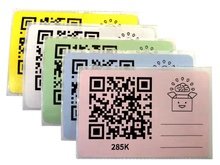
BoxBrain brings new meaning to labeling. They created “smart labels for smart living.” Their water-resistant labels help you organize your life, especially when packing, unpacking, and storing your things. The labels are color-coded with a QR code connected to their app.

I love BoxBrain’s simple 3-step process:

1. Grab Some Labels – There are 3 sizes and 5 colors.

2. Slap ‘Em On Your Stuff – Label your boxes with the color-coded labels. For example, use blue labels for kitchen items, yellow labels for toys, or green for the home office.

3. Know Where Your Stuff Is – Using your smartphone, scan the label, then enter keywords and photos. Use the keyword search to locate an item quickly.

Motivation increases when you take action, even if it’s tiny.
— Linda Samuels, CPO-CD®, CVOP™

3. Interesting Article – Motivation and Organizing Mistakes

Have you ever worked on an organizing project and made a mistake that crushed your motivation? Maybe you underestimated the needed storage space, took on too many simultaneous projects, or purchased organizing containers before decluttering. Guess what? You’re not alone.

In the recent Redfin article, “Organizing Mistakes: 27 Slip-Ups to Avoid During Your Next Project,” Jamie Forbes features professional organizers, including me (#5). We share our best advice for making your next organizing project a success.

My suggestion is to keep like with like. By corralling similar items together, you can make more informed decisions, stop overbuying, know what you own, and quickly access your belongings.


4. Interesting Resource – Motivation and Downsizing

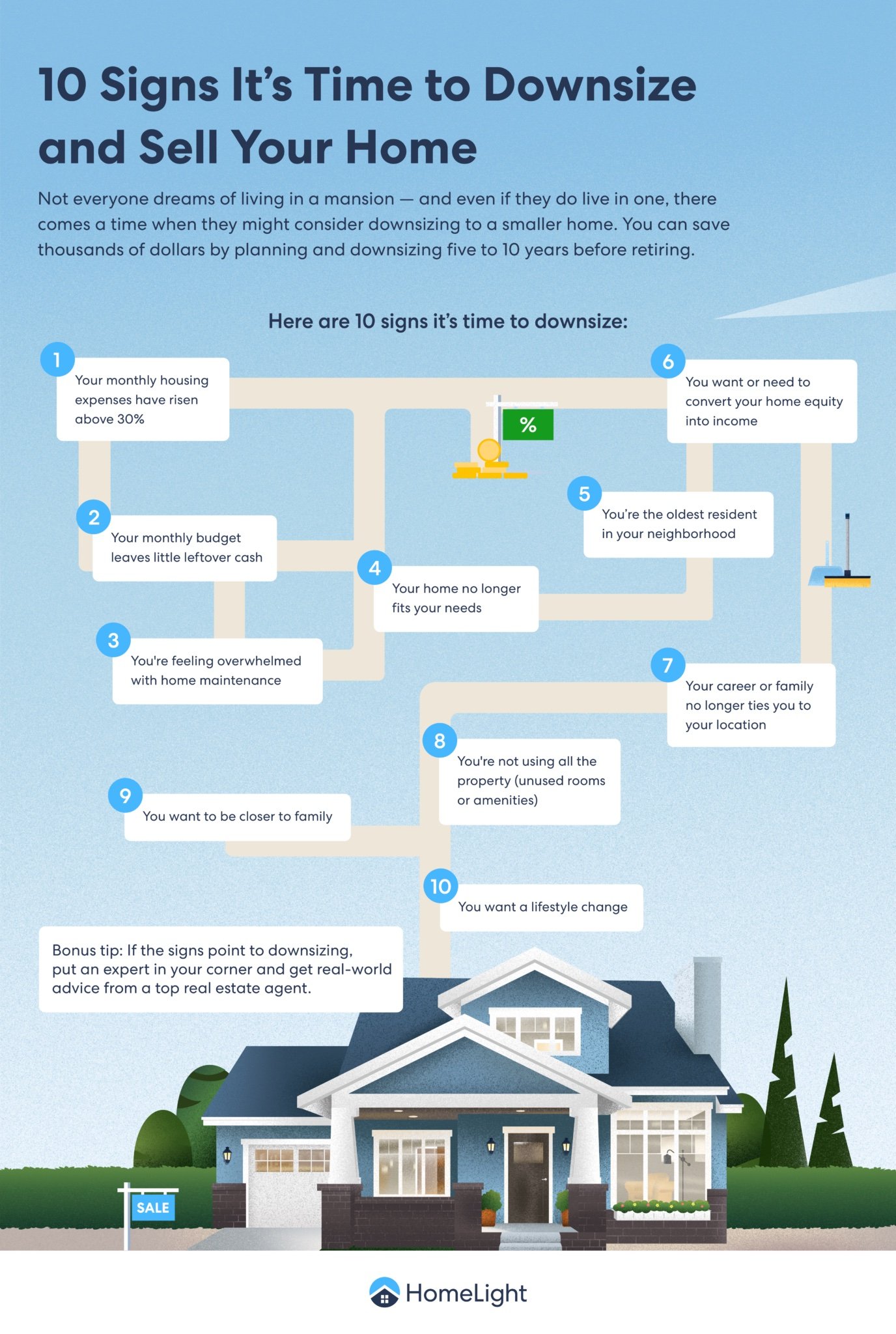
Are you or someone you know thinking about downsizing to a smaller home but aren’t 100% sure? If so, you’ll love the 10 Signs It’s Time to Downsize and Sell Your Home infographic from HomeLight. The real estate company explains how important timing can be in making that decision. Waiting can cost you more to run a larger home. Also, downsizing as you age can be more challenging due to health or mobility issues.

Motivations to downsize include feeling overwhelmed with home maintenance, your career or family no longer tying you to your location, you want a lifestyle change, or your home no longer fits your needs.

Downsizing is a compelling motivator to make a life change.


5. Interesting Thought – Motivation and Progress


A fascinating aspect of motivation is how it increases when you take action, even if it’s tiny. Progress, no matter how small, is still forward movement. So, when you are feeling discouraged or overwhelmed, instead of giving up, do one little thing. You’ll be amazed how an action will change your perspective from being stuck to feeling hopeful, energized, and motivated.


Do you have an interesting motivation-related discovery? Which of these resonates with you? I’d love to hear your thoughts. I invite you to join the conversation.


How can I help?