Posts tagged hope
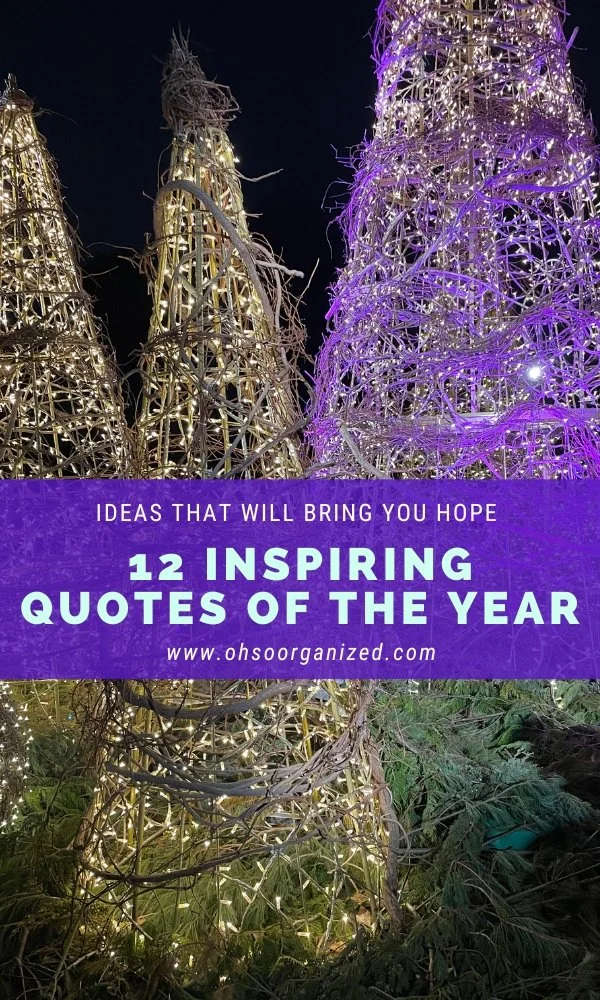
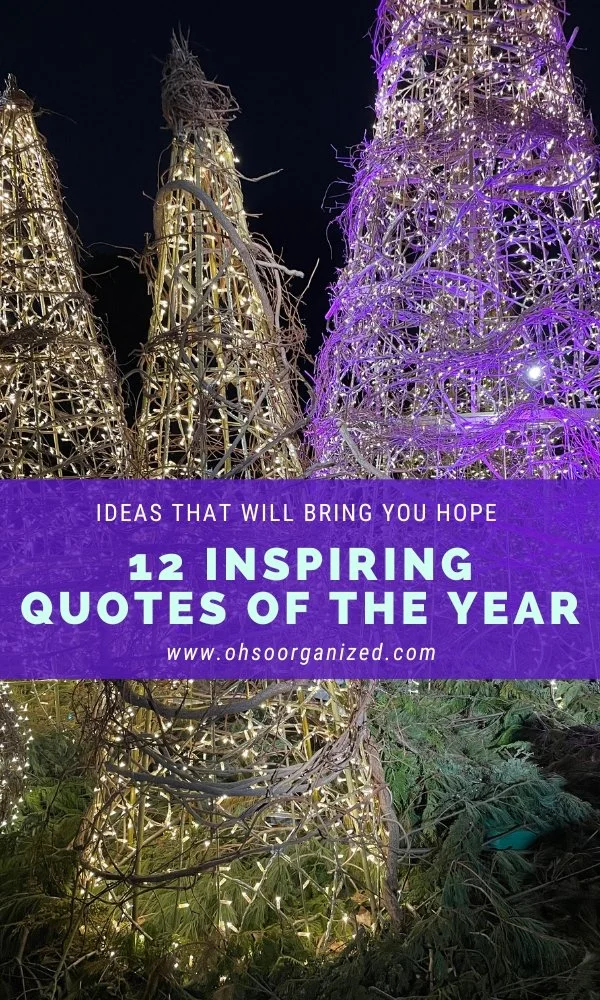
12 Inspiring Quotes of the Year That Will Make You Feel Hopeful

This is a wonderful time to reflect on the past twelve months before the new year begins. In 2025, we had emotional, enriching, and deep conversations on the blog.

We walked together, shared tumultuous times, made exciting discoveries, and navigated life balance. In our free-flowing exchanges, insights, new perspectives, and hope emerged.


Meaningful Conversations

Our conversations about life balance, change, clutter, letting go, time management, motivation, organizing, hope, and more brought comfort, connection, learning, and joy.

Thank you for being part of this community. You inspire me to show up, write, think, and engage.


Deepest Gratitude

I am profoundly grateful for your thoughtful words and generous sharing. Based on your comments this year, I curated twelve of my favorite insights from you. Thank you, Diane Quintana, Ellen Delap, Hazel Thornton, Janet Barclay, Jill Katz, Jonda Beattie, Julie Bestry, Kim Tremblay, Melissa Gratias, Sabrina Quairoli, Seana Turner, and Yota Schneider.

You are consistent voices and participants who bring our conversations to life. I am grateful to you and to everyone who reads the blog, contributes to our discussions, or shares the posts. You infuse this community with hope, humor, curiosity, perspective, and learning.

Enjoy the year in review, one quote at a time!


12 Inspiring Quotes from Our Conversations This Year That Will Make You Feel Hopeful


1. Fresh Start | 3 Ways to Take a Slow Exhale & Refocus Energy for a New Fresh Start

Giving yourself permission to downshift, reset, and refresh is the best way to pave the way for the next project.
— Ellen Delap
Change can be hard. Focusing on one small thing at a time can help.
— Kim Tremblay
I was just in the middle of talking myself out of doing something because of uncertainty. Okay, time for a deep breath and some rational thinking.
— Melissa Gratias
People are more likely to let go of items if they know they are going to a good place.
— Jill Katz
Focusing only on the next step keeps me from becoming overwhelmed by decluttering and other large projects.
— Janet Barclay
As for productivity, no, it isn’t a dirty word, but neither is setting it aside for a while. I get a lot of satisfaction from completing my to-do list and from giving myself to the activities that soothe my spirit.
— Yota Schneider
Waiting to feel motivated never works for me. It’s more like I start, and then the motivation catches up.
— Seana Turner
I have my people to call for different types of help – the ones who just let me vent, the ones who want to help me brainstorm and plan, and the ones who are on my doorstep almost immediately.
— Jonda Beattie
Virtual organizers can pull out the essential steps and manage them, helping the client feel more in control of their time during this stressful moment.
— Sabrina Quairoli
I love reframing! One of my favorites is this: Instead of thinking ‘I’m anxious,’ or nervous to do something, think ‘I’m excited!’ to do it.
— Hazel Thornton
Tolerating discomfort, in particular, means that waiting is so much easier when you can focus on the fact that any uncomfortable situation is temporary.
— Julie Bestry
I love the idea of embracing fun! It’s easy to get bogged down by the minutiae and to forget to look outside our to-do list and notice things around us.
— Diane N. Quintana


Past Reflections and Future Possibilities

What was most significant to you this year? Which quote resonates most? What do you want to focus on in the New Year? I’d love to hear your thoughts. I invite you to join the conversation.


How Can I Help?

Let’s make 2026 a fabulous year! Do you want support in creating a better balance, letting go of what no longer serves you, or getting more organized? I’m ready to help. Virtual organizing is an extraordinary path forward - Local feel with a global reach.

Let’s connect! I’m easy to reach.

Getting organized is possible, especially with support.
I wish you a happy, healthy, organized, and joy-filled New Year!


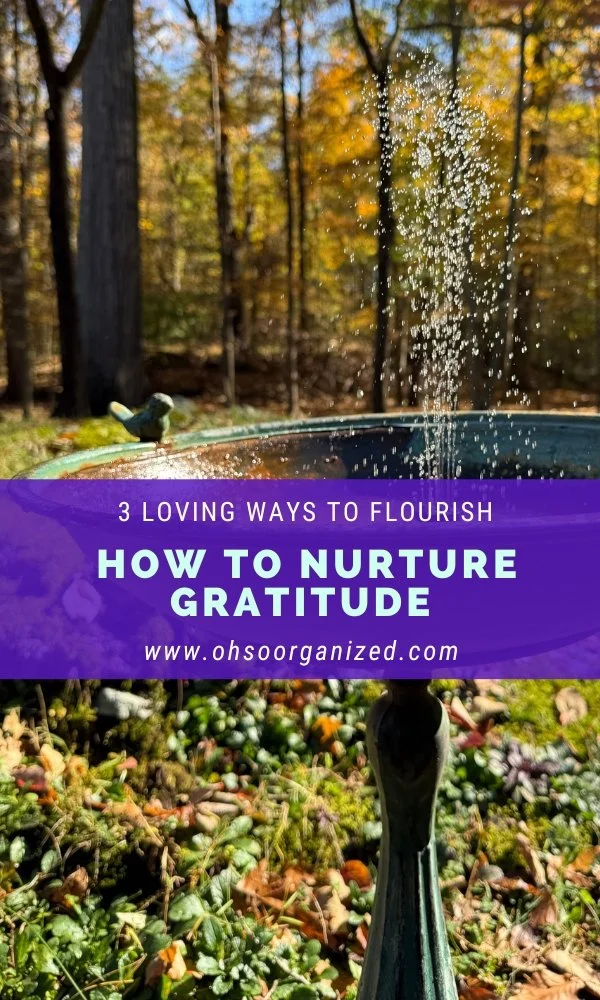
3 Loving Ways to Nurture Gratitude to Help You Flourish

Thanksgiving is just around the corner. My husband and I are excited to host our family and bring everyone together. I might even make my new peanut butter brownie recipe. A word of warning: it’s hard not to eat the entire tray because they’re so delicious. So, if you ask me for the recipe and make it, be sure to invite people to share it with.

Gratitude fills my thoughts. At the same time, I’m very aware of how challenging these times are. The constant stream of bad news, division, and suffering is impossible to ignore. Hope, love, and gentleness can feel elusive.

Perhaps it’s the eternal optimist in me, but I can’t help myself. Those small moments or glimmers of connection, comfort, generosity, kindness, and joy are also available. I hold them close. They are as essential to me as breathing oxygen.

Recently, I was reading through my journal from this past year. I found a passage I want to share with you. It reminded me how gratitude and being present have been, and continue to be, guiding forces in my life.


My journal entry:

For now, I am here. Rooted in the past, ready for the future, and grounded in the present.


Consider these questions:

  • How has your past influenced you?

  • Do you feel ready and excited for your future?

  • Are you fully present right now?

  • How does gratitude connect to your past, future, and present?


3 Ways to Nurture Gratitude To Help You FLourish

1. Rooted

As I reflect on the past, gratitude fills my being. I think about my family, loved ones cherished and now gone, the boundless love and connection, the feeling of home that traveled with me wherever I went, the deep conversations, traditions, music, laughter, and hugs.

I remember and feel grateful for the time spent visiting relatives, traveling, hosting and attending gatherings, renovating, learning, creating, snuggling, being raised, raising kids, and so much more.

Of course, no life or family is perfect. Still, I am grateful for everything and everyone—the beautiful moments and the challenges.


2. Ready

Are any of us ever truly prepared for the future? On one hand, unexpected surprises can arise that might throw us off course or discourage us. Many of these will be impossible to predict.

At the same time, there will be incredibly joyful experiences, opportunities for growth, and adventures.

To me, future readiness is mainly about having an open and flexible attitude toward what may happen. Being ready also involves a certain level of confidence, positivity, anticipation, and acceptance. While I can’t predict what will happen, I hold hope close.

I recognize that what I do today can positively or negatively affect my future. I’m grateful for the actions I’m willing and able to take to create a better tomorrow.


I am grateful for this moment. I am here now.
— Linda Samuels, CPO-CD®, CVOP™


3. Grounded

The past has already happened, and the future is not yet here. All we truly have is the present. I am thankful every day for the moments I get to live, breathe, see nature’s wonders, create, work, contribute, inspire, love, and be loved.

I am grateful for my senses, which always delight me and bring me back to the present moment. The magic of this season offers a feast of colors, a variety of delightful scents and flavors, cozy fabrics like cashmere and velvet that bring warmth and comfort, and sounds of wind blowing, music playing, animals calling, and leaves dancing.

Being grounded in the present helps me show up each day for my loved ones, friends, clients, community, colleagues, and myself.

I am grateful for this moment. I am here now.


Are You Rooted, Ready, and Grounded?

We’re complex humans with different backgrounds, dreams, and circumstances. Gratitude can color where we’ve been, where we’re headed, and where we are.

During this season of gratitude, what are you focusing on? Which ideas resonate most with you? I’d love to hear your thoughts. I invite you to join the conversation.


How Can I Help?

This is a wonderful time to plan, get unstuck, and prepare for what’s to come. Are you feeling overwhelmed, stuck, disorganized, or unfocused? Would you like to make progress? I’m here to help! Virtual organizing is an extraordinary path forward – Local feel with a global reach.

Let’s talk. I’m easy to reach.

Getting organized, focused, and progressing is possible, especially with support.
 
 
What Becomes Immediately Achievable When You Get Out of Your Own Way?

The things you say or think can act as possibility-blockers, preventing you from moving forward. They can be subtle or obvious. You might not notice how these phrases get in your way.

The blockers may sound like:

  • “I can’t do this.”

  • “It’s too hard.”

  • “I can’t tolerate the discomfort.”

  • “I’m just not good at this.”

  • “I’m unable to figure this out.”

  • “I don’t know where to start.”

  • “I don’t have any skills.”

  • “Nothing ever seems to work out.”

  • “I’m really frustrated, and I don’t know what to do.”

  • “I never finish anything.”

  • “It has always been like this, and I can’t change it.

  • “I’m feeling totally overwhelmed.”

  • “Nobody ever taught me how to do this.”

  • “I can barely get through today, let alone think about tomorrow.”

  • “I’m stuck where I am.”

  • “I’m too busy and don’t have time to find a solution.”

  • “I can’t imagine what’s possible because my mind and space are so cluttered.”

That’s a lot to take in. Have you noticed yourself repeating any of these phrases? Maybe you have different go-to messages that aren’t helping you. Take a moment to identify which thoughts are shutting you down.

What did you find out?

Focusing on negative messages reinforces your lack of agency. You are paying attention to defeat. While you might not be able to eliminate negativity completely, there is hope. In fact, here is a three-step approach that can help. It consists of awareness, reframing, and action.


A Three-Step Approach: Transform the Impossible into Possible

Step 1: Develop Awareness

The only limits to the possibilities in your life tomorrow are the ‘buts’ you use today.
— Les Brown

Notice the messages that aren’t serving you. Each time you repeat them, those neural pathways in your brain become stronger. The applies to positive messages, too. Becoming aware of your thoughts is the first step in changing them.

  • Observe and record.

  • Write down your negative thoughts and messages without judgment.

  • Make a note of how frequently they ‘visit’ you.


Step 2: Experiment with Reframing

Take your mind off the problems for a moment, and focus on the positive possibilities. Consider how very much you are able to do.
— Ralph Marston

Once you recognize which negative messages appear and how often they do, you’re ready for this next step.

When you notice yourself repeating the undesired words, use that as a cue to reframe them. Make a mental or written note. Intentionally craft a statement that reduces the power of negative thoughts and promotes healthier, more proactive messages.

Reframing examples:

  •  “I can’t do this,” can become “I’m learning to do this.”

  • “I don’t know where to start,” can become “Just start anywhere.”

  • “Nobody ever taught me how to do this,” can become “I can learn and will ask for help.”

  • “Nothing ever seems to work out,” can become “The past doesn’t have a hold over my future.”


Step 3: Do Something

The possibilities are numerous once we decide to act and not react.
— George Bernard Shaw

Negative messages can cause doubt and inaction. One way to overcome them is by taking action. After trying out the reframes, you’re ready to move on to this last step.

Ask yourself, “What tiny action can I take to move this project or situation forward?”

Make the action as small and simple as possible. That’s where the real change begins. By doing something, you shift from “I can’t” to “I can.”

Taking action changes your thinking and behavior. It helps you move from feeling stuck to being proactive.

Action also helps you to:

  • Be more creative when facing challenges,

  • Build momentum,

  • Foster a sense of agency,

  • Achieve your goals, and

  • Nourish hope.


What Is Possible When You Change Your Message?

You’re human. You’ll have internal and external messages that are negative and unhelpful. However, by learning to acknowledge, reframe, and take action, you can change the course of today and the future. Words and thoughts matter. Are yours supporting or hindering your growth? Change the messages so you can thrive.

Which ideas resonate most with you? I’d love to hear your thoughts. I invite you to join the conversation.


How Can I Help?

Do you feel overwhelmed, stuck, or disorganized? I’m here to help! Virtual organizing is an extraordinary path forward – Local feel with a global reach.

Let’s talk. I’m easy to reach.


Getting organized and making progress is possible, especially with support.
 
 
3 Helpful Things I Learned That Will Benefit My Virtual Organizing Clients

Attending organizing conferences is one of the highlights of my year. I learn interesting things, dedicate time to professional growth, connect with dear colleagues, and meet new people.

I just got back from the Institute for Challenging Disorganization’s (ICD) conference in Atlanta. Colleagues came from all over the United States and around the world, including Canada, Mexico, Spain, the Netherlands, and New Zealand. We learned together from experts on decision-making, time management, ADHD, autism, hoarding disorder, aging, dementia, and more.

Earlier this month, I participated in a meditation and writing retreat led by my dear friend and life coach, Yota Schneider. She shared a quote from John O’Donohue that feels relevant to the ideas I’m about to share. He said, “Nothing opens up the mind like the glimpse of new possibility.”

It’s the “glimpse” of what is possible that fosters hope and encourages change for my virtual organizing clients. I hope what I’m about to share will also be relevant and helpful for you.


3 Helpful Things I Learned at the Organizing Conference That Can Benefit You

1. Decision-Making Takes Energy

Melissa Gratias and Linda Samuels

Getting and staying organized requires making lots of decisions. One of the conference sessions about the brain and decision-making was presented by productivity expert, colleague, and fellow blogger, Melissa Gratias, PhD. She said, “The more choices, the more cognitively taxing.”  

In another session on chronic disorganization and aging, Beth Nolan, PhD, a gerontology expert, also discussed decision-making. She mentioned that one way we can help our clients with decision-making is by “being aware of the energy it takes.” Decision fatigue can become even more pronounced when compensating for physical changes or conditions.

Making decisions is an integral part of most virtual organizing sessions. I provide support to my clients and consider their energy level as they:

  • Weigh various options

  • Choose what to keep or release

  • Decide what step is next

  • Select what to include or exclude from their schedules


2. Change Barriers Can Be Overcome

Linda Samuels and Cameron Gott

Change was another topic that surfaced throughout the conference. In the session on tools to help your ADHD clients with their organizing goals, presented by Executive ADHD Coach, trainer, podcast host, author, and friend, Cameron Gott, PCC, he spoke about change.

Cam said there are many barriers to change, especially when ADHD is in the mix. The “ADHD hard place” exists in the space between being aware of the issues and actualizing the change you seek. Some of these ‘change’ barriers include:

  • Engaging in negative self-talk

  • Having lots of rules

  • Having difficulty prioritizing

  • Being challenged with activating

  • Experiencing a lack of focus

  • Getting easily distracted

One of the tools Cam suggested is using curiosity to bring about change. However, curiosity can also act as a barrier to change. As a barrier, it can appear as:

  • Doing endless research

  • Going down rabbit holes

  • Engaging in time sucks

However, Cam said you can reframe curiosity as a resource. He said, “Bring curiosity to a dilemma.” This will help you focus and take a more proactive approach.

While my virtual organizing clients desire change, they often face internal and external obstacles. However, with support and accountability, we work together to identify these challenges and try different ways to overcome them.


Bring curiosity to a dilemma.
— Cameron Gott, PCC


3. Connection is Essential

Carrie M. Lane

The last conference session, “Qualitative Research, Connective Labor & Professional Organizing,” was presented by Carrie Lane, PhD, an anthropologist and author of More Than Pretty Boxes – How the Rise of Professional Organizing Shows Us the Way We Work Isn’t Working.

“Connective labor,” which is “work that relies on empathy, human interaction, and mutual recognition,” was one of the ideas Carrie discussed. She referenced her friend’s book, The Last Human Job, written by Allison Pugh, a sociologist and author.

Carrie reminded us that “Our job as organizers requires the human connection – an intimate, nonjudgmental connection.”

While technology and AI keep advancing into our daily lives in many ways, nothing can replace human interaction and connection. I value the relationship I have with my clients. By building trust, showing compassion, and remaining nonjudgmental, I provide support as they work on growth and positive change.


Decision-Making, Change, Connection, and Virtual Organizing

There are many ways I support my virtual organizing clients. Are you struggling with making decisions, creating change, or feeling disconnected from others? What becomes possible when you get the help you need? Which ideas resonate most with you?

I’d love to hear your thoughts. I invite you to join the conversation.


How Can I Help?

Do you feel overwhelmed, stuck, or disorganized? I’m here to help! Virtual organizing is an extraordinary path forward – Local feel with a global reach.

Let’s talk. I’m easy to reach.

Getting organized is possible, especially with support.