Posts tagged decision-making
How One Small Change Can Help Reduce Overwhelm and Boost Task Activation

There are two challenges related to change that many of my clients face. The most common reason is overwhelm, often because the changes they seek are significant. Overwhelm can happen when you:

  • Have difficulty deciding where to start

  • Want to make multiple changes

  • Are unsure whether what you want to accomplish is possible

  • Engage in negative self-talk or unhelpful loops and scripts

  • Are uncertain how you’ll have time to make the changes you seek

The second most common challenge is task activation. My clients often know what to do, yet struggle to take action. They may experience low mood, boredom with the task, self-doubt, exhaustion, or difficulty managing their time.

The good news is that even when you’re feeling overwhelmed and having difficulty activating, things can shift quickly in a positive direction. I’ve seen this happen consistently with my clients, and it’s inspiring to be part of.

Are you curious about how to shift from overwhelm to hope and from stuckness to action? If so, keep reading to learn a few helpful strategies.


Change Strategies That Work When You’re Feeling Overwhelmed and Stuck

Strategy 1: Go Small

You know the phrase, “Think big?” For the first strategy, do the exact opposite. Instead of focusing on all the changes you want to make, go small, really small. This shift creates a boundary.

Let’s say you want to edit and organize all the rooms in your home. The goal is doable, but the enormity of those tasks feels overwhelming. For now, set aside thinking about the big picture and focus on a single, small piece.

For example, you want to edit and organize your clothes, which are stored in many rooms, dressers, and closets. Select one small area to begin, such as a drawer, a shelf, a closet rod, or a bag stuffed in the basement. Anywhere is OK as long as the area is small.

You’ll notice almost immediately that your mood begins to regulate because you’ve contained the organizing task to something more manageable. Overwhelm and anxiety subside when you set boundaries around your area of focus.


Strategy 2: Engage in What’s Doable

Combine the first strategy, going small, with this next one. As you can imagine, it’s not enough to create a tinier boundary and shift your mindset. It must be paired with an action or task. By reducing stress and cortisol surges, activation becomes possible. You can calmly face your task.

Here’s the magic. Making progress on that one small thing has a wonderfully positive effect. Your thoughts transform from “I can’t do this” to “I’m getting it done!” Your mood shifts from blocked and negative to lighter, more energetic, and more excited about taking on more.


Overwhelm and anxiety subside when you set boundaries around your area of focus.
— Linda Samuels. CPO-CD®, CVOP™


Strategy 3: Enlist Help

The first two strategies are effective. However, if you’re ready for change and still feel unable to move forward, it’s time for the third option: Ask for help. This can come from a nonjudgmental friend, family member, or professional organizer like me. You don’t have to do this alone.

My clients recognize that having a partner on their organizing journey is the secret sauce. They appreciate ongoing support, discussions of solutions and challenges, help with decision-making, a thought partner, and encouragement.

Some recent client organizing tasks included:

  • Decluttering the dining room table

  • Refining a project management system

  • Editing several bags of shirts

  • Sorting and releasing old business files from a shelf

  • Editing and letting go of a box of electronic material

For all of these projects, my clients’ starting point was feeling overwhelmed and unable to act. However, by narrowing the scope, focusing on one small part at a time, and enlisting external support, they improved their mood, accomplished a specific task, boosted their confidence, and were motivated to do more.


Why Does a Tiny Change Matter?

Small shifts are doable and sustainable. When you think about change, it can feel overwhelming, especially when the changes are big. However, by adjusting your mindset, narrowing the scope, and enlisting help, you can make progress. What helps you when you feel overwhelmed? How do you work with task activation? What resonates with you?

I’d love to hear your thoughts. I invite you to join the conversation.


How Can I Help?

Do you feel overwhelmed, disorganized, or paralyzed? Do you seek change, yet feel stuck? I’m here to help! Virtual organizing is an extraordinary path forward – Local feel with a global reach.

Let’s connect! I’m easy to reach.

Embracing change and getting organized are possible, especially with support.


3 Helpful Things I Learned That Will Benefit My Virtual Organizing Clients

Attending organizing conferences is one of the highlights of my year. I learn interesting things, dedicate time to professional growth, connect with dear colleagues, and meet new people.

I just got back from the Institute for Challenging Disorganization’s (ICD) conference in Atlanta. Colleagues came from all over the United States and around the world, including Canada, Mexico, Spain, the Netherlands, and New Zealand. We learned together from experts on decision-making, time management, ADHD, autism, hoarding disorder, aging, dementia, and more.

Earlier this month, I participated in a meditation and writing retreat led by my dear friend and life coach, Yota Schneider. She shared a quote from John O’Donohue that feels relevant to the ideas I’m about to share. He said, “Nothing opens up the mind like the glimpse of new possibility.”

It’s the “glimpse” of what is possible that fosters hope and encourages change for my virtual organizing clients. I hope what I’m about to share will also be relevant and helpful for you.


3 Helpful Things I Learned at the Organizing Conference That Can Benefit You

1. Decision-Making Takes Energy

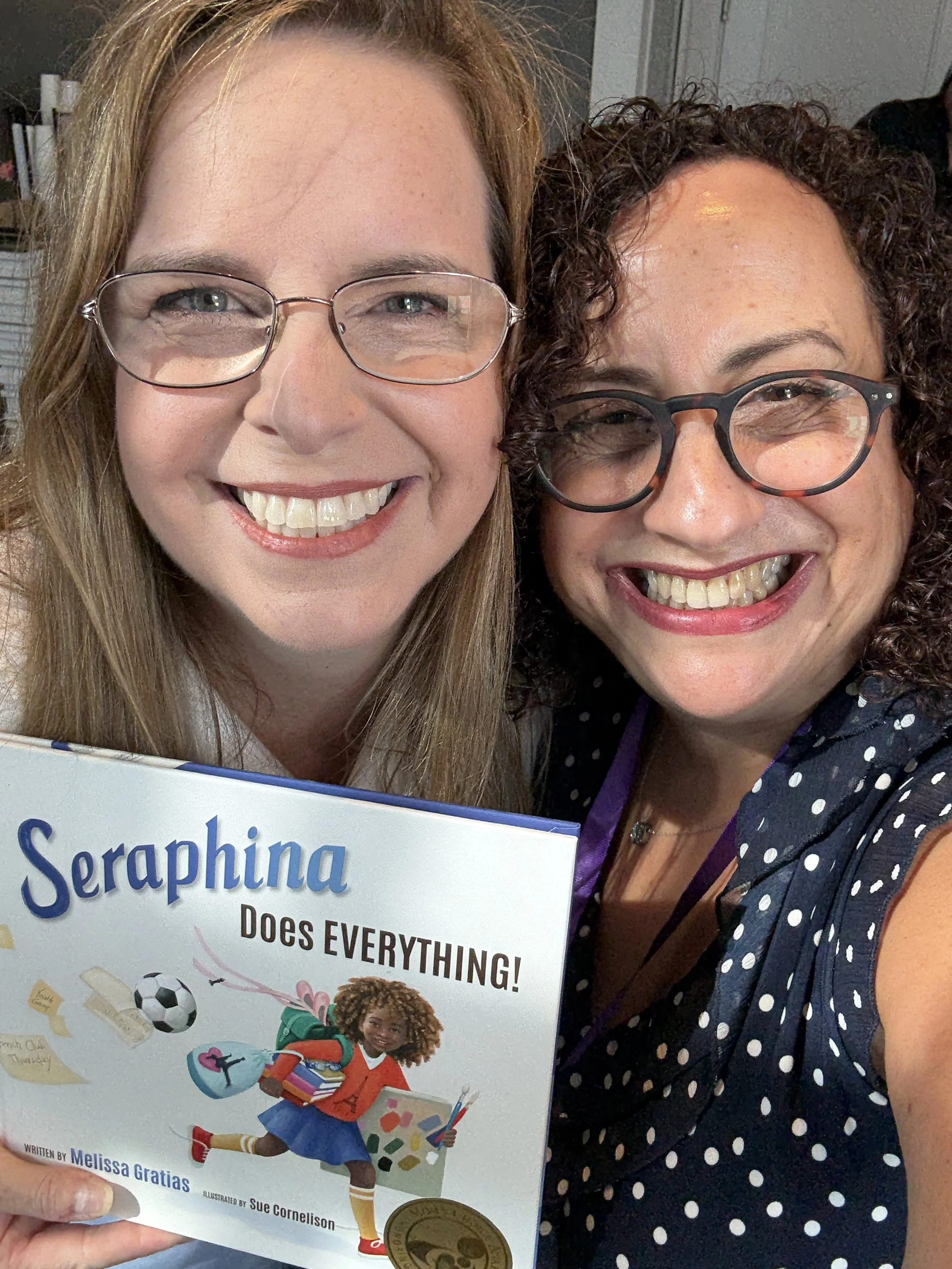
Melissa Gratias and Linda Samuels

Getting and staying organized requires making lots of decisions. One of the conference sessions about the brain and decision-making was presented by productivity expert, colleague, and fellow blogger, Melissa Gratias, PhD. She said, “The more choices, the more cognitively taxing.”  

In another session on chronic disorganization and aging, Beth Nolan, PhD, a gerontology expert, also discussed decision-making. She mentioned that one way we can help our clients with decision-making is by “being aware of the energy it takes.” Decision fatigue can become even more pronounced when compensating for physical changes or conditions.

Making decisions is an integral part of most virtual organizing sessions. I provide support to my clients and consider their energy level as they:

  • Weigh various options

  • Choose what to keep or release

  • Decide what step is next

  • Select what to include or exclude from their schedules


2. Change Barriers Can Be Overcome

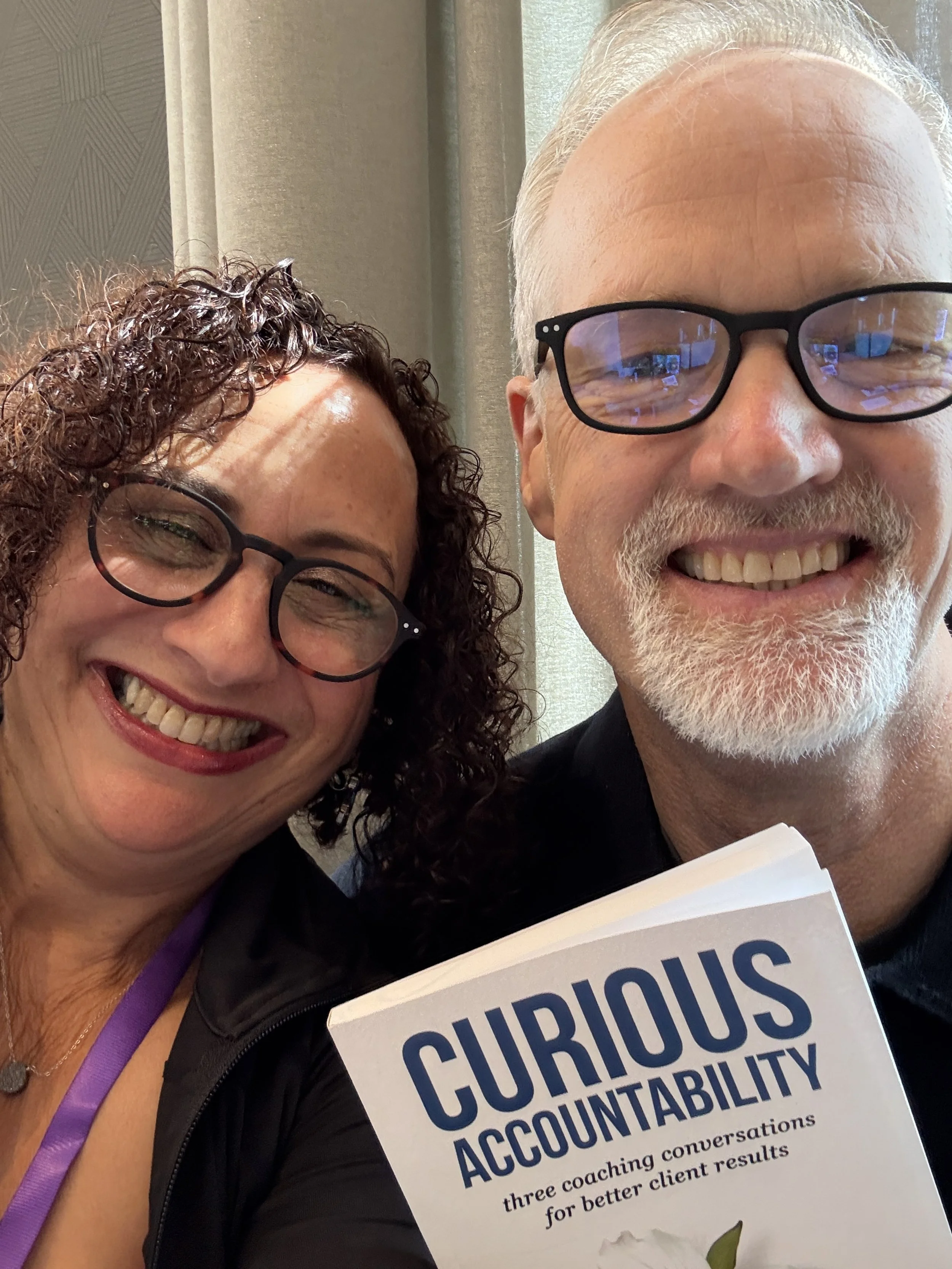
Linda Samuels and Cameron Gott

Change was another topic that surfaced throughout the conference. In the session on tools to help your ADHD clients with their organizing goals, presented by Executive ADHD Coach, trainer, podcast host, author, and friend, Cameron Gott, PCC, he spoke about change.

Cam said there are many barriers to change, especially when ADHD is in the mix. The “ADHD hard place” exists in the space between being aware of the issues and actualizing the change you seek. Some of these ‘change’ barriers include:

  • Engaging in negative self-talk

  • Having lots of rules

  • Having difficulty prioritizing

  • Being challenged with activating

  • Experiencing a lack of focus

  • Getting easily distracted

One of the tools Cam suggested is using curiosity to bring about change. However, curiosity can also act as a barrier to change. As a barrier, it can appear as:

  • Doing endless research

  • Going down rabbit holes

  • Engaging in time sucks

However, Cam said you can reframe curiosity as a resource. He said, “Bring curiosity to a dilemma.” This will help you focus and take a more proactive approach.

While my virtual organizing clients desire change, they often face internal and external obstacles. However, with support and accountability, we work together to identify these challenges and try different ways to overcome them.


Bring curiosity to a dilemma.
— Cameron Gott, PCC


3. Connection is Essential

Carrie M. Lane

The last conference session, “Qualitative Research, Connective Labor & Professional Organizing,” was presented by Carrie Lane, PhD, an anthropologist and author of More Than Pretty Boxes – How the Rise of Professional Organizing Shows Us the Way We Work Isn’t Working.

“Connective labor,” which is “work that relies on empathy, human interaction, and mutual recognition,” was one of the ideas Carrie discussed. She referenced her friend’s book, The Last Human Job, written by Allison Pugh, a sociologist and author.

Carrie reminded us that “Our job as organizers requires the human connection – an intimate, nonjudgmental connection.”

While technology and AI keep advancing into our daily lives in many ways, nothing can replace human interaction and connection. I value the relationship I have with my clients. By building trust, showing compassion, and remaining nonjudgmental, I provide support as they work on growth and positive change.


Decision-Making, Change, Connection, and Virtual Organizing

There are many ways I support my virtual organizing clients. Are you struggling with making decisions, creating change, or feeling disconnected from others? What becomes possible when you get the help you need? Which ideas resonate most with you?

I’d love to hear your thoughts. I invite you to join the conversation.


How Can I Help?

Do you feel overwhelmed, stuck, or disorganized? I’m here to help! Virtual organizing is an extraordinary path forward – Local feel with a global reach.

Let’s talk. I’m easy to reach.

Getting organized is possible, especially with support.
 
 
3 Inspiring Time Questions That Will Help You Make Thoughtful Choices

The decisions you make relate to different points in time: the past, present, and future. Although you may not always view your choices this way, considering these time parameters can help reduce decision fatigue and create clarity surrounding decision-making.

Making thoughtful decisions can be challenging. Some common decision-making obstacles include:

  • Having too many choices

  • Lacking clarity

  • Feeling rushed

  • Asking unhelpful questions

  • Deciding when you’re exhausted

  • Being afraid to make the wrong choice

Any of these challenges can cause overwhelm, procrastination, or paralysis. However, when you ask questions based on time, it can cut through the noise, clarify your options, and motivate action.


1. Question to Let Go of the Past

What’s weighing down your backpack that needs to be released?
— James Clear

In a recent edition of James Clear’s 3-2-1 newsletter, he explained how “unfinished tasks” carried in your “invisible backpack” weigh you down. Many of these tasks are ones you will think you “should do,” but will probably never get around to.

Clear suggests two strategies. To “lighten the load: finish the task or let it go.” Applying a past timeframe to your decision about completing or releasing a task can help.

Consider these questions:

  • How long have you been worrying about and carrying these tasks with you?

  • Are past goals or commitments holding you back?

  • Which ones are no longer relevant, important, or necessary?


2. Question to Improve the Present

What small change could you make to your surroundings that would steer you toward good habits and away from distractions?
— James Clear

In another 3-2-1 newsletter, Clear encourages making tiny tweaks to your environment to support building better habits and reducing distractions. Only you know which habits you want to strengthen and which distractions are getting in your way.

Using the present timeframe idea to make proactive choices can be effective here. To do this, think about a current habit you want to build or improve. For example, let’s say you often run late to appointments. This is a source of stress for you and the people in your life. You want to be more punctual, yet find it challenging to get out of the house on time. Let’s say chronic lateness is caused by disorganization at home or your tendency to hyperfocus, which interrupts your sense of time.

Making a slight change in your environment to mitigate distractions and support a better habit could include things like:

  • Gather everything you need the night before

  • Wake up earlier to prepare

  • Use labeled timers to help with transitions and activation


3. Question to Imagine the Future

What will my future-self thank me for doing now?
— Stephanie Sarkis, PhD

In Ari Tuckman’s book The ADHD Productivity Manual, he shares one of his favorite questions posed by Stephanie Sarkis, PhD. She asks, “What will my future-self thank me for doing now?”

Let’s apply the future timeframe lens to this inquiry. While the question asks you to do something in the present, it’s in service of your future self.

Think about a goal you want to achieve. Maybe it’s organizing your legal and end-of-life papers, downsizing, or eating healthier. None of these will be realized in the future without taking action now.

Embrace the future construct. Visualize what ‘done’ will look and feel like. This will motivate you now to take action and accomplish the future results you desire.


How to Make More Thoughtful Choices?

Making wise decisions begins with asking good questions. Including a time perspective can clarify your choices. Do you consider the past, present, and future when making decisions? How does using a time construct affect you?

I’d love to hear your thoughts. I invite you to join the conversation.


How Can I Help?

Do you need support with organizing, letting go, or managing your time? I’d love to help! Virtual organizing is an extraordinary path forward – Local feel with a global reach.

Let’s talk. You can:

Organizing your time and space is possible, especially with support.
 
 
7 Inspiring Resources to Quickly Motivate You to Declutter Now

If you have a little clutter, a lot, or somewhere in between, you can benefit from editing and letting go. What happens when you hold onto things that no longer serve you? What results when your ‘stuff’ takes up too much physical, emotional, or energetic space?

Clutter can intensify feelings of:

  • Overwhelm

  • Anxiety

  • Stress

  • Frustration

  • Hopelessness

It can significantly affect your daily life, sense of agency, self-esteem, and energy.

The good news is that you can change your relationship with clutter and live with more ease. I’ve compiled a list of seven resources to help motivate you to declutter. From simple questions to client-inspired experiences to advice from experts, you’ll find what you need to support your decluttering journey.


Seven Resources to Motivate Decluttering

1. Commitment – Is Decluttering Worth It?

Let’s face it. Decluttering takes effort and time, and you might feel you have a limited supply of both. Ciéra Cree interviewed me for the Livingetc article, “Is Decluttering Worth It? Experts Say Yes – and Highlight Why a Clutter-Free Space Feels So Good.”

Only you can decide if decluttering is worth it. As shared in the article, “Countless clients of mine have experienced the positive effects of decluttering their space…they feel relief, as if a weight has been lifted. They are more energetic, productive, and optimistic about their space.”


2. Well-Being – What is Clutter’s Impact on Mental Health?

Clutter can negatively affect your mental health and well-being. If you are looking for several valuable resources that dive into the impact of clutter on your life and some helpful tools, check out my article, “One Excellent Tool to Assess Clutter’s Impact on Your Mental Health.”

The article includes links to my interviews with Melissa Tracey for

  • “How Clutter Creates Stress and Anxiety: Strategies for Decluttering” – Houselogic article

  • “You’ll Never Look at Your Home’s Clutter the Same” - The Housing Muse podcast


3. Observation – Does Clutter Blindness Affect You?

How can you declutter if you are clutter blind? Ciéra Cree interviewed me for the Apartment Therapy article, “4 Signs You May Be Struggling with ‘Clutter Blindness’ – And How to Fix It for Good.”

I defined clutter blindness as “the experience of having clutter in your life that you no longer see.”

Cultivate curiosity by developing awareness of clutter by purposefully noticing what’s around you. Focus on heightening your awareness. This will “help shift your internal perspective as well as your actual view of the physical clutter.”


4. Motivation – What Are the Top Reasons That Motivate Decluttering?

Significant life events can make the decluttering process easier and faster. This is because the reasons to declutter are clear. Decision-making goes more quickly and less stressfully because your choices are aligned with your goal.

The five top decluttering motivators are:

  • Moving – Downsizing, upsizing, or right-sizing

  • Cycling – Revolving door stage when kids leave and return home frequently during the college years and beyond

  • Surprising – Experiencing extreme weather events that damage possessions

  • Ending – Handling deceased loved one’s possessions

  • Stabilizing – Adjusting the environment to accommodate unanticipated medical or mental health conditions

To learn more, read my post, 5 Strong Motivation Reasons to Get Rid of Your Clutter.”


Significant life events can make the decluttering process easier and faster.
— Linda Samuels, CPO-CD®, CVOP™

5. Distress – What to Do First When Overwhelmed by Clutter?

Does clutter overwhelm you? If so, you’re not alone. You will love this resource if you’re curious about excellent first-step strategies.

Caroline Bologna recently interviewed me for the HuffPost piece, “The First Thing Professional Organizers Do When They’re Feeling Overwhelmed by Mess.”

There are many practical approaches. I prefer to change my internal state first to gain control so that I can more calmly and easily alter the external state, the clutter. You can achieve this by taking several slow, deep breaths. Then, shift your thoughts to more proactive and positive messages.


6. Solutions – Where Are the Best Tips for Decluttering and Organizing?

For over thirty years, I’ve been helping clients declutter and organize. Fast-forward to 2009 when I started blogging about organizing and life balance.

The categories I write about include clutter, letting go, virtual organizing, mindfulness, parenting, motivation, change, and more. Use the Browse the Blog feature or the search icon to learn more about a specific topic that interests you.

Many excellent organizing blogs are great resources for tips and strategies. Each blog has a distinct focus and personality. Feedspot recently featured its favorite organizing blogs on two lists, and I was thrilled to be included.

They are:


7. Progress – How Can the Decluttering Process be Simplified?

One of my favorite creatives and authors, Todd Henry, shared an excellent question in his book, Daily Creative. While he didn’t pose the question specifically for clutter challenges, I thought it could be effectively used in that context.

Todd asked,

“What’s the very next thing I need to do to make any kind of progress?”

I appreciate three aspects about this question and why it’s so powerful. They are:

  • The emphasis is on “the very next thing.” This implies not worrying about the entirety of your goal but instead reducing the scope to take one small next step at a time.

  • The qualifier “any” encourages you to start decluttering wherever you choose.

  • Including “progress” focuses your effort on moving forward rather than on perfection or completion. A progress pursuit is easier to measure, reduces overwhelm, and boosts motivation.


What Motivates Decluttering?

Is clutter challenging for you? What are your go-to resources that motivate you to declutter?  I’d love to hear your thoughts. I invite you to join the conversation.


How Can I Help?

Do you want support organizing, editing, or decluttering? I’d love to help! Virtual organizing is an extraordinary path forward – Local feel with a global reach.

Please schedule a Discovery Call, email me at linda@ohsorganized.com, or call 914-271-5673. Living clutter-free is possible, especially with support.