Posts tagged compassion
How to Meet Change with More Compassion and Ease

When you think of compassion and ease, what sensations do you feel in your body? What images come to mind? What stories or messages do your thoughts reveal?

Now, think about change. Are you experiencing sensations, images, and thoughts that feel quite different from those associated with compassion and ease?

No one has the same experience, and yours will likely differ from mine. For me, thoughts of compassion and ease bring calm, care, and gentleness. My breath feels steady and slow. My mind feels clear. I feel more grounded, present, and better able to navigate in the moment.

When I think about change, my initial reaction is to brace. I can feel my shoulders tense, my jaw clench, and a funny sensation in my stomach. Not all change feels that way. Sometimes, positive anticipation and excitement are present. But rarely with change is my first thought or feeling calm or ease-filled.

What becomes possible when you can meet change with compassion and ease?


Meet Change More Gently
Last week, I wrote about the Tiny Shifts Experience I’ve been participating in, led by Dr. Elisha Goldstein. In one of his prompts, he guided us to “Allow a little more ease” throughout the day.

Before starting the Tiny Shifts program, I had been considering “ease” as my guiding principle, my North Star for 2026. When Elisha encouraged us to “Allow a little more ease,” it confirmed what I was already thinking.

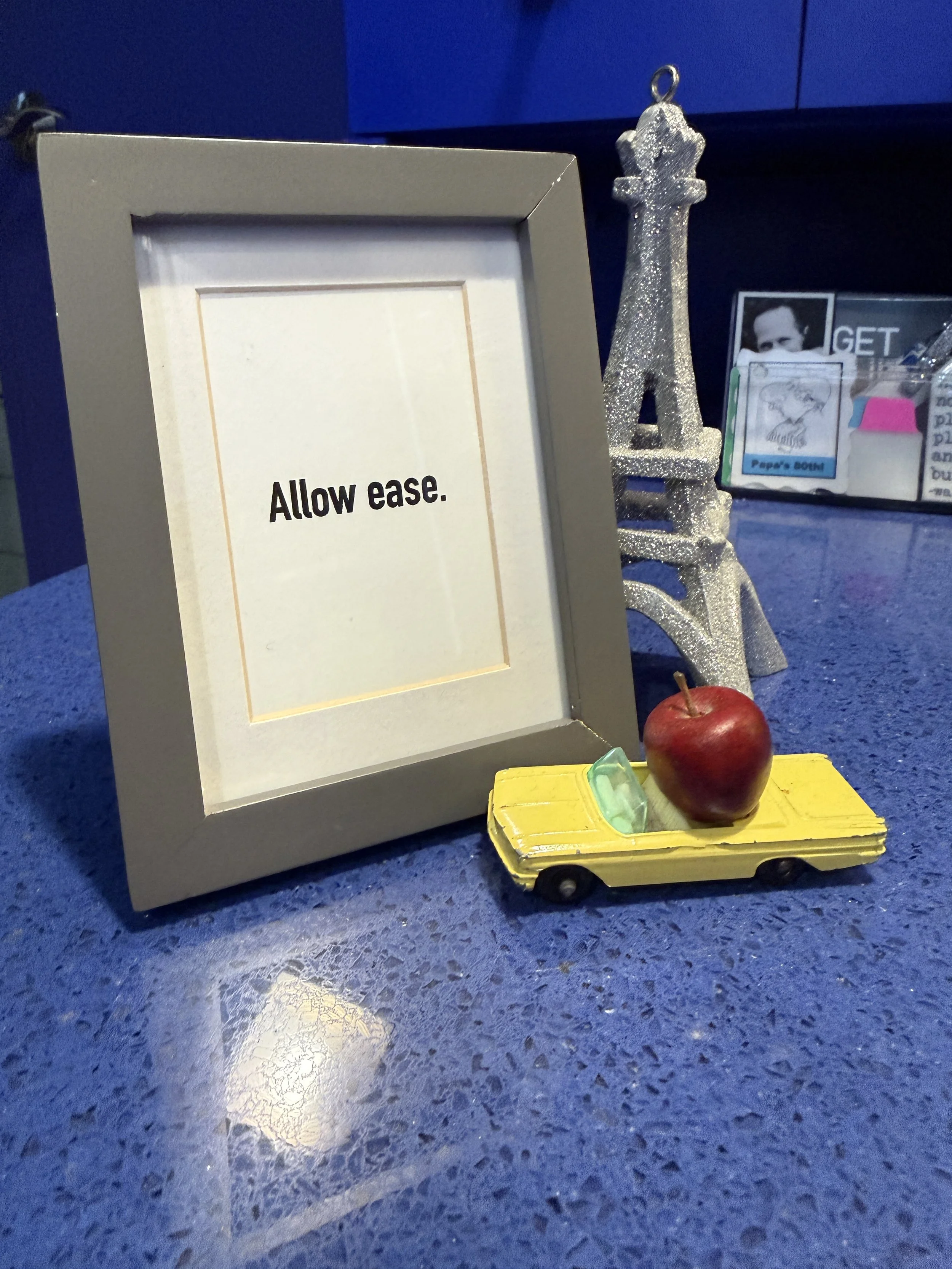
This week, I tweaked the message. My focus for 2026 will be “Allow ease.” I will meet each day, including the challenges, joys, tasks, commitments, and changes I seek, and those thrust upon me, with more compassion and ease.


Engage in Strategies That Encourage Ease

When I notice I’m getting stressed, I will lean on these two strategies.

Strategy 1: Embody Ease with the Breath

This one is so simple. I’ve already used it half a dozen times recently, and it’s incredibly effective. It takes less than a minute.

To Embody Ease:

  • Pause what you’re doing.

  • Gently close your eyes or shift your gaze downwards.

  • Thinking silently, pair these two words while you breathe.

  • Inhale > Allow.

  • Exhale > Ease.

  • Repeat the sequence one or more times until your nervous system calms.

Strategy 2: Ask One Simple Question

You can ask this question on its own, before, or after using the breathing strategy. Listen to what arises and then focus on making a small shift.

Ask this:

Where can I allow more ease right now?

The query will help you identify where your tension or stress lies. How can you change your experience in the moment and lean into more ease? Is there a physical place in your body you can soften? Is there an unhelpful thought loop that needs to be released or noticed? Where is ease possible for you right now?

Where can I allow more ease right now?
— Linda Samuels, CPO-CD®, CVOP™


Can You Shift How You Approach Change?

Change can be exciting or stressful. By integrating strategies that foster compassion and ease, you can move forward with greater grounding and calm. What is your relationship to change? How could creating more ease alter your relationship with change? Which ideas resonate with you?

I’d love to hear your thoughts. I invite you to join the conversation.


How Can I Help?

Do you feel overwhelmed, disorganized, or stressed? Do you want to embrace change this year, yet feel stuck? I’m here to help! Virtual organizing is an extraordinary path forward – Local feel with a global reach.

Let’s connect! I’m easy to reach.

Embracing change and getting organized are possible, especially with support.


3 Helpful Things I Learned That Will Benefit My Virtual Organizing Clients

Attending organizing conferences is one of the highlights of my year. I learn interesting things, dedicate time to professional growth, connect with dear colleagues, and meet new people.

I just got back from the Institute for Challenging Disorganization’s (ICD) conference in Atlanta. Colleagues came from all over the United States and around the world, including Canada, Mexico, Spain, the Netherlands, and New Zealand. We learned together from experts on decision-making, time management, ADHD, autism, hoarding disorder, aging, dementia, and more.

Earlier this month, I participated in a meditation and writing retreat led by my dear friend and life coach, Yota Schneider. She shared a quote from John O’Donohue that feels relevant to the ideas I’m about to share. He said, “Nothing opens up the mind like the glimpse of new possibility.”

It’s the “glimpse” of what is possible that fosters hope and encourages change for my virtual organizing clients. I hope what I’m about to share will also be relevant and helpful for you.


3 Helpful Things I Learned at the Organizing Conference That Can Benefit You

1. Decision-Making Takes Energy

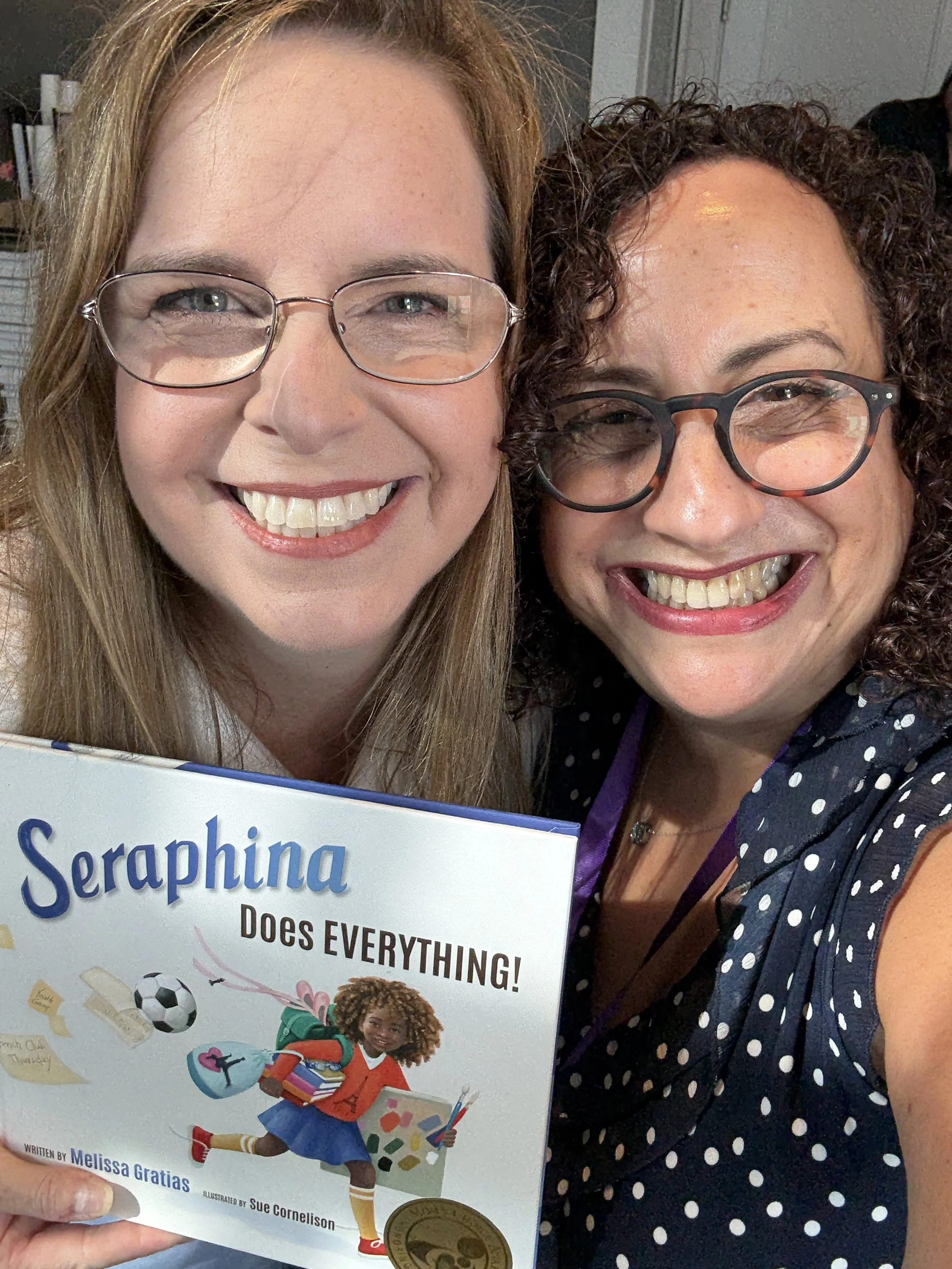
Melissa Gratias and Linda Samuels

Getting and staying organized requires making lots of decisions. One of the conference sessions about the brain and decision-making was presented by productivity expert, colleague, and fellow blogger, Melissa Gratias, PhD. She said, “The more choices, the more cognitively taxing.”  

In another session on chronic disorganization and aging, Beth Nolan, PhD, a gerontology expert, also discussed decision-making. She mentioned that one way we can help our clients with decision-making is by “being aware of the energy it takes.” Decision fatigue can become even more pronounced when compensating for physical changes or conditions.

Making decisions is an integral part of most virtual organizing sessions. I provide support to my clients and consider their energy level as they:

  • Weigh various options

  • Choose what to keep or release

  • Decide what step is next

  • Select what to include or exclude from their schedules


2. Change Barriers Can Be Overcome

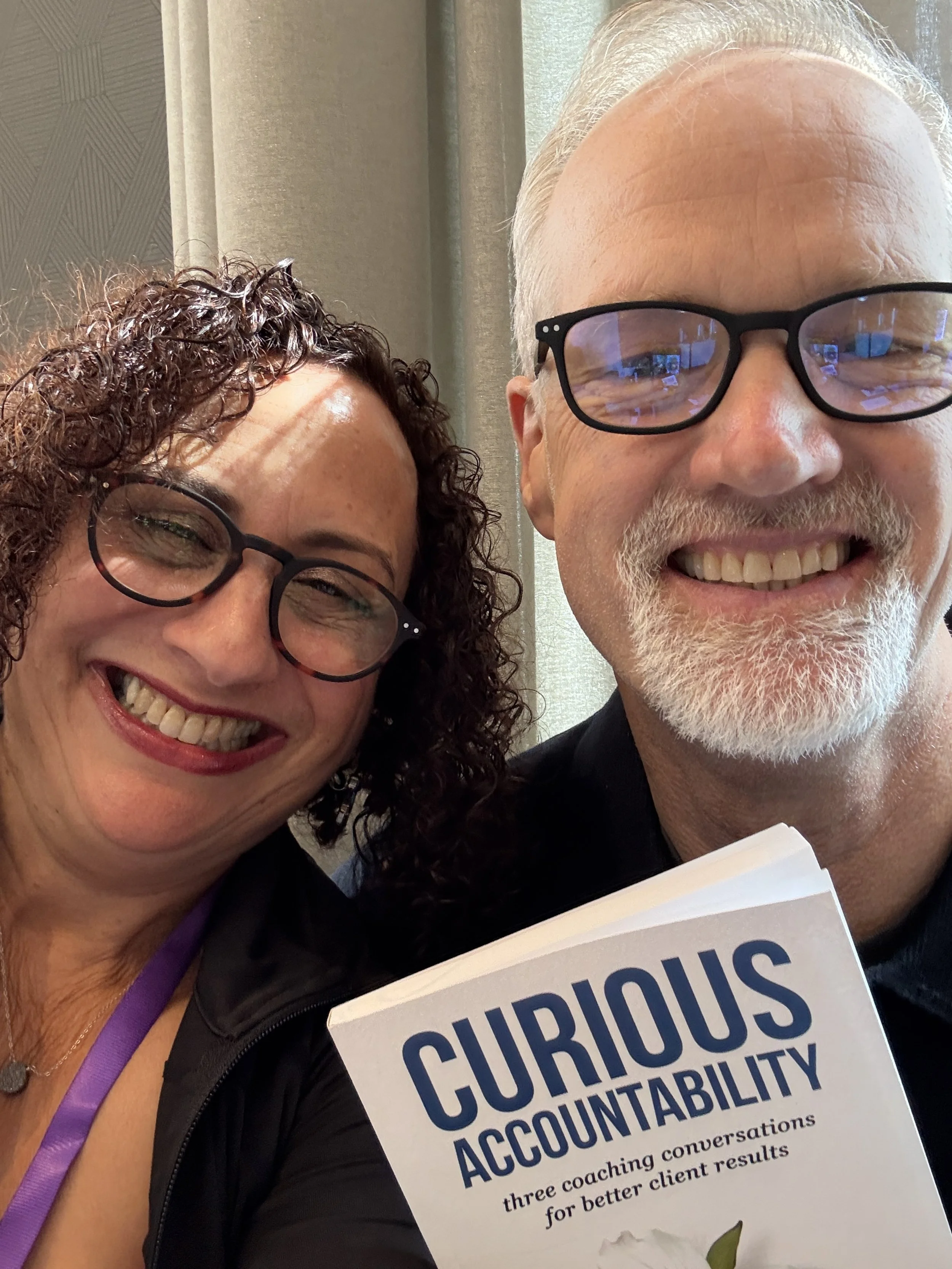
Linda Samuels and Cameron Gott

Change was another topic that surfaced throughout the conference. In the session on tools to help your ADHD clients with their organizing goals, presented by Executive ADHD Coach, trainer, podcast host, author, and friend, Cameron Gott, PCC, he spoke about change.

Cam said there are many barriers to change, especially when ADHD is in the mix. The “ADHD hard place” exists in the space between being aware of the issues and actualizing the change you seek. Some of these ‘change’ barriers include:

  • Engaging in negative self-talk

  • Having lots of rules

  • Having difficulty prioritizing

  • Being challenged with activating

  • Experiencing a lack of focus

  • Getting easily distracted

One of the tools Cam suggested is using curiosity to bring about change. However, curiosity can also act as a barrier to change. As a barrier, it can appear as:

  • Doing endless research

  • Going down rabbit holes

  • Engaging in time sucks

However, Cam said you can reframe curiosity as a resource. He said, “Bring curiosity to a dilemma.” This will help you focus and take a more proactive approach.

While my virtual organizing clients desire change, they often face internal and external obstacles. However, with support and accountability, we work together to identify these challenges and try different ways to overcome them.


Bring curiosity to a dilemma.
— Cameron Gott, PCC


3. Connection is Essential

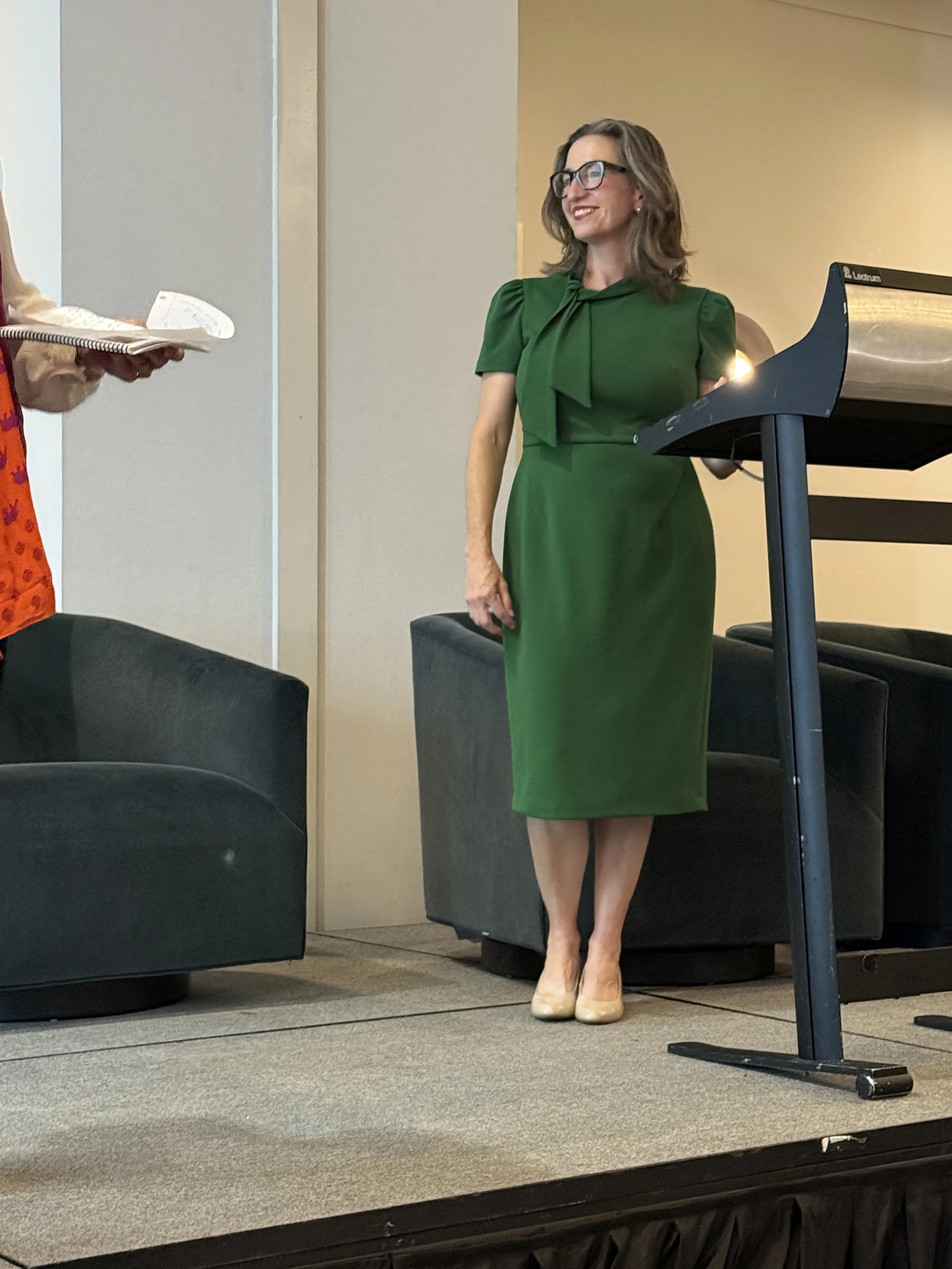
Carrie M. Lane

The last conference session, “Qualitative Research, Connective Labor & Professional Organizing,” was presented by Carrie Lane, PhD, an anthropologist and author of More Than Pretty Boxes – How the Rise of Professional Organizing Shows Us the Way We Work Isn’t Working.

“Connective labor,” which is “work that relies on empathy, human interaction, and mutual recognition,” was one of the ideas Carrie discussed. She referenced her friend’s book, The Last Human Job, written by Allison Pugh, a sociologist and author.

Carrie reminded us that “Our job as organizers requires the human connection – an intimate, nonjudgmental connection.”

While technology and AI keep advancing into our daily lives in many ways, nothing can replace human interaction and connection. I value the relationship I have with my clients. By building trust, showing compassion, and remaining nonjudgmental, I provide support as they work on growth and positive change.


Decision-Making, Change, Connection, and Virtual Organizing

There are many ways I support my virtual organizing clients. Are you struggling with making decisions, creating change, or feeling disconnected from others? What becomes possible when you get the help you need? Which ideas resonate most with you?

I’d love to hear your thoughts. I invite you to join the conversation.


How Can I Help?

Do you feel overwhelmed, stuck, or disorganized? I’m here to help! Virtual organizing is an extraordinary path forward – Local feel with a global reach.

Let’s talk. I’m easy to reach.

Getting organized is possible, especially with support.


3 Ways to Joyfully Prepare for a Compassionate Holiday Season

Are you feeling the fast whoosh of time passing with the holiday season arriving, the elections looming, and the year ending? It’s a lot to take in. You may feel overwhelmed. Perhaps you’re thinking about what goals you wanted to accomplish this year, the time left to do it, and what is actually possible.

Maybe your thoughts are occupied with ‘regular’ life maintenance to-dos plus hundreds of holiday-related tasks, including gift shopping, holiday meal prepping, guestroom readying, travel planning, and family and friends’ gatherings.

Breathe. You’re human, and you’re juggling many things.

I often say that life is in the joyful doing and presence of the moment. And while that’s all well and good, when you’re stressed and overwhelmed, accessing that presence can be more challenging.

With so much going on with work and family, externally and internally, this time of year, making tiny adjustments is helpful. Infusing compassion and mindfulness into your thoughts and actions will encourage a more joyful, fulfilling, and happier holiday season.

I offer you a thought, question, and strategy to help.


3 Ways to Prepare for a Compassionate Holiday Season

1. One Thought: “We don’t have to be perfect.”

Let’s remove the idea of perfection from the holiday season. Why impose more pressure, stress, or unrealistic expectations on yourself or others?

Try channeling your perfectionism energy differently. Focus your energy on one of these options instead:

As the Noom app said about overcoming thought distortions, “…it’s about recognizing that we don’t have to be perfect. We’re human.”

Which reframe of perfectionism (one suggested or something else) is helpful for you?

Breathe. You’re human, and you’re juggling many things.
— Linda Samuels, CPO-CD®, CVOP™

2. One Question: “Am I putting myself in good positions and creating the conditions for success?”

One of my favorite recent discoveries is James Clear’s weekly 3-2-1 email, which my client told me about. The idea he wrote about last month feels relevant and worth sharing.

Clear wrote, “Forget about the outcome and focus on what precedes it.” He asks, “Am I putting myself in good positions and creating the conditions for success?”

Consider Clear’s question in the context of which actions and thoughts you can focus on to create a joyful, compassion-filled holiday season. They might include:

What will you choose to focus on to create a positive holiday season?

We don’t have to be perfect.
— James Clear

3. One Strategy: “Accept help.”

Do you tend to do everything yourself? Perhaps you don’t want to impose on others. Or, Seth Godin suggests you might think, “Doing the tasks is more efficient than coordinating the help.” Either philosophy results in you doing all the work, which can lead to resentment and exhaustion. Neither of those is a recipe for happy holidays.

Whatever the season, enlisting and accepting help improves your life. We’re human and benefit from the support and interactions with others. What type of help will benefit your life and infuse more ease? Who can you ask for help? How will that change your experience? If you’re having guests over and they offer to help, lean in and say “Yes.” Have tasks ready to delegate. It will make them feel comfortable and reduce pressure from your list.

Godin says, “It’s much more productive to accept help. When we have a project, part of the work is to enlist others in figuring out how to make the change we seek.”

Let me know if you’re stressed and need a thought partner, decluttering and organizing guide, planning help, or accountability buddy. In my virtual organizing sessions, I offer one-hour focused sessions, ongoing support, and personalized guidance to help you with your goals and challenges. I’m available and am ready to help.


Human Holiday

Do you know the 1953 movie Roman Holiday, starring Audrey Hepburn and Gregory Peck? This season, I encourage you to embody a Human Holiday.

  • Let go of what you can.

  • Invite in what you want.

  • Enlist the help you need.

For a less stressful and happier holiday season and beyond, I’m here to help. Please schedule a Discovery Call, email me at linda@ohsorganized.com, or call 914-271-5673. Organization and ease are possible, especially with support.

How to Joyfully Grow and Thrive When Life Feels Like Complete Chaos

When the world within and around you is drenched in chaos, how can you thrive? Humans are complicated beings. We can simultaneously hold profoundly opposite ideas, emotions, and thoughts. We can experience love and safety when wrapped in our loved one’s embrace. We can also experience intense pain when we hear news about wars, hate, displacement, and heartache. The hard stuff can weigh so heavily on you that it can feel impossible to thrive. You might even feel guilty about experiencing joy when there is so much suffering.

Several years ago, I listened to a conversation about opening and cultivating the human heart with Frank Ostaseki, co-founder of The Zen Hospice Project, and Roshi Joan Halifax, Ph.D., Buddhist teacher and Founder of Upaya Zen Center. One of the ideas that resonated with me then and even more now is that hope is essential, especially in a “time of radical uncertainty.” Hope is not about “sappy positivity,” bypassing the truth of suffering, or thinking that everything will be OK.


Thoughts About Hope

During the conversation, Ostaseki and Halifax shared their perspectives about hope:

  • Hope helps us go beyond the rational.

  • Hope can be the flip side of fear.

  • Hope is not based on optimism.

  • Hope is a surprise. It’s light and buoyant and not about a particular outcome.

  • Hope reflects an understanding that what we do matters, even though we don’t know how, why, who it will touch, or what will unfold from our actions.

  • Hope is resistant to futility.

  • Hope resides in resourcefulness.

  • Hope speaks to possibilities.

While you might feel powerless to change the world, you can make your corner more joyous and hope-filled.
— Linda Samuels, CPO-CD®, CVOP™

31 Ways to Thrive and Feel Joyful During Chaotic Times

Having hope contributes to being able to thrive. Without it, we give up. Take an active role in cultivating hope. Nourish yourself and others, and create a solid base to grow from. During chaotic times, there are so many things that seem futile. Instead, focus on engaging in simple actions or observations in your control. Hope will grow from there. Consider:

  • Watching the fall leaves gently float to the ground

  • Taking a walk along the river with a good friend

  • Getting a good night’s sleep

  • Eating a nutritious and delicious meal

  • Feeling the warm sun on your face

  • Hugging your loved ones

  • Reading or listening to uplifting books, articles, and podcasts

  • Planning something you will look forward to doing

  • Taking a road trip, even a local one

  • Brewing and slowly sipping a hot cup of tea

  • Curling up on the sofa, wrapped in your favorite soft, cozy blanket

  • Learning something new

  • Listening to your favorite music

  • Practicing mindfulness meditation

  • Organizing that one room that is ready to be tamed

  • Helping something to grow

  • Focusing on the inhale and exhale of your breath

  • Making something with your hands

  • Pausing in the middle of your day to regroup and reset

  • Listening to the sounds of laughter

  • Laughing

  • Writing in your journal

  • Smiling at a stranger

  • Having a ‘do nothing’ day

  • Checking in by phone, email, text, or in person on your loved ones

  • Doing something outside of your comfort zone

  • Helping a client set boundaries, establish priorities, and get unstuck

  • Noting what you are grateful for

  • Offering compassion and kindness to someone you do or don’t know

  • Refusing to give up

  • Listening to your intuition


Life is a mixture of joy, pain, and everything in between. As humans, we know this is true. Yet even so, it can be challenging to navigate the sadness when your life and the world feel so chaotic and unhinged. While you might feel powerless to change the world, you can make your corner more joyous and hope-filled. You never know how your actions or words will uplift someone else. Be gentle with yourself and others. Nourish your being to have the energy to extend more kindness and compassion to yourself and others.

What helps you thrive during challenging times? What brings you hope? How do you make your ‘corner’ better? I’d love to hear your thoughts and invite you to join the conversation.