
Posts tagged chaos
5 Life Lessons I Learned About Patience and Promising Progress

Recently, I reread the first blog post I wrote on waiting. As humans, waiting is something we do, yet we’re not always happy about it. We want things to happen quickly, effortlessly, and painlessly. However, things don’t often go that way. Our patience gets tested as waiting can be a challenging experience.

Maybe you’re working toward a big goal that might take months, years, or even decades. Perhaps your energy is low, and progress looks different from what it did earlier in your life. You might also lack clarity about your goal or what your next step will be.

Developing your internal resources, including patience, resilience, and agency, can be beneficial. You can also enlist help from external resources, such as haulers, handymen, trade specialists, a coach, a therapist, or a professional organizer like myself.

Progress is possible. Reaching your goals is doable. Gathering the resources to get there is essential.

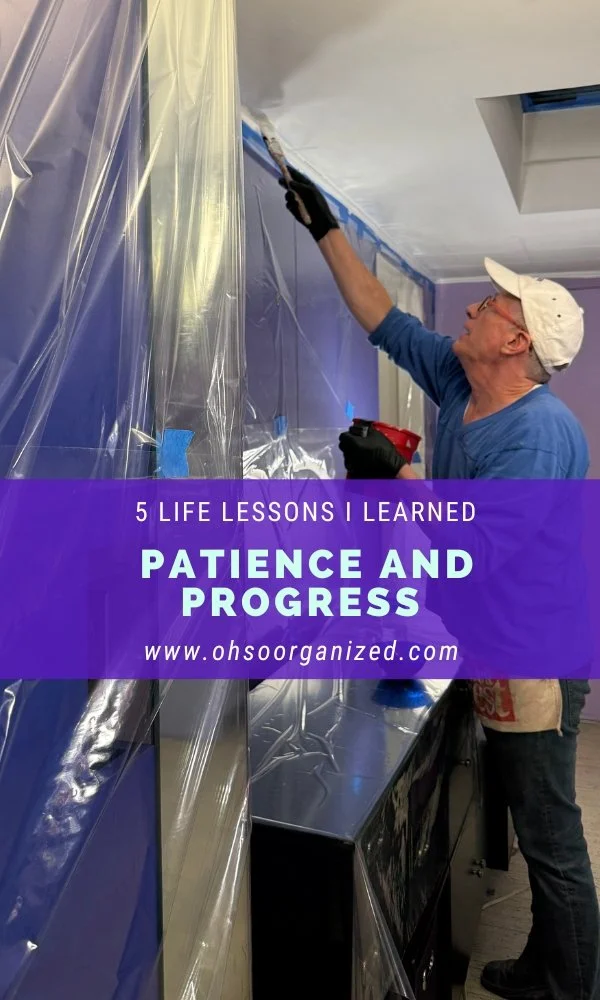
Over the past few months, my husband and I have been working on some home projects. They have taken different amounts of time to complete, and some are still ongoing. The biggest obstacles were setting priorities and managing time constraints. To finish these projects, we had to decide that they were still important enough to pursue. Once we agreed on that, we scheduled the time to complete them. The scheduling was pivotal. Without planning and scheduling, nothing would have happened.

During the process, I reaffirmed and learned a few things. Hopefully, some of these will resonate with you and be useful as you pursue your goals and projects.


5 Life Lessons I Learned About Patience and Promising Progress

Life Lesson #1:  I can tolerate discomfort.

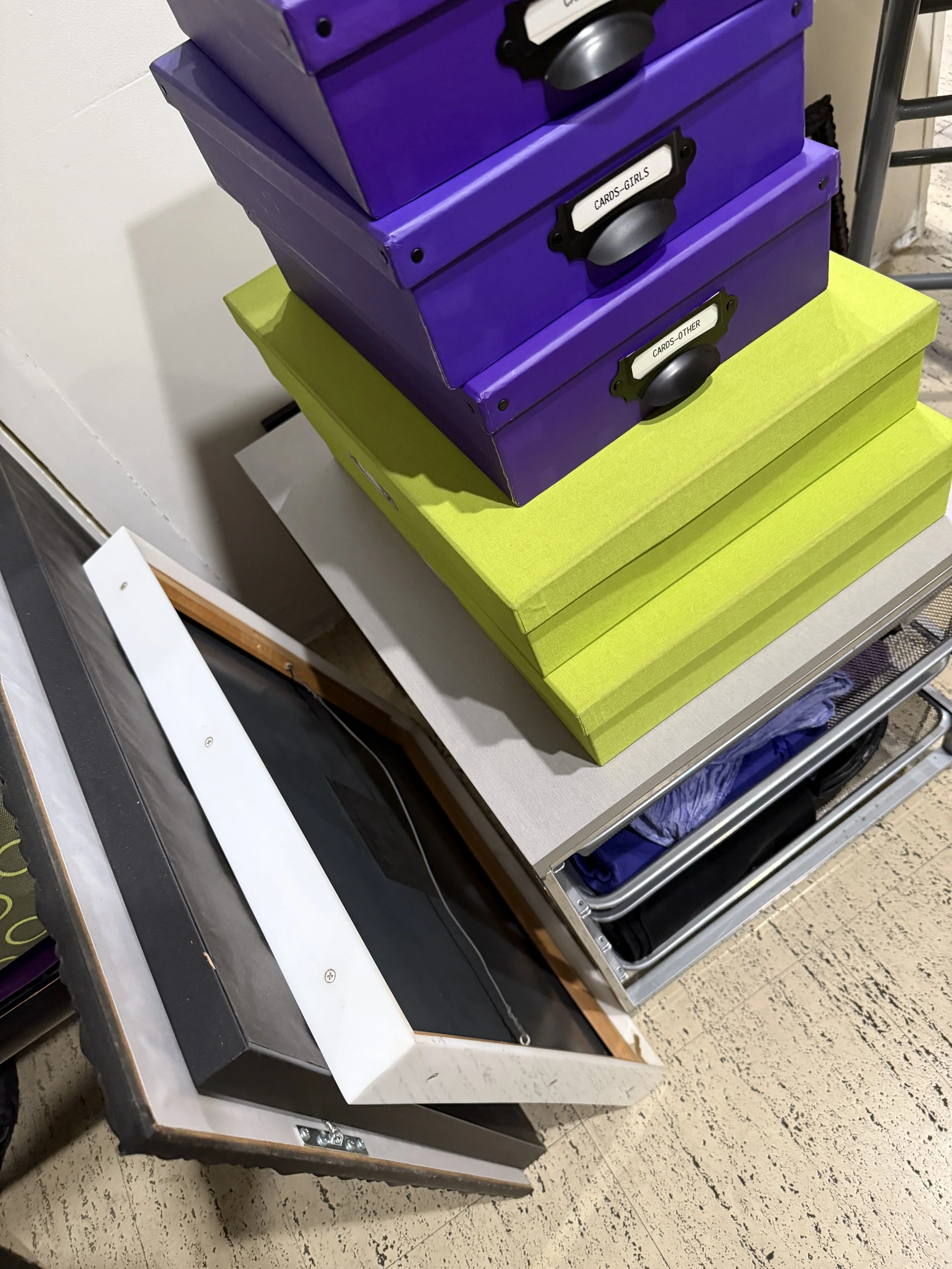
I love the final result when we improve our home. It’s hard for me to tolerate the temporary chaos that happens. Stuff gets pulled out of place, messes spread to multiple areas, and order and organization are disrupted.

I often tell my clients that things usually get worse before they get better. When you’re organizing a closet, for example, and things are pulled out, it doesn’t look great. But as you start editing, rerouting, discarding, and donating, clarity begins to emerge. Once you organize the “keepers,” everything looks and feels better. However, there's a tipping point in the middle of the project where discomfort can surface.

Even though I’m happy when we’re fixing things, I tend to feel more anxious and stressed when we’re in reno mode. That discomfort motivates me to finish what we started as soon as possible. Interestingly, I can easily handle disorder in spaces I don’t live in. But in my own home, I prefer a certain level of order, calmness, and predictability.

Although I prefer not to be uncomfortable, I am capable of tolerating discomfort. This is especially true when it’s temporary or for a good reason. Acknowledging this made me feel less stressed and more accepting of the chaos.


Life Lesson #2: I can transform temporary chaos into an opportunity to reimagine.

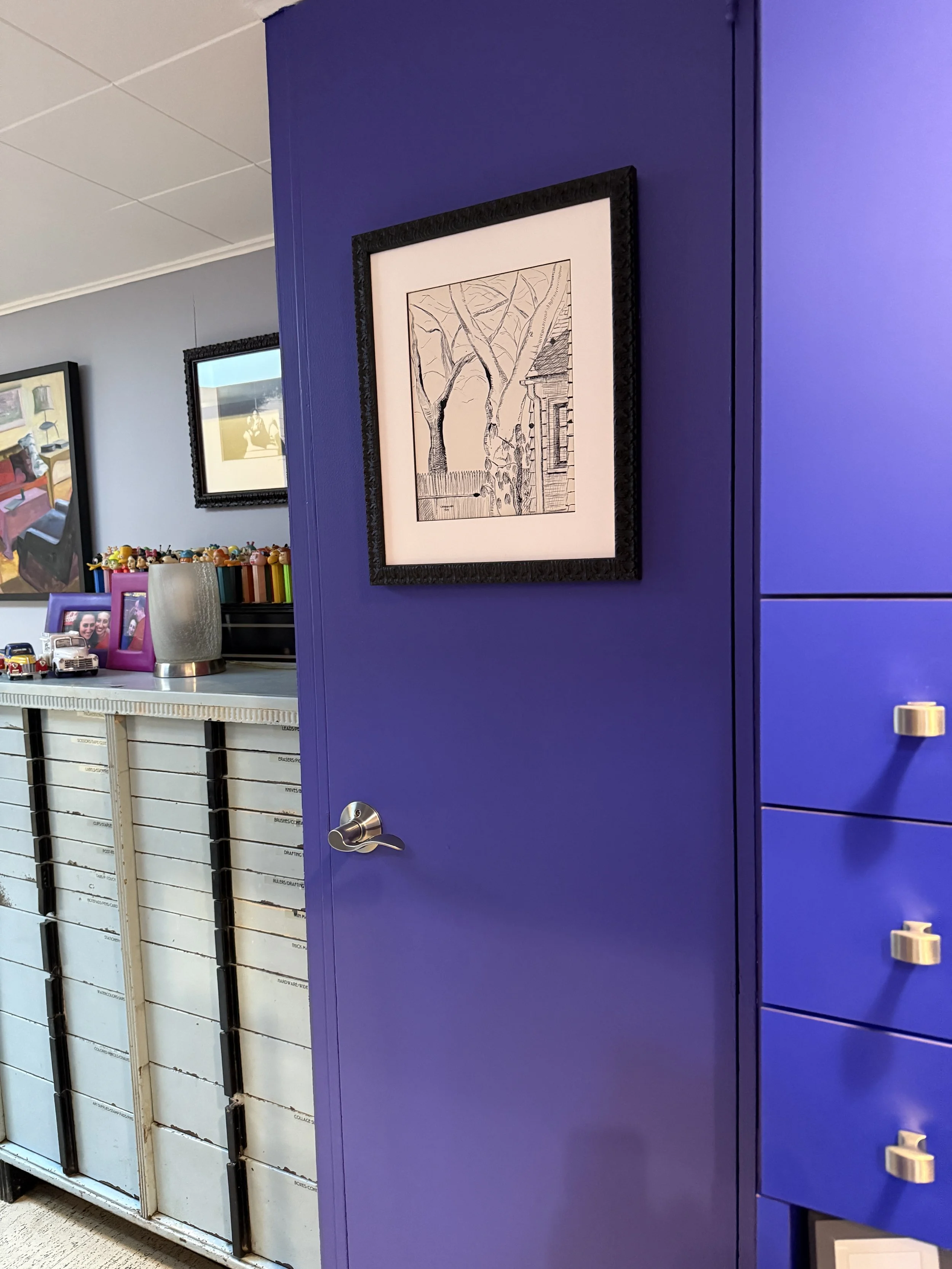
One of the benefits of taking things apart is having time to edit, question, and reimagine. We recently disrupted our entryway to spackle, paint, and do some electrical work. Doing that allowed me to let go of some things and reimagine the placement of certain items, like my Pez collection and one of the rugs.

I also felt inspired to repaint three of the cabinets. One is a big project, which I’ll wait to do in warmer weather. The other two cabinets will be done soon. Without being open to chaos and committing to the entryway project, these other projects might not move forward.

Chaos doesn’t have to be negative. It can be an opportunity to bring positive changes. The temporary chaos stirred my creativity and desire to make more improvements.


Life Lesson #3: I can finish what I start when I prioritize and plan.

This might seem obvious, but when you want to accomplish something, whether it’s organizing, home improvement, or changing a habit, dedicating time and energy to it is essential.

Deciding that something is a priority is the first step. This may involve temporarily setting other things aside while you focus your resources on the main goal. After all, you can accomplish a lot, but not all at once. Something has to give.

Once you've identified your priority, the next step is to schedule and plan dedicated time to work on it. For us, that meant working several evenings and weekends. Again, without blocking out specific calendar dates, it would not have been completed.

I can wish all I want, but without making it a priority and including it in a scheduled plan, it’s unlikely to happen. There is great potential and power in recognizing what I’m capable of when I prioritize and plan.

I can tolerate discomfort.
— Linda Samuels, CPO-CD®, CVOP™

Life Lesson #4: I can feel the joy and satisfaction that come with progress.

Done is great, but so is progress. No goal happens with one step. Progress happens one step, one action, and one commitment at a time. When working on the renovation projects, Steve and I took a moment to appreciate the progress along the way.

Momentum is a powerful force. Taking action motivates you to do more. Experiencing progress encourages further movement. Progress is satisfying and joy-inducing.

Steve and I made sure to see, feel, talk about, and celebrate the progress we've made. It was no small feat to get some of these projects started. We embraced the positive feelings that came with making progress.

Do you know the expression, “Stop and smell the roses?” For this one, let’s pause and celebrate the progress. You took action and worked hard. Now, enjoy it!


Life Lesson #5: I can be awed by my bad-ass husband.

After 42 years of marriage, I am still amazed by my husband. He is a talented man who, among his many skills, knows how to cook, play the drums, coordinate large-scale architectural woodworking projects, and handle almost any type of home improvement or repair project. He’s also a devoted volunteer, a great listener, a wonderful father, and an incredible husband and life partner.

Whether he was finishing the glass tiles in the bathroom, doing electrical work, plumbing, cutting through walls, spackling the ceiling, or painting surfaces, he not only knew what to do but also had the right tools to do it. He also taught me how to do some things, so we could work together on projects. I love that!

I am constantly inspired by Steve’s work ethic, humanity, skills, design sense, dedication, and talent. He was willing to let go of perfection to do his best and finish projects. I’m grateful for and in awe of the incredible human he is. Thank you, Honey!


How Do Patience and Progress Manifest for You?

Patience, or the lack of it, is part of being human. In fact, impatience can sometimes drive progress. When you feel stuck, progress may seem out of reach. However, leaning into that urge to move forward and pushing your patience to its limit can be one way to make progress. Prioritizing and planning are also helpful. What helps you move ahead?

Which ideas resonate most with you? I’d love to hear your thoughts. I invite you to join the conversation.


How Can I Help?

Are you ready to make progress? Do you feel overwhelmed, stuck, or disorganized? I’m here to help! Virtual organizing is an extraordinary path forward – Local feel with a global reach.

Let’s talk. I’m easy to reach.

Getting organized and making progress is possible, especially with support.


5 Courageous Coping Strategies When Life Feels Out of Control

There are times when life goes sideways. The unthinkable happens, and you feel you have no control over anything. Your mood is dark, and hope is barely accessible. Cognitively, you understand there are no guarantees in life and that chaos is present. Yet, how do you cope? What can you do when nothing makes sense, and things feel out of control?

I don’t pretend to have the answers or know what you’re experiencing. I’m navigating this challenging time, too. Yet, I have a few strategies that are helping me, which might be helpful to you.

Instead of focusing on the areas you have no control over, shift your attention. Identify and engage in what is nourishing and within your control.


5 Courageous Coping Strategies When Life Feels Out of Control

1. Supercharge Your Self-Care

Take care of yourself. During stressful times, you might ignore the basics. However, doing that makes you feel worse and less able to cope with challenges.

Recommit to self-care basics. Get enough sleep, hydrate, eat nutritiously, and move your body. Walking in nature has additional mood-boosting benefits.

Beyond essential self-care, consider getting a massage, manicure, or pedicure. Or how about taking a yoga, exercise, or meditation class?

Be kind to yourself and engage in intentional, mood-enhancing activities within your control.

Recommit to self-care basics.
— Linda Samuels, CPO-CD®, CVOP™

 2. Engage With Your Community

You might want to retreat when feeling out of sorts. However, I encourage you to do the opposite. Reach out to those who are also feeling ‘it.’ You’re not alone.

Your friends and family may be struggling, too. Connect with your loved ones. Pool your strengths while offering and receiving support.


3. Curate the Input

Scrolling social media, listening to the news, and fueling the fire may not be the healthiest choice. Cut yourself off (even if temporarily) when the external input you’re allowing adds to those out-of-control feelings.

Just as I encouraged you to eat nutritious foods to nourish your body, do something similar for your mind. Curate the input to minimize anxiety-producing thoughts and maximize ones with a more positive effect.

This could be a great time to read that new book or your favorite magazine from cover to cover. Or maybe you prefer to watch a comedy show or movie.

I’m not suggesting you ignore the outside world forever, but for this day, while building your resilience, choose to disengage with stress-inducing news. Control the input.

Identify and engage in what is nourishing and within your control.
— Linda Samuels, CPO-CD®, CVOP™

4. Make Something

There is a gift in making something from nothing. What kind of something? Maybe you like to bake, write blog posts or in journals, take photographs, write poetry, or knit scarves. Perhaps you want to paint, write music, do a craft project, or create fancy cocktails.

Take control of a joy-inducing physical activity and make something. Enjoy the process and the result.

I’ve already journaled and worked on this post. Guess what else I did? I baked (and ate) some Almond Butter Chocolate Chip cookies. Fortunately, these cookies are not only delicious but also nutritious. I just have to remember to eat them in moderation. Wish me luck.


5. Declutter Your Space

Physical disorganization and chaos in your environment can affect how you feel and function. The disarray adds to a feeling of lack of control. You don’t know where things are or have the mind space to focus.

There is mood-boosting power in decluttering and organizing. The act of doing, making a change, and then experiencing the benefits of that shift is palpable.

You can’t control everything, but you can improve your corner of the world (or desk).


Human Coping Skills

Remember, you are resilient, and you have people to lean on. To help navigate challenging times, exert control in tiny yet significant ways. This won’t change everything, but it will help to calm and ground you. What coping strategies do you use when life feels chaotic?

If you need help decluttering, organizing, planning, or grounding, I’m here for you. Please schedule a Discovery Call, email me at linda@ohsorganized.com, or call 914-271-5673. Organization and ease are possible, especially with support.


3 Positive Ways Getting Organized Will Reduce Suffering and Improve Your Well-Being

What becomes possible when you get organized enough? Will you suffer less? Will your mental health and well-being improve due to better organization and flow?

For over 30 years, I have been a professional organizer, helping overwhelmed individuals challenged by disorganization get unstuck and organized.

I’ve observed a direct correlation between disorganization and distress. Creating order in the areas within your control significantly improves your external and internal state of being.

Recently, I had the joy of speaking with John Burton, a singer, songwriter, author, and host of the Home From Here podcast. John is fascinated by the intersection of organization and mental health, and he invited me to talk about that and much more on his show.

I invite you to listen to the podcast, episode 193, to hear the entire conversation. You might even discover a few surprising personal details, such as how I start my day, what my household was like growing up, and my favorite color. Although, I bet you can guess that last one even without listening to the podcast. You all know me so well.

Read about these three ideas I featured from our conversation about organization and well-being, and enjoy the podcast, too.

Home From Here - Episode 193 - John Burton with guest Linda Samuels


3 Ways Getting Organized Reduces Suffering and Improves Your Well-Being

1. “Organization made me feel better.”

John Burton, Home From Here podcast host with Linda Samuels - Episode 193

John noticed that organizing specific areas of his life made him feel better. You can learn more about his mental health journey from our conversation. One of the things he mentioned was how life-changing it was to organize his time and habits, especially his morning routine. As John experienced, better organization enhanced his day’s flow and well-being. He “felt better.”

Many of my clients have mental health challenges, including depression, anxiety, bipolar disorder, and OCD. The organizing piece has been elusive. Often, the external chaos reflects what’s happening internally. Through our work, I see a positive shift as we remove the disorganization blockages, create manageable systems, and focus on being “organized enough.” It’s not about perfection but about organizing in a way that helps you live with more ease.

What will be possible as you feel better?


2. “If I could only get it all done, life would be perfect.”

John asked me about the “trick” to time management. There are many different philosophies about managing yourself and your time, and there isn’t one definitive trick. However, I’ll share two significant principles of time management.

The first thing to understand about time management is acknowledging that you’ll never get it all done. And just so you know, I say those words as someone who is highly optimistic. People often think life would be perfect if you could “only get it all done.”

Whether your to-do list is in your head, on paper, or on an electronic list, as soon as you cross off a completed task, a new item appears. That’s the human condition. If you’re alive, you will have things to get done.

Even when your list is overflowing, I encourage you to embrace opportunities for joy and delight and let go of perfection. As John said, “If you can accept imperfection, stress goes way down.”

The second time management concept is about clarifying your priorities. Focus on aligning your priorities with what you spend time on. In addition, not all tasks will be related to things you’re passionate about. There are life management responsibilities like doing laundry, getting groceries, showering, or paying bills. Those might not excite you, but they are a necessary part of living.

Does all or most of your time go to life maintenance? Is little to no time reserved for your passions or priorities? If so, looking at where your time is going and making some adjustments is helpful.

What becomes possible when your priorities are clarified?

If you can accept imperfection, stress goes way down.
— John Burton

3. “I can see a path forward.”

John and I discussed virtual organizing and how I typically have 60-minute Zoom sessions with my clients. My goal is to help them get unstuck enough to take action, make progress, and feel better.

At the beginning of a session, clients might feel overwhelmed, discouraged, or hopeless. By the end of the hour, they’ve experienced progress (a physical change, perspective shift, or new system) and can see possibilities.

We take baby steps that boost confidence and agency. Progress happens during and between the organizing sessions. Clients learn organizational skills and how to integrate them into their busy lives.

 What will be possible as you clear your path?


What is Possible?

Toward the end of our conversation, John said he was “struck” by “the amount of reducing suffering” I’m doing.

Life has hiccups and stress. I am passionate about helping my clients get unstuck, make progress, live with more ease, and feel better. Getting organized enough, letting go of perfection, shifting perspectives, and focusing on priorities can make a significant difference. What is possible for you? I’d love to hear your thoughts. I invite you to join the conversation.

Are you ready to get unstuck, organize, and improve your well-being? If so, I’m here to help. Please schedule a Discovery Call, email me at linda@ohsorganized.com, or call 914-271-5673. Turning possibilities into reality is achievable, especially with support.


How to Joyfully Grow and Thrive When Life Feels Like Complete Chaos

When the world within and around you is drenched in chaos, how can you thrive? Humans are complicated beings. We can simultaneously hold profoundly opposite ideas, emotions, and thoughts. We can experience love and safety when wrapped in our loved one’s embrace. We can also experience intense pain when we hear news about wars, hate, displacement, and heartache. The hard stuff can weigh so heavily on you that it can feel impossible to thrive. You might even feel guilty about experiencing joy when there is so much suffering.

Several years ago, I listened to a conversation about opening and cultivating the human heart with Frank Ostaseki, co-founder of The Zen Hospice Project, and Roshi Joan Halifax, Ph.D., Buddhist teacher and Founder of Upaya Zen Center. One of the ideas that resonated with me then and even more now is that hope is essential, especially in a “time of radical uncertainty.” Hope is not about “sappy positivity,” bypassing the truth of suffering, or thinking that everything will be OK.


Thoughts About Hope

During the conversation, Ostaseki and Halifax shared their perspectives about hope:

  • Hope helps us go beyond the rational.

  • Hope can be the flip side of fear.

  • Hope is not based on optimism.

  • Hope is a surprise. It’s light and buoyant and not about a particular outcome.

  • Hope reflects an understanding that what we do matters, even though we don’t know how, why, who it will touch, or what will unfold from our actions.

  • Hope is resistant to futility.

  • Hope resides in resourcefulness.

  • Hope speaks to possibilities.

While you might feel powerless to change the world, you can make your corner more joyous and hope-filled.
— Linda Samuels, CPO-CD®, CVOP™

31 Ways to Thrive and Feel Joyful During Chaotic Times

Having hope contributes to being able to thrive. Without it, we give up. Take an active role in cultivating hope. Nourish yourself and others, and create a solid base to grow from. During chaotic times, there are so many things that seem futile. Instead, focus on engaging in simple actions or observations in your control. Hope will grow from there. Consider:

  • Watching the fall leaves gently float to the ground

  • Taking a walk along the river with a good friend

  • Getting a good night’s sleep

  • Eating a nutritious and delicious meal

  • Feeling the warm sun on your face

  • Hugging your loved ones

  • Reading or listening to uplifting books, articles, and podcasts

  • Planning something you will look forward to doing

  • Taking a road trip, even a local one

  • Brewing and slowly sipping a hot cup of tea

  • Curling up on the sofa, wrapped in your favorite soft, cozy blanket

  • Learning something new

  • Listening to your favorite music

  • Practicing mindfulness meditation

  • Organizing that one room that is ready to be tamed

  • Helping something to grow

  • Focusing on the inhale and exhale of your breath

  • Making something with your hands

  • Pausing in the middle of your day to regroup and reset

  • Listening to the sounds of laughter

  • Laughing

  • Writing in your journal

  • Smiling at a stranger

  • Having a ‘do nothing’ day

  • Checking in by phone, email, text, or in person on your loved ones

  • Doing something outside of your comfort zone

  • Helping a client set boundaries, establish priorities, and get unstuck

  • Noting what you are grateful for

  • Offering compassion and kindness to someone you do or don’t know

  • Refusing to give up

  • Listening to your intuition


Life is a mixture of joy, pain, and everything in between. As humans, we know this is true. Yet even so, it can be challenging to navigate the sadness when your life and the world feel so chaotic and unhinged. While you might feel powerless to change the world, you can make your corner more joyous and hope-filled. You never know how your actions or words will uplift someone else. Be gentle with yourself and others. Nourish your being to have the energy to extend more kindness and compassion to yourself and others.

What helps you thrive during challenging times? What brings you hope? How do you make your ‘corner’ better? I’d love to hear your thoughts and invite you to join the conversation.


How can I help?