
Posts tagged mood
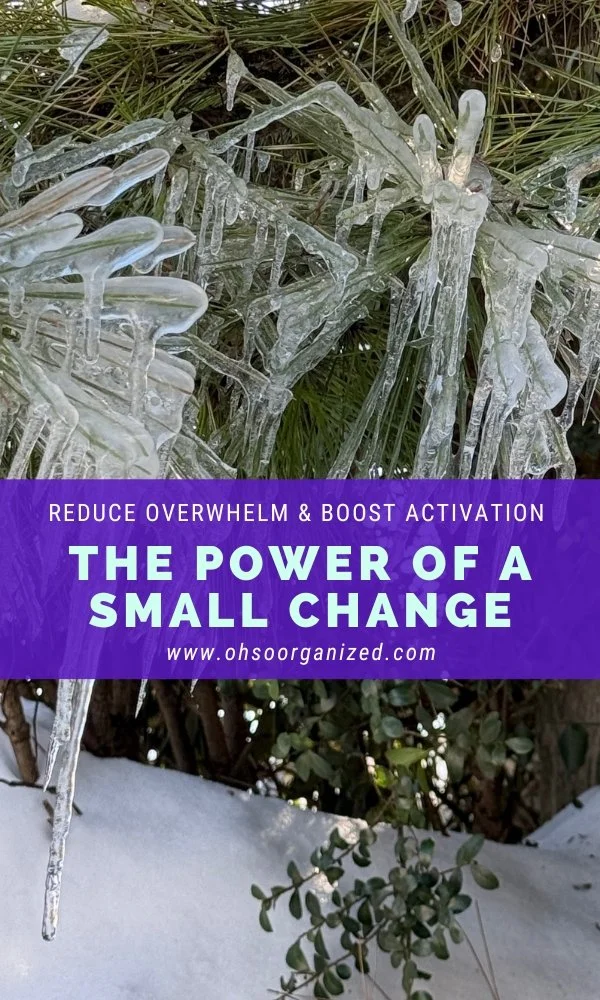
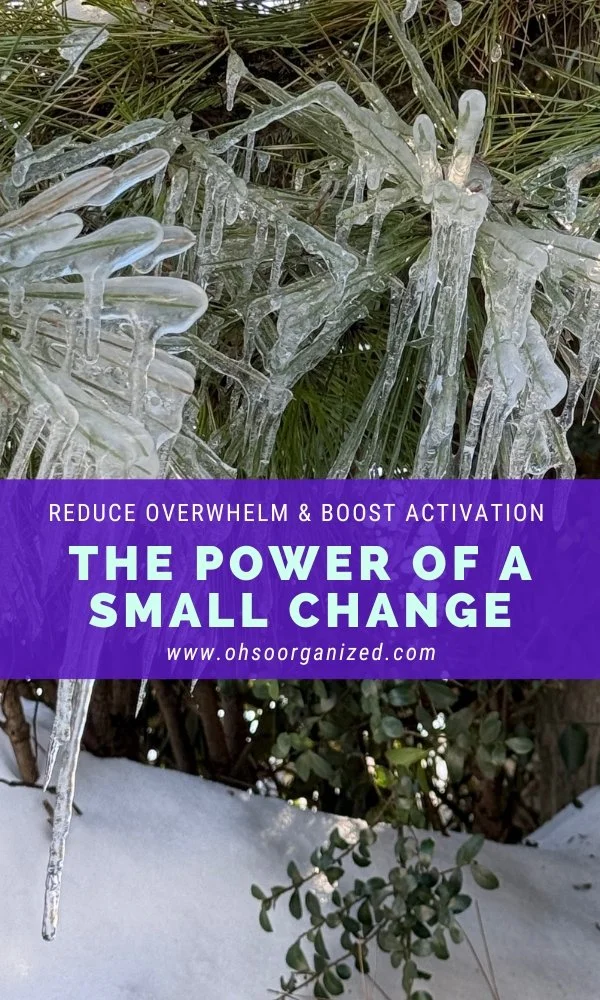
How One Small Change Can Help Reduce Overwhelm and Boost Task Activation

There are two challenges related to change that many of my clients face. The most common reason is overwhelm, often because the changes they seek are significant. Overwhelm can happen when you:

  • Have difficulty deciding where to start

  • Want to make multiple changes

  • Are unsure whether what you want to accomplish is possible

  • Engage in negative self-talk or unhelpful loops and scripts

  • Are uncertain how you’ll have time to make the changes you seek

The second most common challenge is task activation. My clients often know what to do, yet struggle to take action. They may experience low mood, boredom with the task, self-doubt, exhaustion, or difficulty managing their time.

The good news is that even when you’re feeling overwhelmed and having difficulty activating, things can shift quickly in a positive direction. I’ve seen this happen consistently with my clients, and it’s inspiring to be part of.

Are you curious about how to shift from overwhelm to hope and from stuckness to action? If so, keep reading to learn a few helpful strategies.


Change Strategies That Work When You’re Feeling Overwhelmed and Stuck

Strategy 1: Go Small

You know the phrase, “Think big?” For the first strategy, do the exact opposite. Instead of focusing on all the changes you want to make, go small, really small. This shift creates a boundary.

Let’s say you want to edit and organize all the rooms in your home. The goal is doable, but the enormity of those tasks feels overwhelming. For now, set aside thinking about the big picture and focus on a single, small piece.

For example, you want to edit and organize your clothes, which are stored in many rooms, dressers, and closets. Select one small area to begin, such as a drawer, a shelf, a closet rod, or a bag stuffed in the basement. Anywhere is OK as long as the area is small.

You’ll notice almost immediately that your mood begins to regulate because you’ve contained the organizing task to something more manageable. Overwhelm and anxiety subside when you set boundaries around your area of focus.


Strategy 2: Engage in What’s Doable

Combine the first strategy, going small, with this next one. As you can imagine, it’s not enough to create a tinier boundary and shift your mindset. It must be paired with an action or task. By reducing stress and cortisol surges, activation becomes possible. You can calmly face your task.

Here’s the magic. Making progress on that one small thing has a wonderfully positive effect. Your thoughts transform from “I can’t do this” to “I’m getting it done!” Your mood shifts from blocked and negative to lighter, more energetic, and more excited about taking on more.


Overwhelm and anxiety subside when you set boundaries around your area of focus.
— Linda Samuels. CPO-CD®, CVOP™


Strategy 3: Enlist Help

The first two strategies are effective. However, if you’re ready for change and still feel unable to move forward, it’s time for the third option: Ask for help. This can come from a nonjudgmental friend, family member, or professional organizer like me. You don’t have to do this alone.

My clients recognize that having a partner on their organizing journey is the secret sauce. They appreciate ongoing support, discussions of solutions and challenges, help with decision-making, a thought partner, and encouragement.

Some recent client organizing tasks included:

  • Decluttering the dining room table

  • Refining a project management system

  • Editing several bags of shirts

  • Sorting and releasing old business files from a shelf

  • Editing and letting go of a box of electronic material

For all of these projects, my clients’ starting point was feeling overwhelmed and unable to act. However, by narrowing the scope, focusing on one small part at a time, and enlisting external support, they improved their mood, accomplished a specific task, boosted their confidence, and were motivated to do more.


Why Does a Tiny Change Matter?

Small shifts are doable and sustainable. When you think about change, it can feel overwhelming, especially when the changes are big. However, by adjusting your mindset, narrowing the scope, and enlisting help, you can make progress. What helps you when you feel overwhelmed? How do you work with task activation? What resonates with you?

I’d love to hear your thoughts. I invite you to join the conversation.


How Can I Help?

Do you feel overwhelmed, disorganized, or paralyzed? Do you seek change, yet feel stuck? I’m here to help! Virtual organizing is an extraordinary path forward – Local feel with a global reach.

Let’s connect! I’m easy to reach.

Embracing change and getting organized are possible, especially with support.


Feeling Stuck? Start Here: Small Organizing Steps That Empower Motivation

Feeling stuck is a common experience. Do you wait to feel motivated before starting a project or task? You might think you need to be in a good mood, have the right energy, or be completely clear about your plan before beginning. However, like with organizing and in life, waiting can keep you stuck. The reality is that motivation doesn’t always come first. More frequently, it follows the act of starting.

When you take that first tiny step, whether it’s decluttering one surface, recycling some papers, or making a short to-do list, you build momentum. Beginning helps you to":

  • Break through mental clutter.

  • Build confidence.

  • Turn what’s overwhelming into something manageable.

Just starting reinforces that progress doesn’t begin with having everything figured out. Getting unstuck starts with taking one small step.

If you’ve been waiting for the perfect time, I encourage you to let go of perfection and take action today. The smallest effort can spark the motivation you’ve been missing.

As James Clear said, “Whenever you are stuck searching for the optimal plan, remember: Getting started changes everything.”

With these ideas in mind, what can help you change everything?


27 Ways to Get Started: A Motivation-Boosting Organizing Checklist

Nike’s iconic motto is “Just Do It.” Similarly, but with a twist, the suggestions in this checklist encourage you to just start with small actions that will help build significant momentum.

Use this checklist when you’re feeling stuck. Completing even one small task can boost the motivation needed to keep going.


THE MOTIVATION-BOOSTING ORGANIZING CHECKLIST

Home Clutter

  • Make your bed.

  • Declutter one corner of your desk.

  • Organize just one category, like shoes, coffee mugs, or bathing suits.

  • Empty and edit the contents of a tote bag or bin.

  • Declutter five items from any drawer.

  • Take out the recycling.

  • Place a donation bag somewhere visible.

  • Put five items into the donation bag.

  • Declutter one shelf or surface.

  • Recycle ten old magazines, papers, or receipts.


Digital Clutter

  • Delete or archive ten emails from your inbox.

  • Clear your desktop of old files.

  • Remove five phone apps you don’t use.

  • Unsubscribe from three newsletters you never read.

  • Turn off dings, pop-ups, and alerts.


Time-Induced Starts

  • Set a 10-minute timer to declutter anything.

  • Schedule 15 minutes this week to start your next project.

  • Take five minutes to decide on the “maybe” items.

  • Spend five minutes reviewing your to-do list and pick the top three tasks you want to accomplish today.


Quick Wins

  • Toss all the non-working pens in your pencil cup.

  • Clear the kitchen sink.

  • Put dirty laundry in the hamper.

  • Follow up on one item from your ‘pending’ pile.

  • Label one shelf, bin, or folder.

  • File or shred a small group of papers.

  • Clean out your purse.

  • Remove the trash from your car.


What Small Actions Help You Get Started?

Don’t underestimate the positive impact taking small steps has on motivation. Relief and progress are within your reach. How does starting influence what happens next? Which items from the getting started checklist resonate most with you? What additional items would you like to add to your checklist?

I’d love to hear your thoughts. I invite you to join the conversation.


The smallest effort can spark the motivation you’ve been missing.
— Linda Samuels, CPO-CD®, CVOP™


How Can I Help?

Would you like some support with motivation, activation, or organization? I’d love to help! Virtual organizing is an extraordinary path forward – Local feel with a global reach.

Let’s talk. You can:

Organizing and sustaining motivation is possible, especially with support.


Four Effective Questions to Focus Your Time with Purpose

Is it just me, or are you also wondering, “How is it mid-year already?" As each day and week pass, the feeling that time is flying by only grows stronger. It’s no surprise. Time keeps moving on. However, the continual ticking of the clock makes me consider how intentionally I’m using my time. I like to think I’m being purposeful and conscious with my time, yet there’s always room for improvement.

Recently, I discovered some powerful questions in Jenny Blake’s book, Free Time – Lose the Busywork, Love Your Business. Jenny’s book was recommended to me by my friend, the fabulous author, podcast host, lyricist, and project coach, Kara Cutruzulla. Thank you, Kara.

The questions that Jenny poses are excellent clarifiers. I found them helpful, and I thought you would, too. While her book focuses on business, her questions can easily be applied to your personal life. I adapted several of them to make them more relevant for you.

To determine whether Jenny’s questions will be helpful for you, consider these first:

  • Are you struggling to focus your time?

  • Are you trying to be more intentional about how you spend your time?

  • Are you sensing that time is passing quickly and you’re not focused on what matters?

  • Are you feeling frustrated and stuck?

  • Are you hoping to achieve something soon or within a year?

If you resonated with any of the questions above, the following four questions from Jenny could offer you clarity, direction, and hope.


Four Effective Questions to Help You Better Focus Your Time

1. “What would give you the biggest boost and sense of accomplishment this week?”

The secret sauce of this question is how it helps you focus on the immediate time frame—this week. This approach can be especially beneficial when your mind is so preoccupied with future thinking that it distracts you from the here and now.

Take a moment in a quiet space. Close your eyes if it helps. Ask Jenny’s question, “What would give you the biggest boost and sense of accomplishment this week?”

Break it down further if that’s useful:

  • What will provide you with the most significant lift in mood this week?

  • What can help create a sense of accomplishment this week?

  • What is the best place to focus your time, effort, and energy to achieve those results?


2. “What are your three biggest [time-related] frustrations at the moment?”

You might consistently be late, have trouble meeting deadlines, struggle with your work-life balance, or face other time-related challenges. Maybe you’re experiencing low energy or a lack of motivation. All of these experiences are normal. However, without clarity about what is frustrating you, it’s easy to remain in a static and irritated position.

Identifying your frustrations and what’s keeping you stuck is essential. From that proactive perspective, you can develop a plan of action.

What are your three biggest frustrations related to time right now?

Time is a valuable resource, and it’s not unlimited.
— Linda Samuels, CPO-CD®, CVOP™

3. “What would you be thrilled to achieve in [your life] in the year ahead?”

Living in the present is important. Equally essential is thinking about the future. This forward perspective will help you be more mindful of your time and the small steps you’re taking now toward a future goal.

To put yourself in a positive mindset, ask the question, “What would you be thrilled to achieve in [your life] in the year ahead?”

To increase excitement and minimize overwhelm, identify just one goal. You might have many ideas, but focus on one pursuit instead.

Tick tock. Time keeps moving forward. What is the most thrilling thing you’d like to achieve in a year?


4. “If I could solve your biggest challenge around [organization or time management], what would it be?”

Setting goals and being intentional with your time is rewarding. Seeking help with your goals and challenges can be beneficial. I have found it helpful many times to receive support for the goals I am working on. Although it may seem easier in some ways to go it alone, finding the right kind of support can make a tremendous difference.

What are your biggest challenges with organization or time management? How can I best support you on your journey?


The Value of Focusing Your Time with Intention

Time is a valuable resource, and it’s not unlimited. Just as spring flowers have their blooming season, you also have a limited number of days remaining. How do you want to shape your days and spend your time? What does living more intentionally mean for you? What will help you focus on what’s most important? 

I’d love to hear your thoughts. I invite you to join the conversation.


How Can I Help?

Do you need support with organizing, editing, or managing your time? I’d love to help! Virtual organizing is an extraordinary path forward – Local feel with a global reach.

Let’s talk. You can:

Using your time intentionally is possible, especially with support.


5 Courageous Coping Strategies When Life Feels Out of Control

There are times when life goes sideways. The unthinkable happens, and you feel you have no control over anything. Your mood is dark, and hope is barely accessible. Cognitively, you understand there are no guarantees in life and that chaos is present. Yet, how do you cope? What can you do when nothing makes sense, and things feel out of control?

I don’t pretend to have the answers or know what you’re experiencing. I’m navigating this challenging time, too. Yet, I have a few strategies that are helping me, which might be helpful to you.

Instead of focusing on the areas you have no control over, shift your attention. Identify and engage in what is nourishing and within your control.


5 Courageous Coping Strategies When Life Feels Out of Control

1. Supercharge Your Self-Care

Take care of yourself. During stressful times, you might ignore the basics. However, doing that makes you feel worse and less able to cope with challenges.

Recommit to self-care basics. Get enough sleep, hydrate, eat nutritiously, and move your body. Walking in nature has additional mood-boosting benefits.

Beyond essential self-care, consider getting a massage, manicure, or pedicure. Or how about taking a yoga, exercise, or meditation class?

Be kind to yourself and engage in intentional, mood-enhancing activities within your control.

Recommit to self-care basics.
— Linda Samuels, CPO-CD®, CVOP™

 2. Engage With Your Community

You might want to retreat when feeling out of sorts. However, I encourage you to do the opposite. Reach out to those who are also feeling ‘it.’ You’re not alone.

Your friends and family may be struggling, too. Connect with your loved ones. Pool your strengths while offering and receiving support.


3. Curate the Input

Scrolling social media, listening to the news, and fueling the fire may not be the healthiest choice. Cut yourself off (even if temporarily) when the external input you’re allowing adds to those out-of-control feelings.

Just as I encouraged you to eat nutritious foods to nourish your body, do something similar for your mind. Curate the input to minimize anxiety-producing thoughts and maximize ones with a more positive effect.

This could be a great time to read that new book or your favorite magazine from cover to cover. Or maybe you prefer to watch a comedy show or movie.

I’m not suggesting you ignore the outside world forever, but for this day, while building your resilience, choose to disengage with stress-inducing news. Control the input.

Identify and engage in what is nourishing and within your control.
— Linda Samuels, CPO-CD®, CVOP™

4. Make Something

There is a gift in making something from nothing. What kind of something? Maybe you like to bake, write blog posts or in journals, take photographs, write poetry, or knit scarves. Perhaps you want to paint, write music, do a craft project, or create fancy cocktails.

Take control of a joy-inducing physical activity and make something. Enjoy the process and the result.

I’ve already journaled and worked on this post. Guess what else I did? I baked (and ate) some Almond Butter Chocolate Chip cookies. Fortunately, these cookies are not only delicious but also nutritious. I just have to remember to eat them in moderation. Wish me luck.


5. Declutter Your Space

Physical disorganization and chaos in your environment can affect how you feel and function. The disarray adds to a feeling of lack of control. You don’t know where things are or have the mind space to focus.

There is mood-boosting power in decluttering and organizing. The act of doing, making a change, and then experiencing the benefits of that shift is palpable.

You can’t control everything, but you can improve your corner of the world (or desk).


Human Coping Skills

Remember, you are resilient, and you have people to lean on. To help navigate challenging times, exert control in tiny yet significant ways. This won’t change everything, but it will help to calm and ground you. What coping strategies do you use when life feels chaotic?

If you need help decluttering, organizing, planning, or grounding, I’m here for you. Please schedule a Discovery Call, email me at linda@ohsorganized.com, or call 914-271-5673. Organization and ease are possible, especially with support.