Posts tagged strategies
How One Small Change Can Help Reduce Overwhelm and Boost Task Activation

There are two challenges related to change that many of my clients face. The most common reason is overwhelm, often because the changes they seek are significant. Overwhelm can happen when you:

  • Have difficulty deciding where to start

  • Want to make multiple changes

  • Are unsure whether what you want to accomplish is possible

  • Engage in negative self-talk or unhelpful loops and scripts

  • Are uncertain how you’ll have time to make the changes you seek

The second most common challenge is task activation. My clients often know what to do, yet struggle to take action. They may experience low mood, boredom with the task, self-doubt, exhaustion, or difficulty managing their time.

The good news is that even when you’re feeling overwhelmed and having difficulty activating, things can shift quickly in a positive direction. I’ve seen this happen consistently with my clients, and it’s inspiring to be part of.

Are you curious about how to shift from overwhelm to hope and from stuckness to action? If so, keep reading to learn a few helpful strategies.


Change Strategies That Work When You’re Feeling Overwhelmed and Stuck

Strategy 1: Go Small

You know the phrase, “Think big?” For the first strategy, do the exact opposite. Instead of focusing on all the changes you want to make, go small, really small. This shift creates a boundary.

Let’s say you want to edit and organize all the rooms in your home. The goal is doable, but the enormity of those tasks feels overwhelming. For now, set aside thinking about the big picture and focus on a single, small piece.

For example, you want to edit and organize your clothes, which are stored in many rooms, dressers, and closets. Select one small area to begin, such as a drawer, a shelf, a closet rod, or a bag stuffed in the basement. Anywhere is OK as long as the area is small.

You’ll notice almost immediately that your mood begins to regulate because you’ve contained the organizing task to something more manageable. Overwhelm and anxiety subside when you set boundaries around your area of focus.


Strategy 2: Engage in What’s Doable

Combine the first strategy, going small, with this next one. As you can imagine, it’s not enough to create a tinier boundary and shift your mindset. It must be paired with an action or task. By reducing stress and cortisol surges, activation becomes possible. You can calmly face your task.

Here’s the magic. Making progress on that one small thing has a wonderfully positive effect. Your thoughts transform from “I can’t do this” to “I’m getting it done!” Your mood shifts from blocked and negative to lighter, more energetic, and more excited about taking on more.


Overwhelm and anxiety subside when you set boundaries around your area of focus.
— Linda Samuels. CPO-CD®, CVOP™


Strategy 3: Enlist Help

The first two strategies are effective. However, if you’re ready for change and still feel unable to move forward, it’s time for the third option: Ask for help. This can come from a nonjudgmental friend, family member, or professional organizer like me. You don’t have to do this alone.

My clients recognize that having a partner on their organizing journey is the secret sauce. They appreciate ongoing support, discussions of solutions and challenges, help with decision-making, a thought partner, and encouragement.

Some recent client organizing tasks included:

  • Decluttering the dining room table

  • Refining a project management system

  • Editing several bags of shirts

  • Sorting and releasing old business files from a shelf

  • Editing and letting go of a box of electronic material

For all of these projects, my clients’ starting point was feeling overwhelmed and unable to act. However, by narrowing the scope, focusing on one small part at a time, and enlisting external support, they improved their mood, accomplished a specific task, boosted their confidence, and were motivated to do more.


Why Does a Tiny Change Matter?

Small shifts are doable and sustainable. When you think about change, it can feel overwhelming, especially when the changes are big. However, by adjusting your mindset, narrowing the scope, and enlisting help, you can make progress. What helps you when you feel overwhelmed? How do you work with task activation? What resonates with you?

I’d love to hear your thoughts. I invite you to join the conversation.


How Can I Help?

Do you feel overwhelmed, disorganized, or paralyzed? Do you seek change, yet feel stuck? I’m here to help! Virtual organizing is an extraordinary path forward – Local feel with a global reach.

Let’s connect! I’m easy to reach.

Embracing change and getting organized are possible, especially with support.


How to Meet Change with More Compassion and Ease

When you think of compassion and ease, what sensations do you feel in your body? What images come to mind? What stories or messages do your thoughts reveal?

Now, think about change. Are you experiencing sensations, images, and thoughts that feel quite different from those associated with compassion and ease?

No one has the same experience, and yours will likely differ from mine. For me, thoughts of compassion and ease bring calm, care, and gentleness. My breath feels steady and slow. My mind feels clear. I feel more grounded, present, and better able to navigate in the moment.

When I think about change, my initial reaction is to brace. I can feel my shoulders tense, my jaw clench, and a funny sensation in my stomach. Not all change feels that way. Sometimes, positive anticipation and excitement are present. But rarely with change is my first thought or feeling calm or ease-filled.

What becomes possible when you can meet change with compassion and ease?


Meet Change More Gently

Last week, I wrote about the Tiny Shifts Experience I’ve been participating in, led by Dr. Elisha Goldstein. In one of his prompts, he guided us to “Allow a little more ease” throughout the day.

Before starting the Tiny Shifts program, I had been considering “ease” as my guiding principle, my North Star for 2026. When Elisha encouraged us to “Allow a little more ease,” it confirmed what I was already thinking.

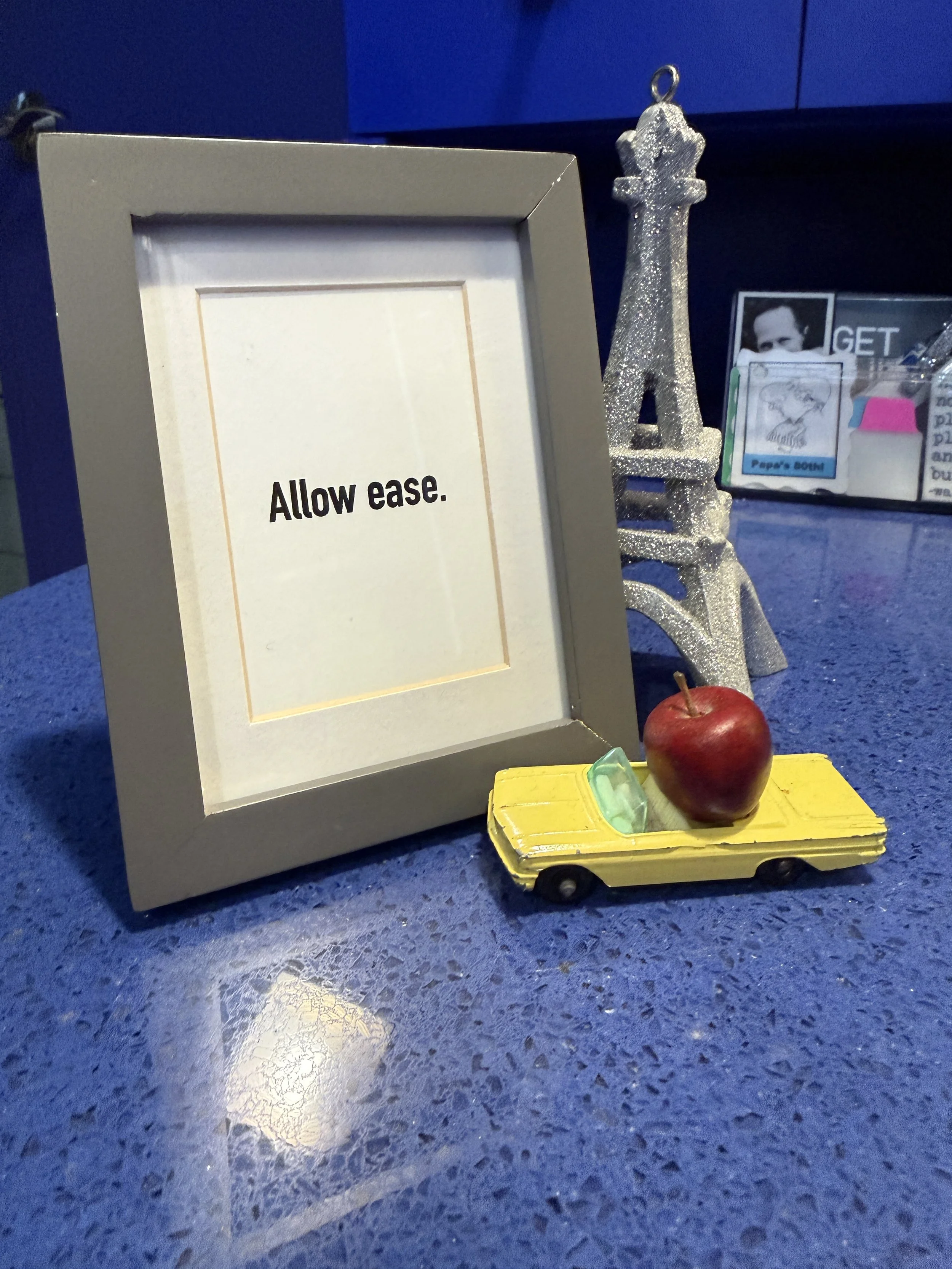
This week, I tweaked the message. My focus for 2026 will be “Allow ease.” I will meet each day, including the challenges, joys, tasks, commitments, and changes I seek, and those thrust upon me, with more compassion and ease.


Engage in Strategies That Encourage Ease

When I notice I’m getting stressed, I will lean on these two strategies.

Strategy 1: Embody Ease with the Breath

This one is so simple. I’ve already used it half a dozen times recently, and it’s incredibly effective. It takes less than a minute.

To Embody Ease:

  • Pause what you’re doing.

  • Gently close your eyes or shift your gaze downwards.

  • Thinking silently, pair these two words while you breathe.

  • Inhale > Allow.

  • Exhale > Ease.

  • Repeat the sequence one or more times until your nervous system calms.

Strategy 2: Ask One Simple Question

You can ask this question on its own, before, or after using the breathing strategy. Listen to what arises and then focus on making a small shift.

Ask this:

Where can I allow more ease right now?

The query will help you identify where your tension or stress lies. How can you change your experience in the moment and lean into more ease? Is there a physical place in your body you can soften? Is there an unhelpful thought loop that needs to be released or noticed? Where is ease possible for you right now?

Where can I allow more ease right now?
— Linda Samuels, CPO-CD®, CVOP™


Can You Shift How You Approach Change?

Change can be exciting or stressful. By integrating strategies that foster compassion and ease, you can move forward with greater grounding and calm. What is your relationship to change? How could creating more ease alter your relationship with change? Which ideas resonate with you?

I’d love to hear your thoughts. I invite you to join the conversation.


How Can I Help?

Do you feel overwhelmed, disorganized, or stressed? Do you want to embrace change this year, yet feel stuck? I’m here to help! Virtual organizing is an extraordinary path forward – Local feel with a global reach.

Let’s connect! I’m easy to reach.

Embracing change and getting organized are possible, especially with support.

 
 
How to Nurture Joy, Reduce Anxiety, and Bring Balance to the Holidays

Jingle bells, jingle bells, jingle all the way! I can hear that tune, the sound of the bells, the smell of pine, and the sight of twinkling lights brightening the dark night. This is the season of festivities, gatherings, and joy. It’s also a time when it's all too easy to overdo, overindulge, and overcommit.

Here’s the good news. If you’re already feeling like it’s too much, I’ve come up with some antidotes. You can increase joy, reduce anxiety and stress, and restore more balance. Of course, you can use these strategies at any time, but they can be especially helpful during the holidays when stress can be high.

The underlying concept is based on what you might need more of or less of right now. Experimenting with even one of these could bring you more joy and happiness today. And what’s not to love about that?


4 Ways to Foster Joy, Reduce Anxiety, and Bring More Balance Right Now

What I love about these techniques is their simplicity and their ability to address a wide range of needs. Maybe you’re tired or anxious. Perhaps you want to have more fun. Or maybe you’re yearning for the familiar. There’s something for everyone. Pick and choose which strategy or combination of techniques will be most useful for you.


1. Invite in More Rest

I remember kindergarten, when the teacher insisted on nap time. We would unroll uncomfortable, smelly mats onto the hard floor, be quiet and still (not easy for a five-year-old Linda), and be forced to nap for what felt like an eternity. Naptime felt like a punishment. I felt like I was missing out on life. Instead, I wanted to play, talk, learn, and interact with my friends.

However, as an adult, I’ve come to respect and understand the value of giving my mind and body a short time to rest. It’s a beautiful way to stop, refresh, and return with more energy, focus, and kindness.

If you go all in, you’ll come back feeling more relaxed and joy-filled. Here’s the recipe for a short, restorative rest:

  • Find a quiet spot.

  • Wrap yourself in the coziest blanket (my favorite part).

  • Dim the lights.

  • Set an alarm for 15-20 minutes.

  • Allow yourself to settle.

  • Nap away.

This is a wonderful antidote to the “overdoing it” that often comes with the holiday season. If you’re tired or cranky, invite in some rest. Wake up more joy-filled.


2. Engage in Spontaneous Fun

There are so many truly horrific things happening in the world. They weigh heavily on our hearts and minds, making the idea of having fun feel impossible or inappropriate.

However, to handle the hard things life brings, it’s important to bring some balance by replenishing your resilience reserves. One way to do this is to invite in fun, even if it’s unplanned. Say yes to silliness. That might look like going to a comedy show, having a snowball fight, playing charades, or listening to music while doing goofy dance moves.

The other day, my husband and I had a wonderful BBQ lunch at a local restaurant. It was delicious and filling. It was also right near a local mall. After lunch, we went to the mall, not to shop, but to walk off the beef brisket and hot sausage sandwiches we had just eaten.

As we walked, we discovered Dream Riders, a store that offers electric ride-on plush animals. While they are marketed for kids, adults can ride them, too. I saw the animals lined up and a few kids riding them around, and I thought, “Hey, this looks like fun. I want to try it!”

And since Steve is always up for anything (one of the many things I love about him), he was on board immediately. We spent 10 minutes riding, laughing, smiling, and having a blast. Aside from having fun, the sight of us enjoying ourselves made other people smile and laugh as we passed by, riding our Panda and Tiger.

Embracing impromptu or intentional fun during the holiday season is a wonderful way to nurture joy.


Say yes to silliness.
— Linda Samuels, CPO-CD®, CVOP™


3. Do a Quick Reset

A few weeks ago, I shared five simple practices to reduce stress. I have one more that helps with handling anxiety, which can surface during the holidays. As wonderful as it can be to visit with family, it can also be anxiety-producing to return home. Anxiety can surface from being around too many people, experiencing more noise than you’re used to, having your routines disrupted, or having unhealthy childhood habits, relationship patterns, or interactions surface.

One strategy that helps is using the 3-3-3 Rule. It’s a simple, effective reset that can be used anywhere, anytime. Here is the method:

  • Set: If possible, go to a private space, such as a bedroom or bathroom, where you won't be disturbed.

  • See: Name three things you see, like a blue glass sink, a green plant, or a white wall lamp.

  • Hear: Name three sounds you hear, like people talking in the other room, the boiler humming, or a truck rumbling outside.

  • Move: Move three parts of your body, such as opening and closing your hands, moving your head side to side, or stretching your arms above your head.

Exercising the 3-3-3 Rule will create distance from your anxious thoughts and ground you in the present moment by engaging with your environment and physical sensations.

This reset is an excellent strategy to reduce anxiety and restore balance during the holiday season and beyond.


4. Revisit a Tradition

I’m not sure if you’ve had this experience, but for me, some seasonal traditions remain, some are reimagined, and others disappear completely. These traditions can evoke a mix of feelings, from joy and happiness to grief, frustration, longing, excitement, and relief.

One annual tradition we look forward to is celebrating the winter solstice. Lighting the giant bonfire in the woods signals a transition to the new season. It also marks a change, with a gradual return to less darkness and longer, light-filled days.

For 32 years, our friends have invited family and friends to join this magical experience. At night, each person carries a lit candle up the hill into the woods, where a tepee-like structure of wooden sticks stands tall in the darkness. Before the bonfire is lit, we are encouraged to reflect on what was, release what we no longer want, and imagine how we wish the new year to be. The structure is lit and begins to burn slowly.

When ready, each person carefully approaches the fire and tosses their candle in. I watch, mesmerized and in awe, as the flames gain energy and bring warmth. Tinder sparks fly up and dance wildly against the night sky. Crackling sounds, shifting wood, and the voices of people enjoying each other’s company are the evening’s soundtrack.

Traditions can be comforting, especially those that renew and lift your soul. The winter solstice gathering is one of my favorites each year. It’s a joyful way to release the past, imagine the future, and reconnect with special friends in the present. I’m so grateful to John and Judy for keeping this tradition alive.


What Do You Want to Invite This Holiday Season?

Are your holidays infused with joy, anxiety, or both? How would you like them to be? Is the balance and focus off? Which strategies resonate most with you? What brings you joy and balance?

I’d love to hear your thoughts. I invite you to join the conversation.


How Can I Help?

Do you feel overwhelmed, disorganized, stressed, or out of balance? Would you like to make changes? I’m here to help! Virtual organizing is an extraordinary path forward – Local feel with a global reach.

Let’s connect! I’m easy to reach.

Getting organized is possible, especially with support.

 
 
5 Ways to Easily See What's Possible by Finding Solutions to Your Challenges

Are there many things you want to experience, explore, or accomplish in life? If so, that’s wonderful. However, when you encounter daily challenges, it becomes harder to think about the future and imagine possibilities.

You have the capacity to handle a lot. You can boost your capacity by identifying and addressing a specific challenge you’re facing. Often, just one small tweak is enough to create momentum and open the path for new ideas you couldn’t see before.

Why is that? It’s easy to get stuck in cycles of distress, overwhelm, and frustration. These patterns can cause paralysis and inaction. When you’re in that negative mode, your mind can spiral or shut down. Thinking and dreaming about new possibilities feels out of reach.

There are many ways to open up the ‘what’s possible’ path. Depending on your preferences and situation, choose the strategy that will be most effective for you.


5 Ways to Easily See What’s Possible by Finding Solutions to Your Challenges

1. Identify the Hiccups

One of my favorite methods to prepare for possibilities is by making a list of the hiccups you encounter during your day.

Pay close attention as you go through your day. As situations occur, write down anything that causes you stress, distress, or inconvenience. These might include things like:

  • Misplaced or lost keys, glasses, or your phone.

  • Had trouble getting dressed because of clutter in the closet.

  • Created an overly complicated organizational system that’s too difficult to maintain.

  • Had supplies tumble out of the bathroom cabinet every time it was opened.

  • Was late for an appointment again.

  • Ran out of milk, toilet paper, apples, or other household staples.

  • Was annoyed during kitchen meal prep because things weren’t organized in a useful way.

  • Woke up cranky because of sleep disruptions or lack of sleep.

  • Began the day feeling anxious and unsure what to focus on.

Notice the hiccup. Write it down. Choose one of the challenges and fix the problem.


2. Quiet Your Mind

When the noise upstairs gets too loud and clouds your thoughts, it can prevent you from seeing possibilities. How can you quiet the mind so you can move forward with clarity and purpose?

There are many ways to do this, including:

  • Journaling

  • Meditating

  • Sipping coffee or tea from your favorite mug

  • Resting

  • Reading

  • Breathing slowly with focus and intention


3. Declutter the Desk

Numerous studies show how clutter can negatively affect our mental health and well-being. Not everyone is affected by clutter to the same degree. However, if clutter bothers you, you may actually feel its effects viscerally. You might feel anxious, stressed, agitated, or have difficulty concentrating or relaxing.

One of the easiest ways to change how you’re feeling is by decluttering a small area. It doesn’t matter what you choose. Pick something with distinct boundaries like a desk surface, a comfy chair, or a coffee table.

Remove items that don’t belong. Route the outtakes to the trash, recycling bin, donation box, or rehome them elsewhere. For the remaining items, decide whether you want them to stay, let them go, or relocate to another spot.

Clearing space and surfaces is calming. With this simple reset, you’ll be more open to possibilities. 

The physical act of movement can encourage progress and possibilities in other areas of your life.
— Linda Samuels, CPO-CD®, CVOP™

4. Move Your Body

Sitting is passive. Not only does it make your body stiff and less active, but it can also affect your energy level and mood. Since transitioning from in-person to virtual work, I sit much more than I used to.

Movement has become even more important. I make sure to take breaks between virtual organizing sessions to walk around, stretch, take bio breaks, or get some fresh air. When I’m on the phone, I often walk around the house while talking. I incorporate other movements by doing yoga, exercising, walking by the river or in the woods, running errands, gardening, sweeping, or cleaning.

Some movement is spontaneous, while some is more intentional. It helps when I schedule time to meet a friend for a walk or go to yoga class. That adds accountability and keeps me committed to moving more.

Physical movement creates its own momentum. The physical act of movement can encourage progress and possibilities in other areas of your life.


5. Ask for Help

Have you ever faced a challenge that overwhelmed you? When that happens, do you try to solve it on your own or ask for help? I usually try to figure things out myself first. However, there are times when hiring someone or seeking advice is beneficial.

Recently, I experienced some frustrating tech problems with Mailchimp and Square while setting up the backend for my December workshop. While customer support offered a few insights, they didn’t resolve the issue, so I hired someone to help me. It was incredible how much less stressed I felt knowing someone would help me find a solution and fix the problem. I didn’t have to do this alone. It was wonderful having the personalized support to troubleshoot the issue, discuss options I hadn’t considered, and resolve the problem. Thank you, Lana Kitcher!

As a professional organizer, I help my clients get unstuck and move forward. I love helping and serving others. It’s inspiring to see what becomes possible when obstacles are removed.

Sometimes the answer to a problem is asking for help. When you receive the support you need, your stress and overwhelm decrease. You become more available to take the next steps and imagine what is possible.


Will Finding Solutions Make You More Receptive to New Possibilities?

Everyone gets stuck sometimes. What happens next is what matters most. There are many options, which include identifying the challenge, decluttering a small area, or reaching out for help. What hiccups during your day are keeping you frustrated and stuck? What helps you feel receptive to new possibilities?

Which ideas resonate most with you? I’d love to hear your thoughts. I invite you to join the conversation.


How Can I Help?

Do you feel overwhelmed, stuck, or disorganized? I’m here to help! Virtual organizing is an extraordinary path forward – Local feel with a global reach.

Let’s talk. I’m easy to reach.

Getting organized and making progress is possible, especially with support.