

Posts tagged socialize
Here Are 5 Most Interesting and Best Fresh Start Discoveries – v53

Enjoy the latest release (v53) of the “What’s Interesting?” series, which features my most recent finds that inspire, spark curiosity, and connect to organizing and life balance. These unique, fresh start discoveries reflect this month’s blog theme.

You are an engaged, vibrant, and generous group. I am deeply grateful for your ongoing presence, positive energy, and contributions to this community.

I look forward to your participation and further contributions to the collection I curated.

What do you find interesting?


What’s Interesting? – 5 Best Fresh Start Discoveries

1. Interesting Read – Fresh Start Goals
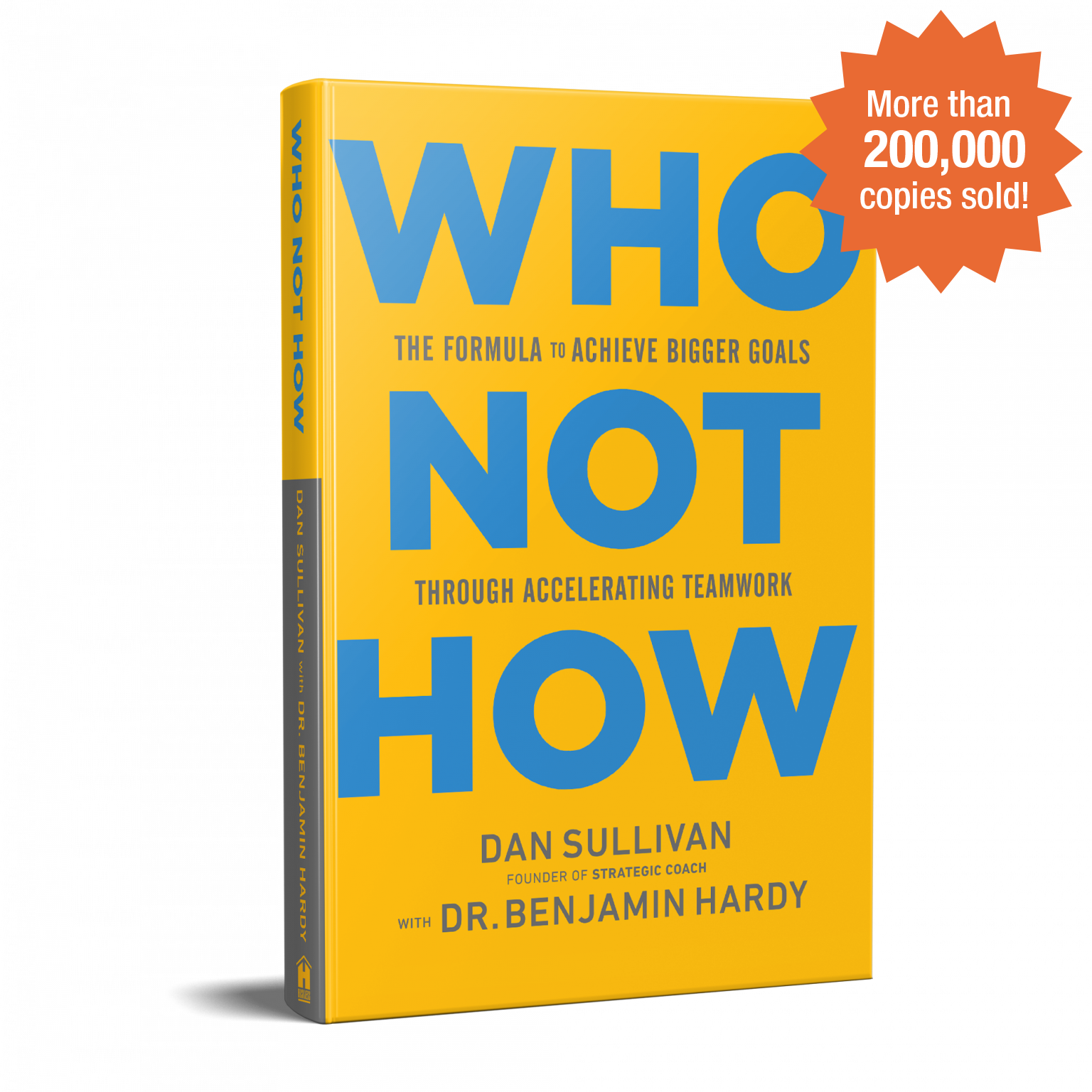
Bigger isn’t always better. Yet if you want to strive for an audacious goal this year, Dan Sullivan, coach and author of Who Not How – The Formula to Achieve Bigger Goals Through Accelerating Teamwork, has a way to get there.

This philosophy hinges on changing the questions you ask. Stop asking, “How can I do this?” Forget working in isolation and doing everything yourself. Instead, Sullivan teaches you to ask, “Who can do this for me?”

He advocates focusing on the “whos in your life that give you the perspectives, resources, and ability to go beyond what you could do alone.” Replace “How can I accomplish this?” with “Who can help me achieve this?”

If you’re feeling frustrated and stuck, it could be the ideal time to build your ‘who’ team.


2. Interesting Experience – Fresh Start ‘Party’

Do you have any “boring tasks” you’re procrastinating on? If so, you are not alone. Thanks to one of my clients, I learned about a Business Insider article that describes a new trend offering a fun solution to this challenge.

Instead of staying stuck and alone while trying to get things done, consider hosting an “admin night” party, as Business Insider editor Tess Martinelli did. She invited her friends over to work on their to-do lists or anything that was causing mind clutter, while also having time to socialize.

She kept things casual and as “low effort” as possible. While there were few rules, Marinelli set several parameters to help make the evening flow better, including:

  • Dress comfortably.

  • Bring your own snacks.
    Provide a beverage (optional).

  • Give some structure, such as working for 30 minutes and socializing or resting for 10 minutes. Repeat that cycle two or three times.

  • After each “round,” talk about what you accomplished.


3. Interesting Article – Fresh Start Decluttering
One of the top ten New Year’s resolutions is to be more organized. An essential part of getting organized is decluttering. This involves letting go of:

  • things that have overstayed their welcome

  • no longer support your current reality, or

  • don’t want or need.

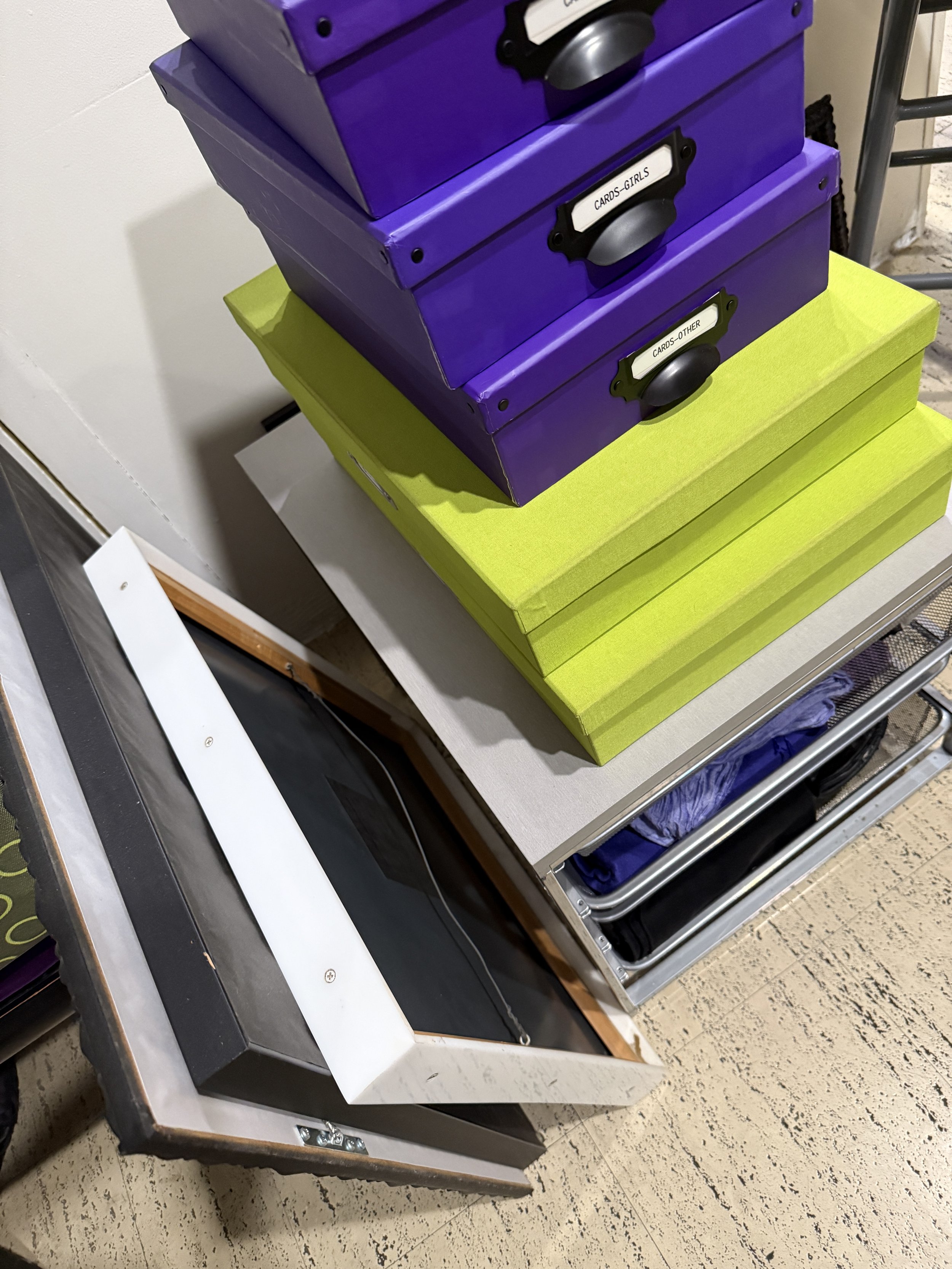
In The Washington Post article “How to reduce visual clutter for a calmer, more functional home,” the case is made for how taxing visual clutter can be on the brain. My clients often describe their clutter (physical or visual) as paralyzing or overwhelming their thoughts and actions.

Corey Pence from The Container Store defines visual clutter as an “overwhelming or excessive amount of visual elements in a space that make it difficult to focus on important information or executing tasks.” Clutter can also make it hard to feel calm and relaxed. Imagine a bedroom with clothing piled everywhere, or a living room with books, toys, and dishes strewn about.

The article suggests many ways to eliminate visual clutter, such as:

  • choosing furniture that encloses objects, such as a nightstand with a drawer instead of an open shelf

  • editing routinely

  • designating a home for objects

  • using coordinated bins on open shelves

  • carefully curating decorative objects, with an emphasis on having fewer

For a great fresh start, declutter until you find that sweet spot for the level of visual clutter your brain can handle.


4. Interesting Product – Fresh Start Planning
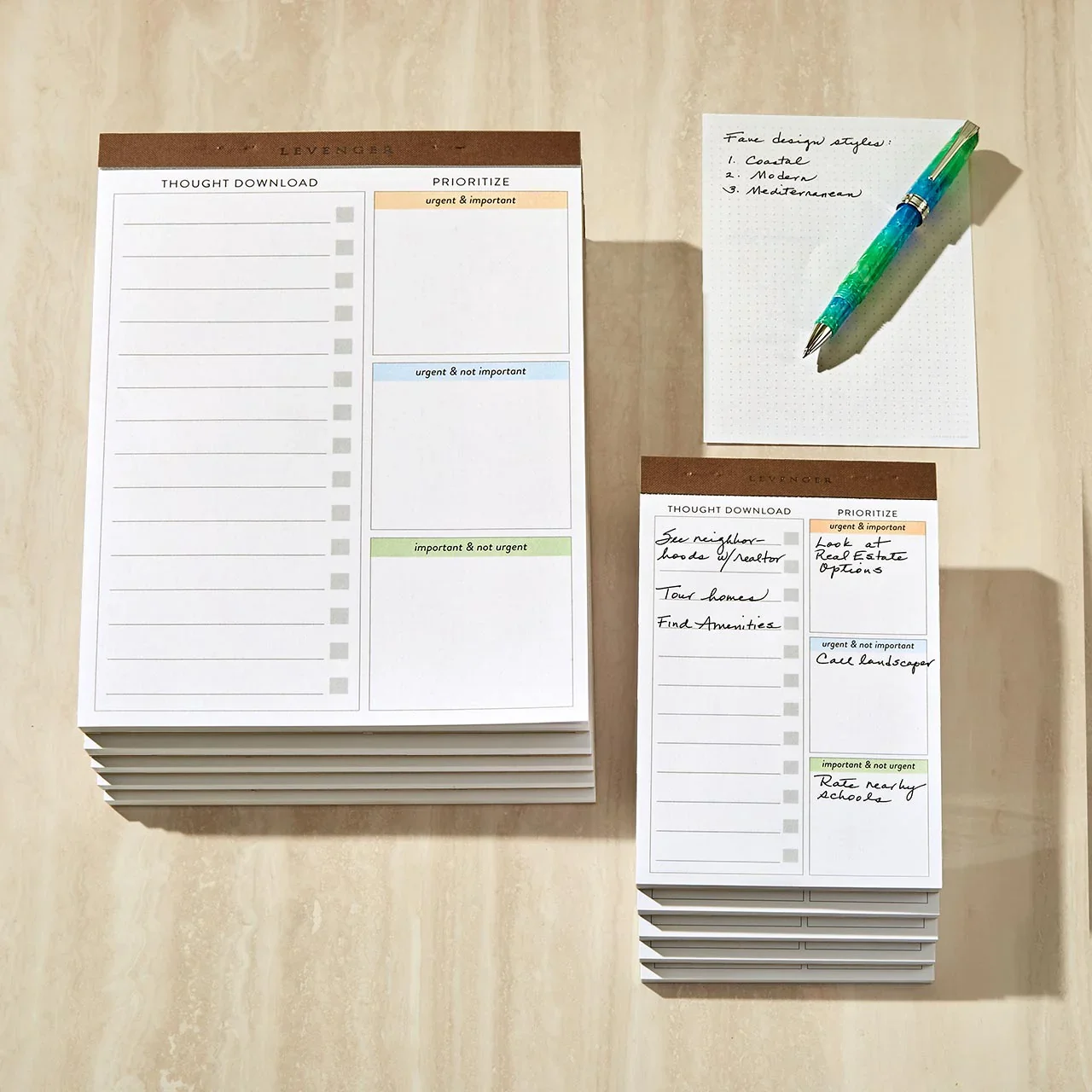
My go-to source for paper pads is Levenger. Their designs are streamlined, and the paper is smooth and easy to write on. If you’re looking for a new way to capture and prioritize your thoughts, check out Levenger’s Think and Plan Priority Manager Pad.

The pad comes in two sizes with two columns and four sections. The left column is great for brainstorming and list-making. It includes:

  • A ruled checklist

The right column is for prioritizing tasks using the Eisenhower method. It has three boxed sections for tasks:

  • Urgent and important

  • Urgent and not important

  • Important and not urgent

Download your brain, sort your to-dos, and give yourself an organized way to focus on your new beginning.


For a great fresh start, declutter until you find that sweet spot for the level of visual clutter your brain can handle.
— Linda Samuels, CPO-CD®, CVOP™


5. Interesting Thought – Fresh Start Magic
There’s something magical about fresh starts and new beginnings. You might feel hopeful, curious, excited, eager, joyful, empowered, or inspired. However, I’ve heard from many people recently that they’re having a very different experience. With the fresh start of the new year, they’re feeling anxious, apprehensive, pressured, disoriented, overwhelmed, or stuck.

Believe me, I get it. I’ve felt all of these ways at different points. On the one hand, I embrace and love a clean slate. It’s an opportunity for a reset and reimagining. Some years, like this past year, I just wasn’t ready to do ‘new.’ Instead, I was in the thick of finishing projects from the year, which overlapped with the time I typically review and plan.

Wherever you are right now, consider these possibilities:

  • If you’re ready, let the wonder of a new year help you move forward.

  • If you’re not ready, be gentle with yourself and ease the pressure to make big new plans for now.

Stay open to activating a fresh start (and its magical powers) at any time: a new day, month, or season.


The Fresh Start Advantage

There’s still time to make this first month of the new year work for you. Lean into the energy and newness of this season. Use the clean slate to your advantage.

Which of these discoveries resonates most with you? Which would you like to add? I’d love to hear your thoughts and invite you to join the conversation.


How Can I Help?
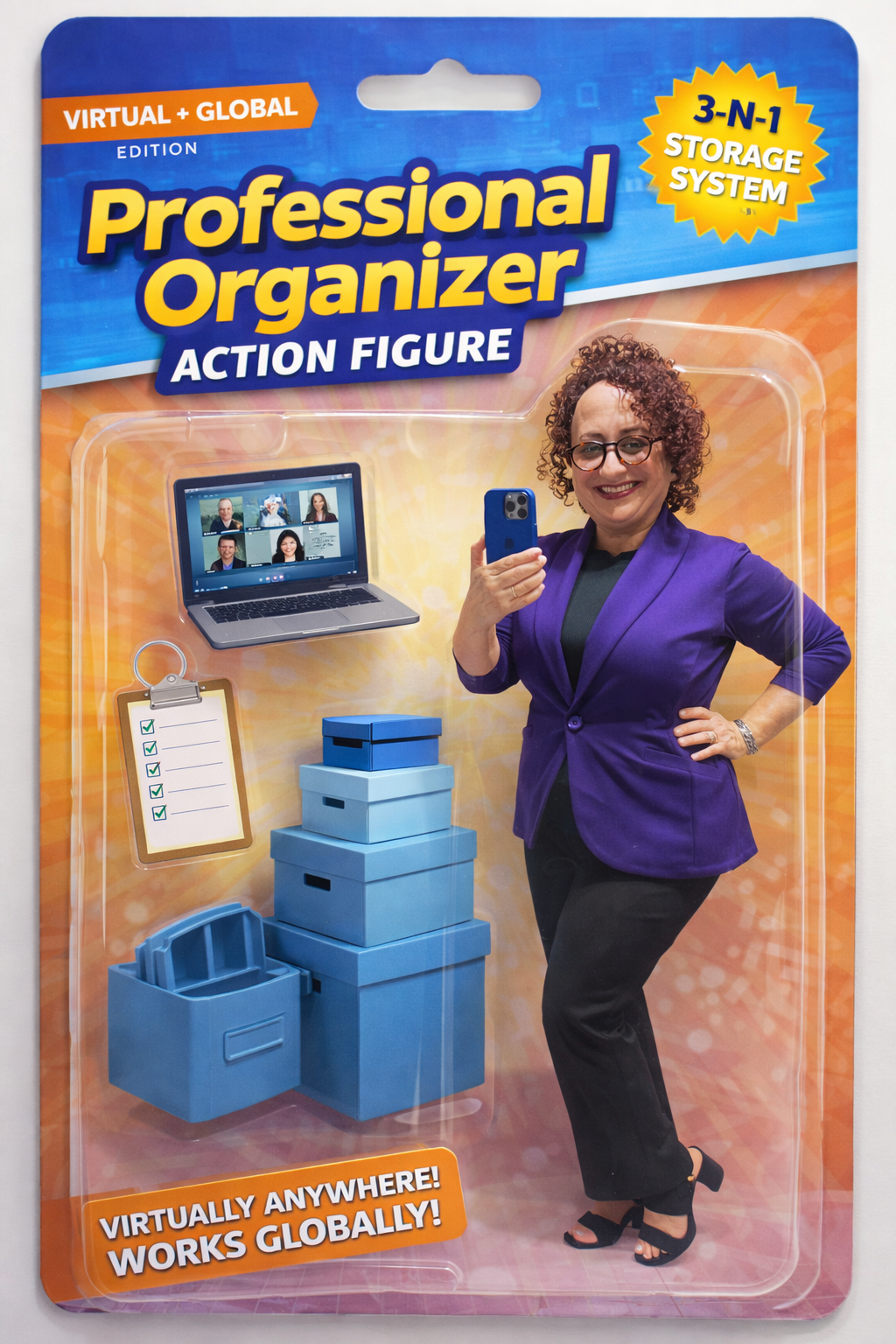
Do you feel overwhelmed, stuck, or disorganized? I’m here to help. Virtual organizing is an extraordinary path forward – Local feel with a global reach.

Let’s talk. I’m easy to reach.

Getting organized is possible, especially with a fresh start and compassionate support.


3 Time Management Strategies That Will Make Your Life More Happy

When you think about how you manage time, do you consider the “happy” factor? It’s a given that you have 24 hours each day. How you use and feel about that time is where life gets interesting. With some minor tweaks, you can enhance the quality of your life by shifting your perspective and actions.

Happiness is not always considered when it comes to time management, yet it’s a powerful element to integrate.

Before I share three helpful time management strategies, let’s look at some common phrases to describe time and how you experience it.

Common Time Phrases

This first list of expressions reflects stress, frustration, and anxiety about the limitations and passage of time. Some common sayings are:

  • Running late

  • Behind schedule

  • On the clock

  • Not enough hours in the day

  • Time waits for no one

  • Time is of the essence

  • Lost time

  • Pressed for time

  • Time-sensitive

  • Killing time

  • Wasting time

  • Running out of time

  • Lost track of time

  • Living on borrowed time

  • Out of time

This second list of phrases describes positive feelings about time, highlighting enjoyment, appreciation, and making the most of every moment. These expressions include:

Which phrases resonate most with you? Do you often experience stressful time-related situations, as reflected in the first list? Are more of your time-related encounters positive, like the phrases on the second list? Or are your encounters with and relationship to time somewhere between the extremes?


3 Time Management Strategies for a Happier Life

The time strategies described below can increase your happiness wherever you are in your relationship with time.

1. Happier Boundaries

What happens when you have few or no boundaries? Without boundaries, everyone else’s priorities come first. And you know what that means? Yours come last, if at all. You end up saying “yes” to things you wish you said “no” to. As a result, you might feel resentful, angry, frustrated, or annoyed.

Learning to set boundaries is a core time management skill. I continually work on boundary-setting because I didn’t understand that skill growing up. On the contrary, I learned how NOT to set boundaries. But I digress.

My insightful friend, colleague, and Professional Organizer Julie Bestry always shares excellent resources on her Paper Doll blog. She also has a great sense of humor. Her recent post, “52 Ways to Say NO to a Request So You Can Say YES to Your Priorities,” includes fabulous boundary-setting strategies.

To illustrate one of Julie’s points, she shares a 30-second YouTube clip from the TV show Friends. In the segment, Joey asks Phoebe if she wants to help assemble Ross’s furniture. Phoebe matter-of-factly says, “I wish I could, but I don’t want to.” Wow! What a clear (and hilarious) example of setting boundaries and saying no.

While Phoebe’s response to Joey’s request might not work for you, the idea behind it is worth considering. There are many ways to set boundaries, and learning to say no when you want to (whatever the reason) is essential. Knowing that skill lets you focus on your top priorities and what matters most.   

Learning to set boundaries is a core time management skill.
— Linda Samuels, CPO-CD®, CVOP™

2. Happier Activation

Now that you excel at boundary setting (yes, you!), your attention can focus on your most important people, projects, and tasks. However, while you cleared your schedule and said no to several requests, you’re having difficulty beginning your work.

The project you want to do, you can’t make progress on. You might need to plan, research, enlist help, gather resources, or take other actions. You’re thinking about how much time it will take to finish. Feelings of overwhelm are taking over. It all feels too big. How are you going to complete this or get started?

Let’s say it. You can’t do it all at once, so don’t expect that you will. Instead, let small time blocks be your ‘activation’ friend. Merge the concept of small blocks of time with an actual timer, and you’ll be amazed at what you can accomplish.

Activation Strategy:

  • Review your calendar

  • Select a day that has availability

  • Select a small amount of time, such as 10, 20, or 30 minutes you commit to your project

  • Set the timer for those minutes

  • Work until the buzzer dings

  • Stop working

  • Check on how you’re doing – Are you done for the day? If so, schedule another day to repeat the process. Or do you want to work for another ‘x’ number of minutes? If so, reset your timer now to continue working. When the buzzer dings, repeat the last two steps.

During the past month, I’ve been preparing my latest workshop, How to Let That Sh*t Go. The small blocks of time strategy helped me progress and prepare to lead the workshop on June 6th. If you or someone you know wants to learn more or register, click here: https://www.ohsoorganized.com/workshops.

You will feel happier attending to what’s most important and meaningful. However, progress will not happen without the ability to activate. When you use small blocks of time effectively, you’ll handle things high on your agenda.

Let small time blocks be your ‘activation’ friend.
— Linda Samuels, CPO-CD®, CVOP™

 3. Happier Connections

Pausing in your day to savor one of life’s simple pleasures is an excellent time management strategy to enhance your happiness. If you are constantly on the go, consider integrating “Fika,” a Swedish practice.

Fika embodies the Swedish values of work-life balance, social interaction, and relaxation. Practicing Fika involves taking a short break, typically in the afternoon. People slow down, socialize, and build relationships. The break often includes coffee or another beverage and a small treat like pastries, cookies, or sandwiches.

The other day, I tried a variation of this with my husband. We skipped the beverage part and visited our local store, The Blue Pig. We sat, talked, and ate espresso chip ice cream cones with chocolate sprinkles. It was time well spent.

Which time management strategies bring you the most happiness? I’d love to hear your thoughts. I invite you to join the conversation.

If you feel time-challenged, reach out to Linda, me at linda@ohsorganized.com, call 914-271-5673, or schedule a Discovery Call. A life focused on what matters most is possible, especially with support.


How can I help?