Posts tagged husband
3 Loving Ways to Nurture Gratitude to Help You Flourish

Thanksgiving is just around the corner. My husband and I are excited to host our family and bring everyone together. I might even make my new peanut butter brownie recipe. A word of warning: it’s hard not to eat the entire tray because they’re so delicious. So, if you ask me for the recipe and make it, be sure to invite people to share it with.

Gratitude fills my thoughts. At the same time, I’m very aware of how challenging these times are. The constant stream of bad news, division, and suffering is impossible to ignore. Hope, love, and gentleness can feel elusive.

Perhaps it’s the eternal optimist in me, but I can’t help myself. Those small moments or glimmers of connection, comfort, generosity, kindness, and joy are also available. I hold them close. They are as essential to me as breathing oxygen.

Recently, I was reading through my journal from this past year. I found a passage I want to share with you. It reminded me how gratitude and being present have been, and continue to be, guiding forces in my life.


My journal entry:

For now, I am here. Rooted in the past, ready for the future, and grounded in the present.


Consider these questions:

  • How has your past influenced you?

  • Do you feel ready and excited for your future?

  • Are you fully present right now?

  • How does gratitude connect to your past, future, and present?


3 Ways to Nurture Gratitude To Help You FLourish

1. Rooted

As I reflect on the past, gratitude fills my being. I think about my family, loved ones cherished and now gone, the boundless love and connection, the feeling of home that traveled with me wherever I went, the deep conversations, traditions, music, laughter, and hugs.

I remember and feel grateful for the time spent visiting relatives, traveling, hosting and attending gatherings, renovating, learning, creating, snuggling, being raised, raising kids, and so much more.

Of course, no life or family is perfect. Still, I am grateful for everything and everyone—the beautiful moments and the challenges.


2. Ready

Are any of us ever truly prepared for the future? On one hand, unexpected surprises can arise that might throw us off course or discourage us. Many of these will be impossible to predict.

At the same time, there will be incredibly joyful experiences, opportunities for growth, and adventures.

To me, future readiness is mainly about having an open and flexible attitude toward what may happen. Being ready also involves a certain level of confidence, positivity, anticipation, and acceptance. While I can’t predict what will happen, I hold hope close.

I recognize that what I do today can positively or negatively affect my future. I’m grateful for the actions I’m willing and able to take to create a better tomorrow.


I am grateful for this moment. I am here now.
— Linda Samuels, CPO-CD®, CVOP™


3. Grounded

The past has already happened, and the future is not yet here. All we truly have is the present. I am thankful every day for the moments I get to live, breathe, see nature’s wonders, create, work, contribute, inspire, love, and be loved.

I am grateful for my senses, which always delight me and bring me back to the present moment. The magic of this season offers a feast of colors, a variety of delightful scents and flavors, cozy fabrics like cashmere and velvet that bring warmth and comfort, and sounds of wind blowing, music playing, animals calling, and leaves dancing.

Being grounded in the present helps me show up each day for my loved ones, friends, clients, community, colleagues, and myself.

I am grateful for this moment. I am here now.


Are You Rooted, Ready, and Grounded?

We’re complex humans with different backgrounds, dreams, and circumstances. Gratitude can color where we’ve been, where we’re headed, and where we are.

During this season of gratitude, what are you focusing on? Which ideas resonate most with you? I’d love to hear your thoughts. I invite you to join the conversation.


How Can I Help?

This is a wonderful time to plan, get unstuck, and prepare for what’s to come. Are you feeling overwhelmed, stuck, disorganized, or unfocused? Would you like to make progress? I’m here to help! Virtual organizing is an extraordinary path forward – Local feel with a global reach.

Let’s talk. I’m easy to reach.

Getting organized, focused, and progressing is possible, especially with support.

 
 
5 Life Lessons I Learned About Patience and Promising Progress

Recently, I reread the first blog post I wrote on waiting. As humans, waiting is something we do, yet we’re not always happy about it. We want things to happen quickly, effortlessly, and painlessly. However, things don’t often go that way. Our patience gets tested as waiting can be a challenging experience.

Maybe you’re working toward a big goal that might take months, years, or even decades. Perhaps your energy is low, and progress looks different from what it did earlier in your life. You might also lack clarity about your goal or what your next step will be.

Developing your internal resources, including patience, resilience, and agency, can be beneficial. You can also enlist help from external resources, such as haulers, handymen, trade specialists, a coach, a therapist, or a professional organizer like myself.

Progress is possible. Reaching your goals is doable. Gathering the resources to get there is essential.

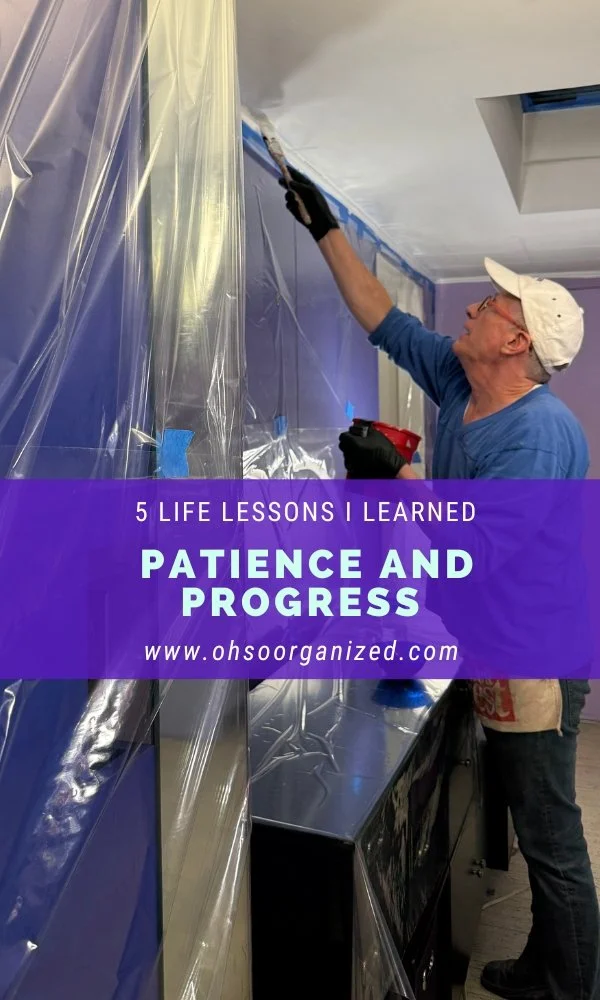
Over the past few months, my husband and I have been working on some home projects. They have taken different amounts of time to complete, and some are still ongoing. The biggest obstacles were setting priorities and managing time constraints. To finish these projects, we had to decide that they were still important enough to pursue. Once we agreed on that, we scheduled the time to complete them. The scheduling was pivotal. Without planning and scheduling, nothing would have happened.

During the process, I reaffirmed and learned a few things. Hopefully, some of these will resonate with you and be useful as you pursue your goals and projects.


5 Life Lessons I Learned About Patience and Promising Progress

Life Lesson #1:  I can tolerate discomfort.

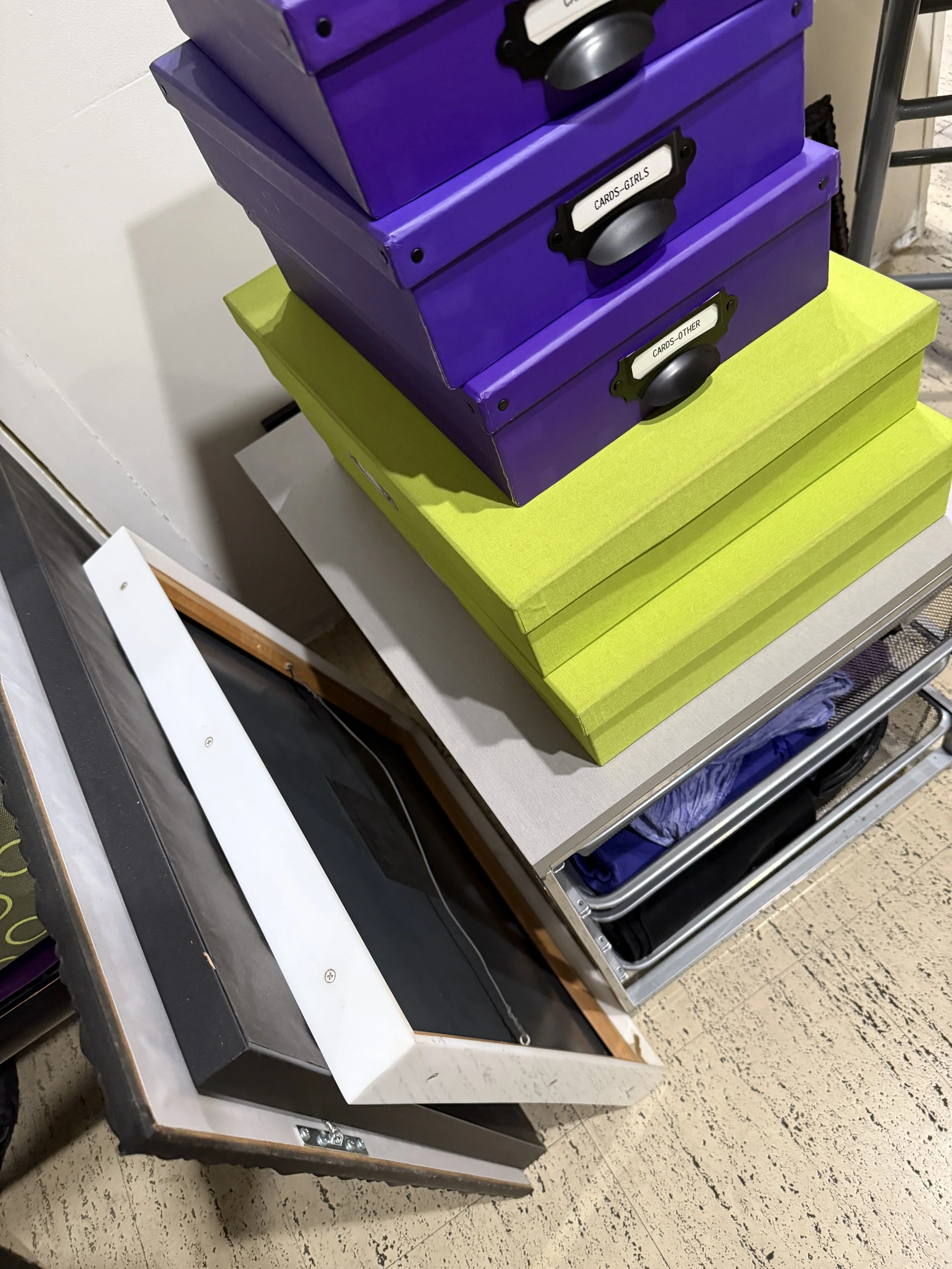
I love the final result when we improve our home. It’s hard for me to tolerate the temporary chaos that happens. Stuff gets pulled out of place, messes spread to multiple areas, and order and organization are disrupted.

I often tell my clients that things usually get worse before they get better. When you’re organizing a closet, for example, and things are pulled out, it doesn’t look great. But as you start editing, rerouting, discarding, and donating, clarity begins to emerge. Once you organize the “keepers,” everything looks and feels better. However, there's a tipping point in the middle of the project where discomfort can surface.

Even though I’m happy when we’re fixing things, I tend to feel more anxious and stressed when we’re in reno mode. That discomfort motivates me to finish what we started as soon as possible. Interestingly, I can easily handle disorder in spaces I don’t live in. But in my own home, I prefer a certain level of order, calmness, and predictability.

Although I prefer not to be uncomfortable, I am capable of tolerating discomfort. This is especially true when it’s temporary or for a good reason. Acknowledging this made me feel less stressed and more accepting of the chaos.


Life Lesson #2: I can transform temporary chaos into an opportunity to reimagine.

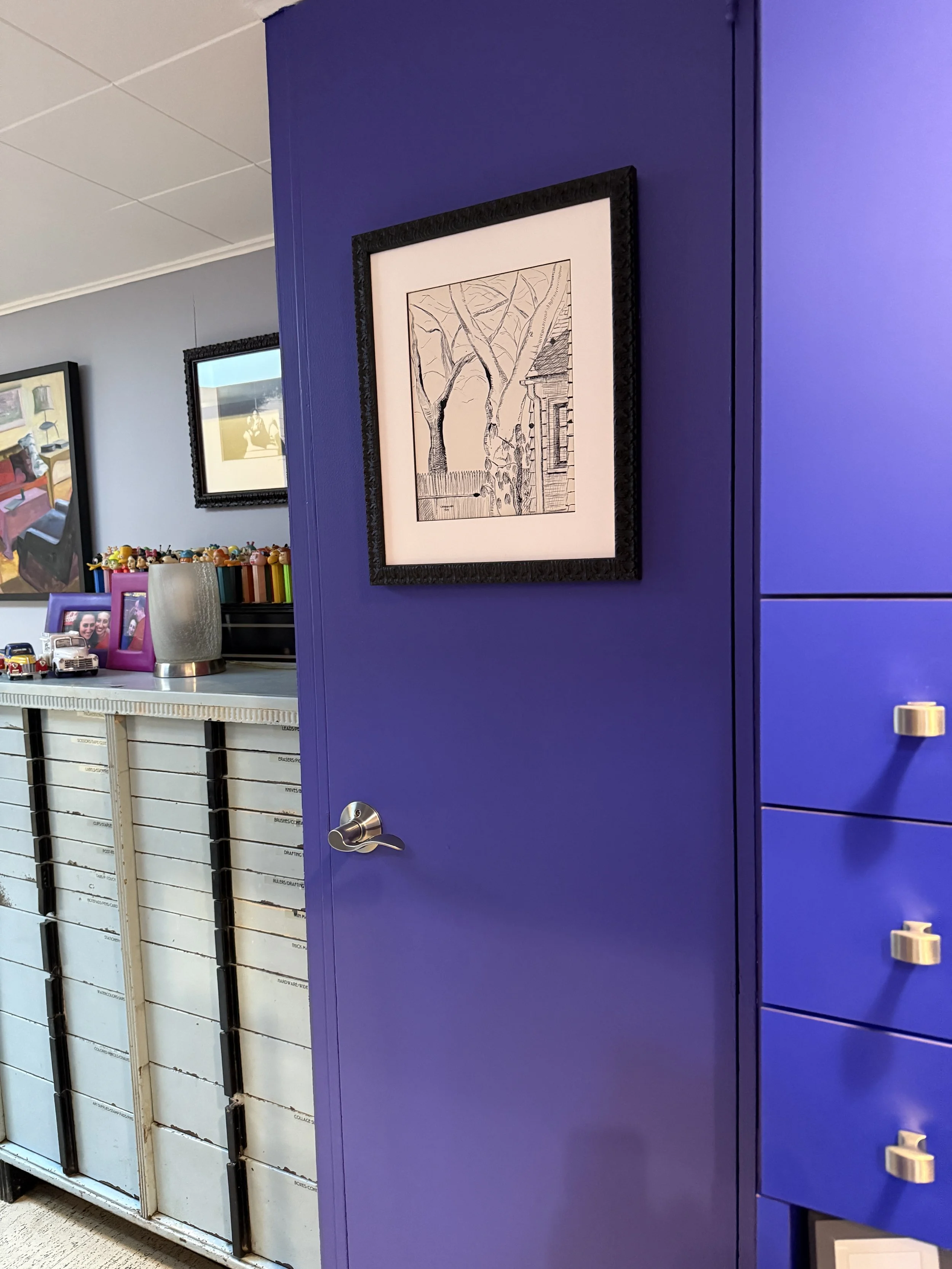
One of the benefits of taking things apart is having time to edit, question, and reimagine. We recently disrupted our entryway to spackle, paint, and do some electrical work. Doing that allowed me to let go of some things and reimagine the placement of certain items, like my Pez collection and one of the rugs.

I also felt inspired to repaint three of the cabinets. One is a big project, which I’ll wait to do in warmer weather. The other two cabinets will be done soon. Without being open to chaos and committing to the entryway project, these other projects might not move forward.

Chaos doesn’t have to be negative. It can be an opportunity to bring positive changes. The temporary chaos stirred my creativity and desire to make more improvements.


Life Lesson #3: I can finish what I start when I prioritize and plan.

This might seem obvious, but when you want to accomplish something, whether it’s organizing, home improvement, or changing a habit, dedicating time and energy to it is essential.

Deciding that something is a priority is the first step. This may involve temporarily setting other things aside while you focus your resources on the main goal. After all, you can accomplish a lot, but not all at once. Something has to give.

Once you've identified your priority, the next step is to schedule and plan dedicated time to work on it. For us, that meant working several evenings and weekends. Again, without blocking out specific calendar dates, it would not have been completed.

I can wish all I want, but without making it a priority and including it in a scheduled plan, it’s unlikely to happen. There is great potential and power in recognizing what I’m capable of when I prioritize and plan.

I can tolerate discomfort.
— Linda Samuels, CPO-CD®, CVOP™

Life Lesson #4: I can feel the joy and satisfaction that come with progress.

Done is great, but so is progress. No goal happens with one step. Progress happens one step, one action, and one commitment at a time. When working on the renovation projects, Steve and I took a moment to appreciate the progress along the way.

Momentum is a powerful force. Taking action motivates you to do more. Experiencing progress encourages further movement. Progress is satisfying and joy-inducing.

Steve and I made sure to see, feel, talk about, and celebrate the progress we've made. It was no small feat to get some of these projects started. We embraced the positive feelings that came with making progress.

Do you know the expression, “Stop and smell the roses?” For this one, let’s pause and celebrate the progress. You took action and worked hard. Now, enjoy it!


Life Lesson #5: I can be awed by my bad-ass husband.

After 42 years of marriage, I am still amazed by my husband. He is a talented man who, among his many skills, knows how to cook, play the drums, coordinate large-scale architectural woodworking projects, and handle almost any type of home improvement or repair project. He’s also a devoted volunteer, a great listener, a wonderful father, and an incredible husband and life partner.

Whether he was finishing the glass tiles in the bathroom, doing electrical work, plumbing, cutting through walls, spackling the ceiling, or painting surfaces, he not only knew what to do but also had the right tools to do it. He also taught me how to do some things, so we could work together on projects. I love that!

I am constantly inspired by Steve’s work ethic, humanity, skills, design sense, dedication, and talent. He was willing to let go of perfection to do his best and finish projects. I’m grateful for and in awe of the incredible human he is. Thank you, Honey!


How Do Patience and Progress Manifest for You?

Patience, or the lack of it, is part of being human. In fact, impatience can sometimes drive progress. When you feel stuck, progress may seem out of reach. However, leaning into that urge to move forward and pushing your patience to its limit can be one way to make progress. Prioritizing and planning are also helpful. What helps you move ahead?

Which ideas resonate most with you? I’d love to hear your thoughts. I invite you to join the conversation.


How Can I Help?

Are you ready to make progress? Do you feel overwhelmed, stuck, or disorganized? I’m here to help! Virtual organizing is an extraordinary path forward – Local feel with a global reach.

Let’s talk. I’m easy to reach.

Getting organized and making progress is possible, especially with support.

 
 
How a Helpful Productivity Reframe Makes More Time for Fun

There’s nothing wrong with being productive. However, life can be stressful if your focus rests solely on to-do lists, getting things done, and making every minute count. You might find it surprising to hear this from a professional organizer. But guess what? Everyone needs time to relax, not be scheduled, and have fun.

Some time ago, one of my clients emailed me an article from The New York Times by Melissa Kirsch, titled “Satisfying vs. Productive.” In it, Kirsch made a distinction between the two concepts. She said that “A productive day implies a day in which you got some things done, a certain degree of industry. Whereas a satisfying day might be one in which you didn’t necessarily do very much at all, but the contents of the day seem totally appropriate given any number of factors…”

Kirsch presented the idea that instead of criticizing yourself for what didn’t get done, you should make time upfront to be more intentional. She suggested setting your day up for success by asking, “What would constitute a satisfying day today?” Think about how you want to feel by the end of the day. What needs to happen (to do or not do) to get there?


The “Satisfying” Perspective

As someone who enjoys being productive, I also value a day that isn’t solely focused on crossing items off my list. Using the “satisfying” lens to reframe the intent of certain days boosts my joy factor and removes the guilt and pressure to produce.

By letting go of my to-dos, I can fully embrace how a day unfolds. The day’s intent might be to have fun or relax. It could involve exploring or wandering. But what the day isn’t is being list or task-driven.


A Perspective Experiment

Recently, I had a chance to experiment with this idea. We took a few days off and put work on hold. During our trip, we did some planned and unplanned things.

One of the impromptu activities was visiting Knoebels, an amusement park. It was so much fun exploring a new place, going on rides, and indulging in good eats. Have you ever had a Belgian waffle ice cream sandwich filled with chocolate peanut butter ice cream? It was delicious!

I digress. My husband loves riding roller coasters, while I prefer the less thrilling rides. I happily waited while he enjoyed the scary attractions. Then he joined me on the gentler ones, like the Ferris wheel and carousel. I love the movement of the carousel—going up, down, round and round with no destination in sight. No worries, just pure delight.

Aside from unpacking, no productivity tasks or thoughts were on my mind when we returned home. Without a doubt, the day and our trip had been soul-nurturing, satisfying, and fun.

I was happy about my response to Kirsch’s question, “What would constitute a satisfying day today?” For me, it had been setting aside the list, doing something spontaneous, and having fun!

What would constitute a satisfying day today?
— Melissa Kirsch

What Does Your Day Look?

Productivity isn’t a dirty word. However, when you start to view productivity as satisfying, it can have a positive effect on your experience. What does a productive day look like for you? Is it the same as or different from a satisfying one?  

I’d love to hear your thoughts. I invite you to join the conversation.


How Can I Help?

Do you need support with organizing, editing, or managing your time? I’d love to help! Virtual organizing is an extraordinary path forward – Local feel with a global reach.

Making your days intentional and satisfying is possible, especially with support.

 
 
One Effective Strategy to Easily Calm Your Mind Clutter

Does this sound familiar? Your mind is filled with a running list of tasks, places to visit, and projects to start (or finish). The thoughts swirling in your brain feel like one giant, cluttered mess.

It can be more challenging to concentrate, take action, or make progress because your ponderings are caught in thought loops. Simply thinking about the possibilities can leave you feeling anxious, exhausted, or demotivated.

Guess what? I’ve been there, too. It’s not that I don’t have task lists to manage, because I do. However, those tasks and events have already been prioritized, planned, and accounted for. They aren’t the issue, but the unaccounted-for ones are. Many of those items require coordination with my husband, Steve.

To clear my mind clutter, I engaged in a helpful process that I will share with you. If your cluttered thoughts have nowhere to go, I encourage you to experiment with this strategy.


The Process to Calm Mind Clutter

Step 1: Activate the Process

  • This may seem obvious, but the first step is to schedule a time to actively work on clearing your mind clutter. This intentional act will help you move in a productive direction.

  • Choose a time when you’re at your best. Steve and I decided to meet on a weekend morning after breakfast when we felt alert and well-rested.


Step 2: Do a Brain Download

  • Release your thoughts, which will immediately clear your mind clutter. This clearing is analogous to decluttering a kitchen counter or editing an overflowing basket of magazines. Relief is felt as space opens up.

  • The brain download can take many forms. Your capture tool can be analog, digital, or auditory. I used a blank piece of paper, which I titled “Planning with Steve.”

  • Create categories if it’s helpful. I separated the page into four columns, each representing a different category: Papers/Logging, Fun, Home, and Financial.

  • Populate your capture tool. As soon as a thought surfaced, we categorized and added it to the corresponding column. For example, “Visit the New York Botanical Garden went into the Fun category. “Clear out the garage” was added to the Home column.


Step 3: Prioritize

  • Your capture tool is probably quite full now. You might feel overwhelmed, as in, “How am I going to get it all done?” You can accomplish everything, but not all at once.

  • Prioritizing comes next. Instead of planning every single thing you captured, select the top three or four things you want to focus on first.

  • There is no right or wrong way to prioritize. For example, your priorities could be time-based if something has a specific deadline, or preference-based, as in what you’d like to accomplish or do first. We opted to prioritize several things from the Fun and Home categories.


Step 4: Commit

  • Commitment is the powerhouse of the mind decluttering strategy. It is essential and is often neglected. Overlooking this aspect can make Steps 1-3 ineffective.

  • Have your calendar ready.

  • Choose one of the priorities you identified.

  • Schedule a time block or blocks for that priority. We began by scheduling dates from the Fun category and then added a few projects from the Home category.

  • Repeat choosing and scheduling until those three or four top priorities are blocked out on your calendar.

  • We found it less overwhelming to focus on and schedule only the top few priorities. We will revisit this process and repeat Steps 3 and 4 once we have made progress on our initial priorities.

  • As an alternate approach, you may prefer to schedule everything from your brain download list in one sitting.

Commitment is the powerhouse of the mind decluttering strategy.
— Linda Samuels, CPO-CD®, CVOP™

The Benefits of Mind Decluttering

There are many benefits to clearing mind clutter. Here are some of the positives I experienced using this process:

  • My mind feels clearer.

  • While we utilized a team approach for mind decluttering, I also see value in using this strategy individually.

  • The unproductive thought loops have ceased.

  • That anxious feeling has dissipated.

  • I feel less burdened by the projects and events because they now have a designated slot for attending to them.

  • I am excited because we have set aside time to focus on things that are important to us.

  • I feel confident that we will complete the tasks we prioritized.

  • I am glad that projects that have been incomplete for a long time will now be brought to completion.

  • I have happy anticipation about the fun things we’ve scheduled.


What Helps You Release Mind Clutter?

There are many ways to ease mind clutter, including the strategy I shared. What helps you declutter your mind? In what ways could the process I described be beneficial to you?

I’d love to hear your thoughts. I invite you to join the conversation.


How Can I Help?

Do you need support with organizing, editing, or decluttering your thoughts? I’d love to help! Virtual organizing is an extraordinary path forward – Local feel with a global reach.

Please schedule a Discovery Call, email me at linda@ohsorganized.com, or call 914-271-5673. Living clutter-free is possible, especially with support.