

Posts tagged let go
5 Life Lessons I Learned About Patience and Promising Progress

Recently, I reread the first blog post I wrote on waiting. As humans, waiting is something we do, yet we’re not always happy about it. We want things to happen quickly, effortlessly, and painlessly. However, things don’t often go that way. Our patience gets tested as waiting can be a challenging experience.

Maybe you’re working toward a big goal that might take months, years, or even decades. Perhaps your energy is low, and progress looks different from what it did earlier in your life. You might also lack clarity about your goal or what your next step will be.

Developing your internal resources, including patience, resilience, and agency, can be beneficial. You can also enlist help from external resources, such as haulers, handymen, trade specialists, a coach, a therapist, or a professional organizer like myself.

Progress is possible. Reaching your goals is doable. Gathering the resources to get there is essential.

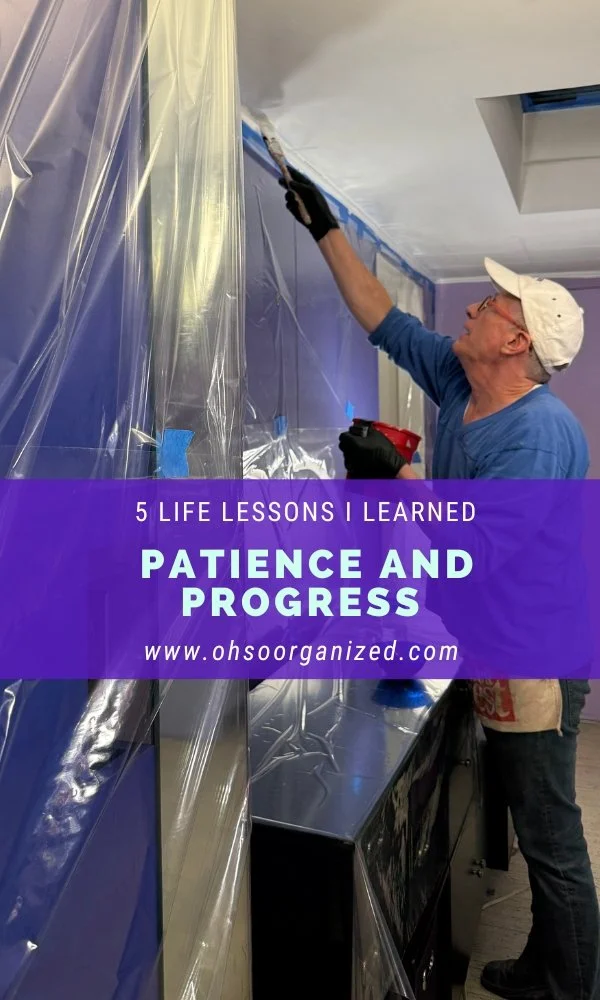
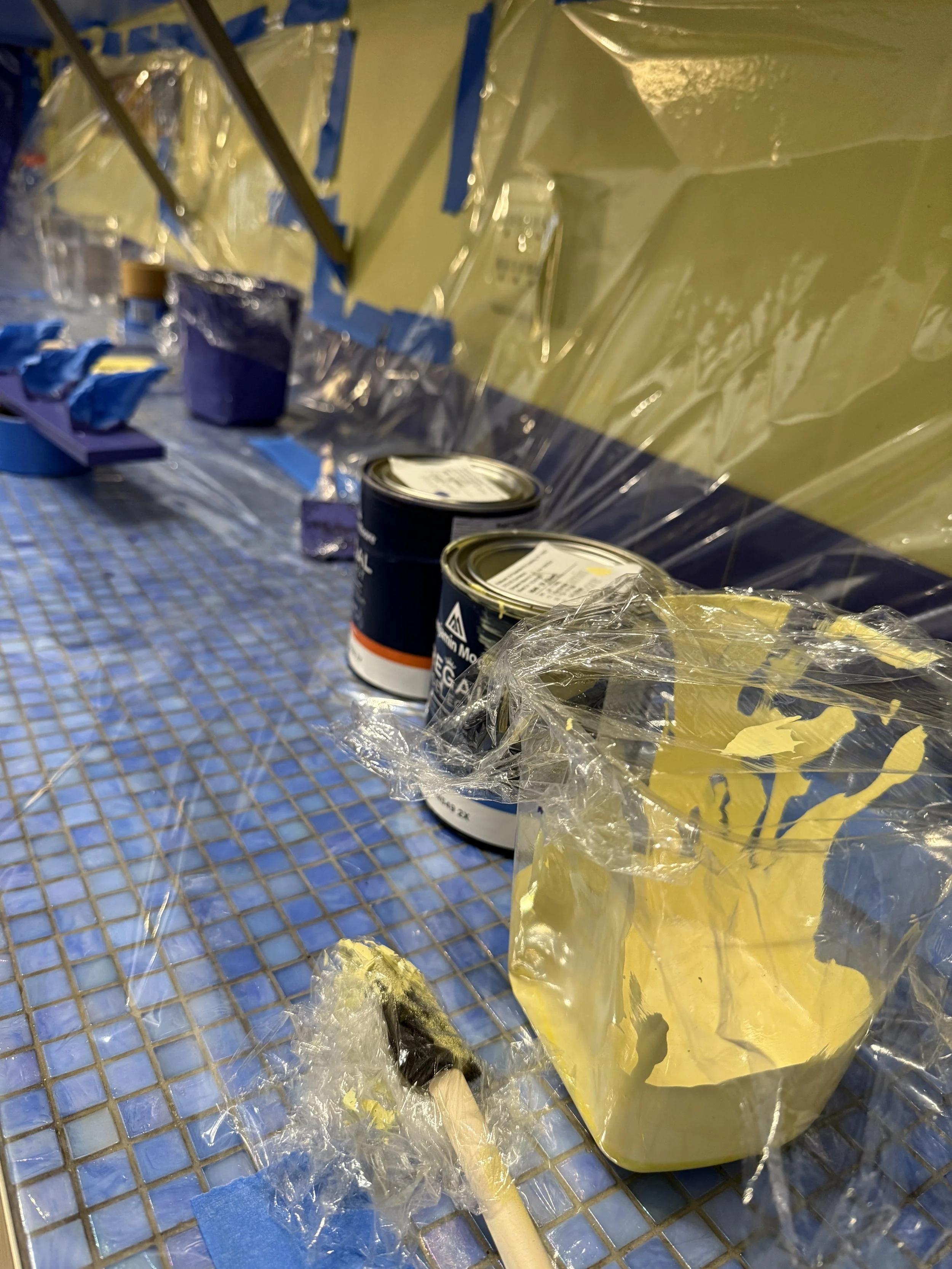
Over the past few months, my husband and I have been working on some home projects. They have taken different amounts of time to complete, and some are still ongoing. The biggest obstacles were setting priorities and managing time constraints. To finish these projects, we had to decide that they were still important enough to pursue. Once we agreed on that, we scheduled the time to complete them. The scheduling was pivotal. Without planning and scheduling, nothing would have happened.

During the process, I reaffirmed and learned a few things. Hopefully, some of these will resonate with you and be useful as you pursue your goals and projects.


5 Life Lessons I Learned About Patience and Promising Progress

Life Lesson #1:  I can tolerate discomfort.

I love the final result when we improve our home. It’s hard for me to tolerate the temporary chaos that happens. Stuff gets pulled out of place, messes spread to multiple areas, and order and organization are disrupted.

I often tell my clients that things usually get worse before they get better. When you’re organizing a closet, for example, and things are pulled out, it doesn’t look great. But as you start editing, rerouting, discarding, and donating, clarity begins to emerge. Once you organize the “keepers,” everything looks and feels better. However, there's a tipping point in the middle of the project where discomfort can surface.

Even though I’m happy when we’re fixing things, I tend to feel more anxious and stressed when we’re in reno mode. That discomfort motivates me to finish what we started as soon as possible. Interestingly, I can easily handle disorder in spaces I don’t live in. But in my own home, I prefer a certain level of order, calmness, and predictability.

Although I prefer not to be uncomfortable, I am capable of tolerating discomfort. This is especially true when it’s temporary or for a good reason. Acknowledging this made me feel less stressed and more accepting of the chaos.


Life Lesson #2: I can transform temporary chaos into an opportunity to reimagine.

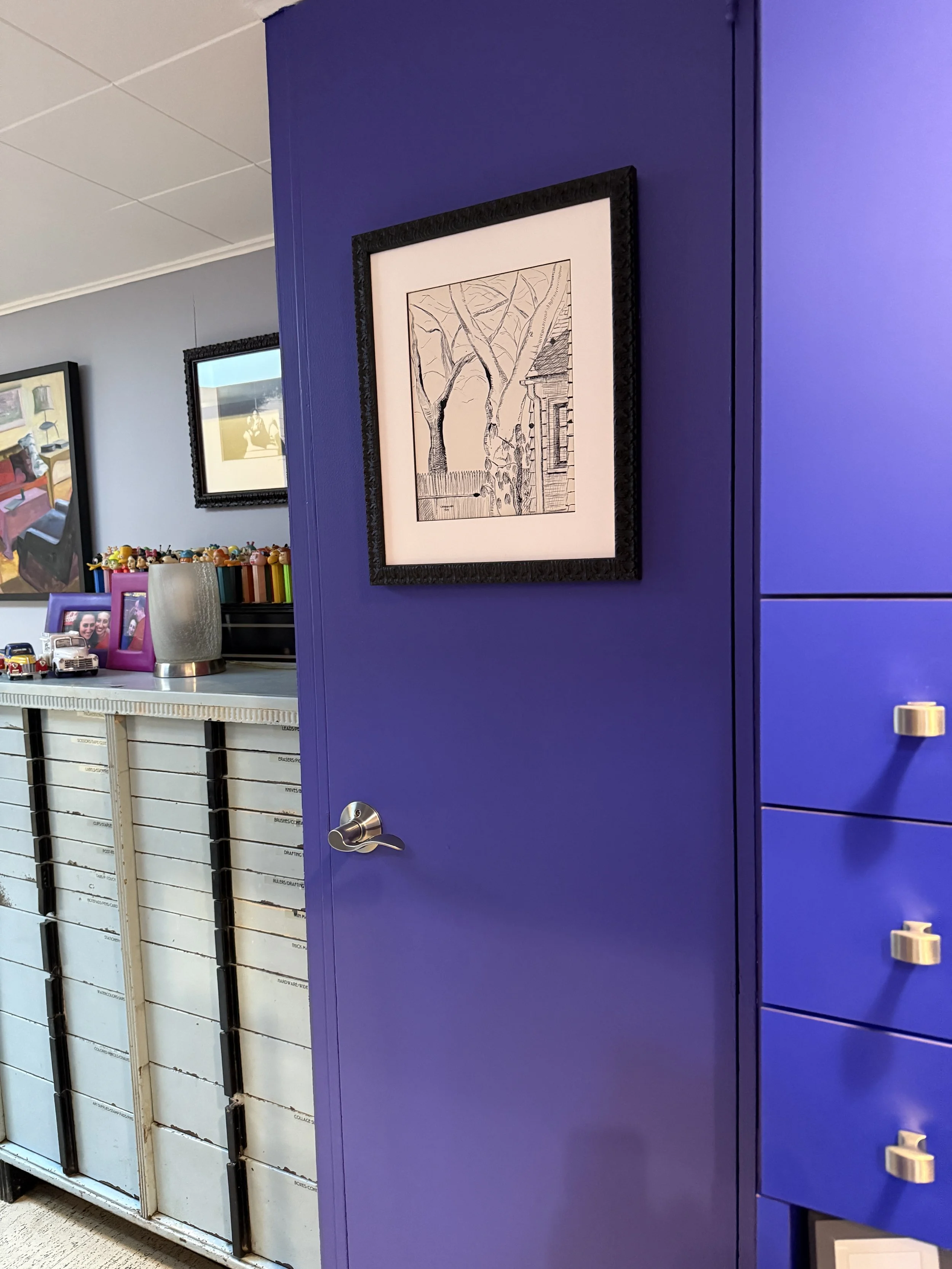
One of the benefits of taking things apart is having time to edit, question, and reimagine. We recently disrupted our entryway to spackle, paint, and do some electrical work. Doing that allowed me to let go of some things and reimagine the placement of certain items, like my Pez collection and one of the rugs.

I also felt inspired to repaint three of the cabinets. One is a big project, which I’ll wait to do in warmer weather. The other two cabinets will be done soon. Without being open to chaos and committing to the entryway project, these other projects might not move forward.

Chaos doesn’t have to be negative. It can be an opportunity to bring positive changes. The temporary chaos stirred my creativity and desire to make more improvements.


Life Lesson #3: I can finish what I start when I prioritize and plan.

This might seem obvious, but when you want to accomplish something, whether it’s organizing, home improvement, or changing a habit, dedicating time and energy to it is essential.

Deciding that something is a priority is the first step. This may involve temporarily setting other things aside while you focus your resources on the main goal. After all, you can accomplish a lot, but not all at once. Something has to give.

Once you've identified your priority, the next step is to schedule and plan dedicated time to work on it. For us, that meant working several evenings and weekends. Again, without blocking out specific calendar dates, it would not have been completed.

I can wish all I want, but without making it a priority and including it in a scheduled plan, it’s unlikely to happen. There is great potential and power in recognizing what I’m capable of when I prioritize and plan.

I can tolerate discomfort.
— Linda Samuels, CPO-CD®, CVOP™

Life Lesson #4: I can feel the joy and satisfaction that come with progress.

Done is great, but so is progress. No goal happens with one step. Progress happens one step, one action, and one commitment at a time. When working on the renovation projects, Steve and I took a moment to appreciate the progress along the way.

Momentum is a powerful force. Taking action motivates you to do more. Experiencing progress encourages further movement. Progress is satisfying and joy-inducing.

Steve and I made sure to see, feel, talk about, and celebrate the progress we've made. It was no small feat to get some of these projects started. We embraced the positive feelings that came with making progress.

Do you know the expression, “Stop and smell the roses?” For this one, let’s pause and celebrate the progress. You took action and worked hard. Now, enjoy it!


Life Lesson #5: I can be awed by my bad-ass husband.

After 42 years of marriage, I am still amazed by my husband. He is a talented man who, among his many skills, knows how to cook, play the drums, coordinate large-scale architectural woodworking projects, and handle almost any type of home improvement or repair project. He’s also a devoted volunteer, a great listener, a wonderful father, and an incredible husband and life partner.

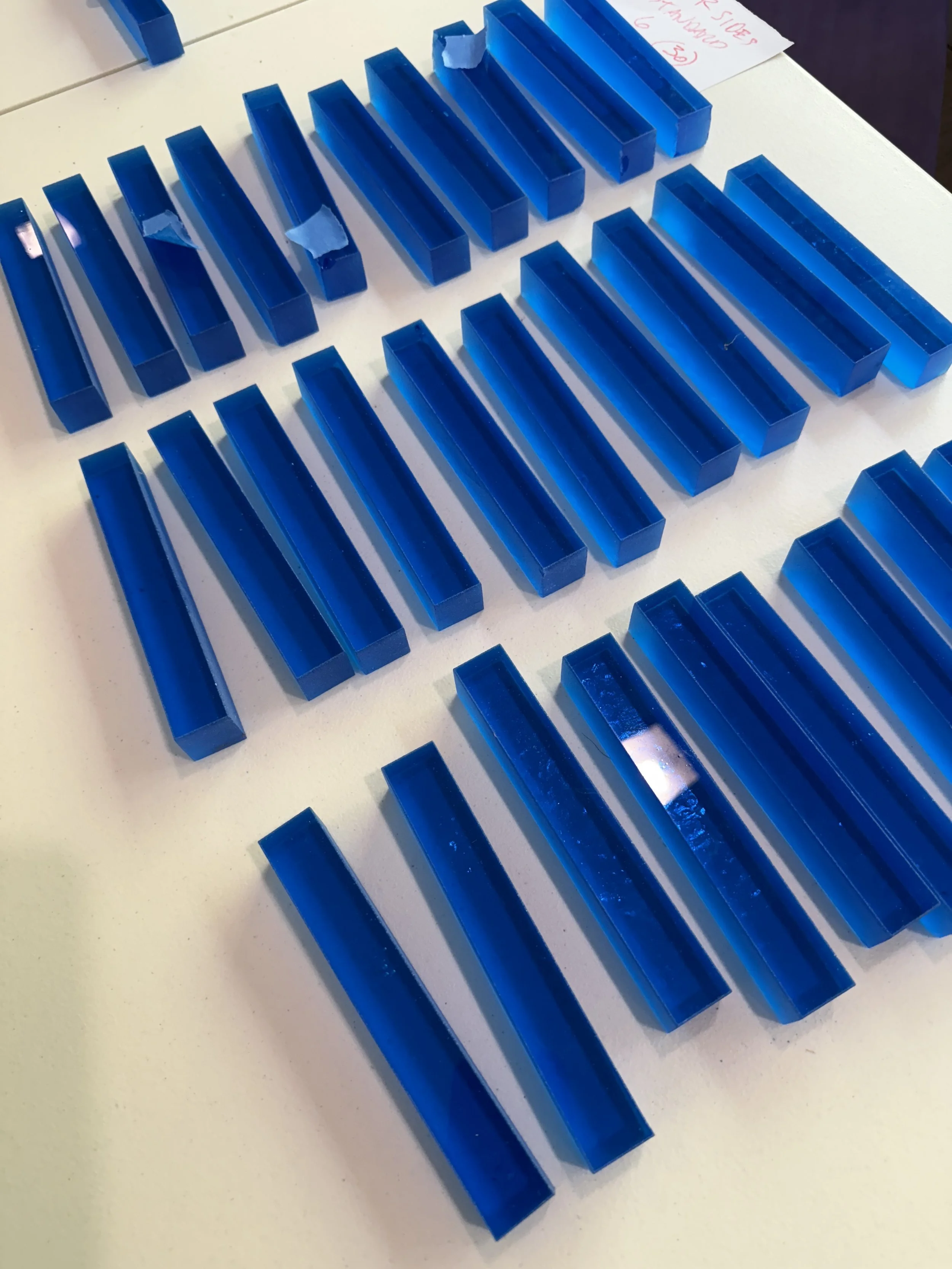
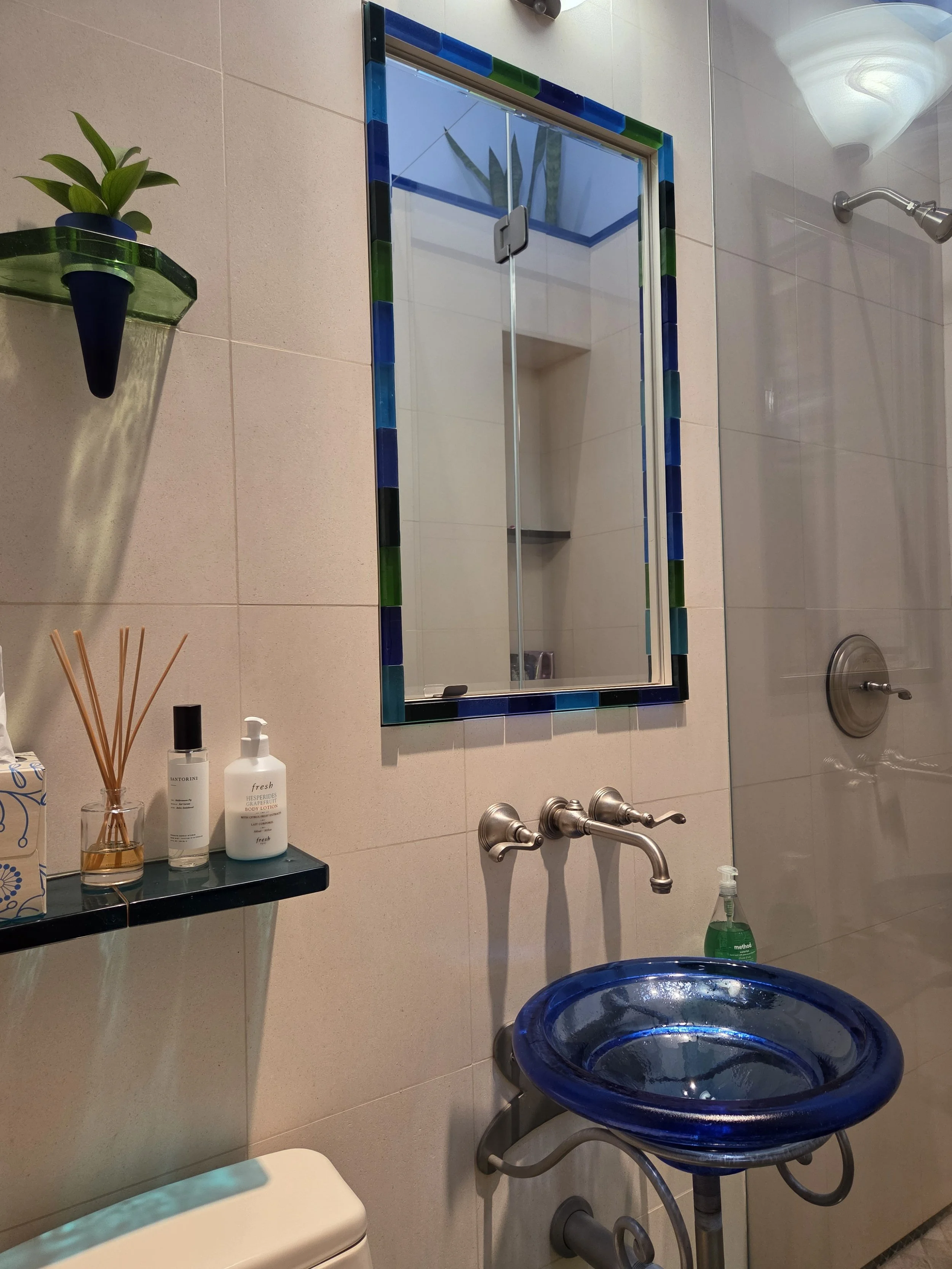
Whether he was finishing the glass tiles in the bathroom, doing electrical work, plumbing, cutting through walls, spackling the ceiling, or painting surfaces, he not only knew what to do but also had the right tools to do it. He also taught me how to do some things, so we could work together on projects. I love that!

I am constantly inspired by Steve’s work ethic, humanity, skills, design sense, dedication, and talent. He was willing to let go of perfection to do his best and finish projects. I’m grateful for and in awe of the incredible human he is. Thank you, Honey!


How Do Patience and Progress Manifest for You?

Patience, or the lack of it, is part of being human. In fact, impatience can sometimes drive progress. When you feel stuck, progress may seem out of reach. However, leaning into that urge to move forward and pushing your patience to its limit can be one way to make progress. Prioritizing and planning are also helpful. What helps you move ahead?

Which ideas resonate most with you? I’d love to hear your thoughts. I invite you to join the conversation.


How Can I Help?

Are you ready to make progress? Do you feel overwhelmed, stuck, or disorganized? I’m here to help! Virtual organizing is an extraordinary path forward – Local feel with a global reach.

Let’s talk. I’m easy to reach.

Getting organized and making progress is possible, especially with support.

 
 
How Celebrating Clutter Can Make Surprising and Heart-Warming Outcomes

Have you ever considered celebrating clutter? Most people don’t think about it that way. We often view clutter as an overabundance of things, thoughts, or time that prevents us from living in the ways we value most.

The idea of celebrating clutter might almost seem like an oxymoron. More often, clutter feels like a burden, which can be overwhelming or paralyzing. It gets in the way and blocks forward movement.

Perhaps a better word choice is honoring instead of celebrating. What becomes possible when you approach clutter in this way? I will share a story with you to illustrate how this idea originated.


The Origin Story for Celebrating Clutter

Recently, I reread a post I wrote fifteen years ago, “As Sure as a Crocus.” Surprisingly, I found a comment (also from then) that I had never seen or responded to. I’m unsure how I missed it because I usually respond to all comments.

This message was especially poignant and heart-warming because it came from my mom, who has passed away. Seeing her signature made me smile, as she signed it with a secret name I knew was hers.

The timing of reading her words was significant for me. It was in March, the anniversary month of her birth and death. She’s been gone for four years, and I miss her terribly. As I read Mom’s sweet note of support, encouragement, and gratitude, I deeply and immediately felt her love and our connection, transcending the constructs of time and space.

How does this connect to celebrating clutter?


Why Celebrate Clutter?

Addressing the clutter in your life can be approached in many ways. One strategy is to identify and release those things that no longer belong, serve a purpose, or align with who you are now. From there, you can focus on organizing the “keepers.”

Another approach is to find the treasures and keepers first. After that step, edit those things you want to let go of.

With both strategies, you will undoubtedly make discoveries. You’ll find letters from loved ones now gone, notes with great ideas to pursue one day, children’s art, old photos, vacation memorabilia, or materials from previous careers.

These findings can evoke a range of emotions as they highlight and represent different stages and aspects of your life.

Celebrating clutter can enhance the decluttering process in several ways by gifting yourself time to:

  • Revisit and appreciate the items you’re releasing.

  • Enjoy and review some of the “treasures.”

  • Celebrate with a dance, high-fives, or cheers after a decluttering session.


Celebrating clutter can enhance the decluttering process.
— Linda Samuels, CPO-CD®, CVOP™

How Does Clutter Affect You?

Decluttering can be energizing or exhausting, depending on your mindset and situation. Approaching it with a celebratory perspective can transform your experience and make it more positive and affirming.

What is your relationship to clutter? What could celebrating clutter look like for you? I’d love to hear your thoughts. I invite you to join the conversation.


How Can I Help?

Do you want support organizing, editing, or decluttering? I’d love to help! Virtual organizing is an extraordinary path forward – Local feel with a global reach.

Please schedule a Discovery Call, email me at linda@ohsorganized.com, or call 914-271-5673. Living clutter-free is possible, especially with support.

 
 
One Fun and Informative Letting Go Exploration with Organizing Colleagues

Letting go is a main focus of my work with clients. They feel overwhelmed and burdened by the stuff in their lives and want my help to let go, organize, and live with more ease. The “stuff” appears as rooms overflowing with physical belongings, calendars scheduled with no breathing space, or minds filled with a barrage of ideas and thoughts.

Recently, I viewed letting go from another perspective. I had the great joy of meeting with my Westchester NAPO Neighborhood Group organizing colleagues for a field trip and tour of a local auction house, The Benefit Shop in Mt Kisco, NY. This is where the things that have been let go of land on their way to their new home.

Our group was graciously welcomed by Pam Stone, Founder and President of The Benefit Shop Foundation Inc. After working on Wall Street for over two decades, Pam changed careers to pursue her passion project. She set up The Benefit Shop, a charitable 501(c)3 non-profit. Proceeds from sales (100% of the profit) go to over 40 charities, which directly help local community organizations. As Pam said, “I really wanted the beneficiary to be my community, for the people who live and work here.”


How Letting Go is Facilitated

The Benefit Shop is what Pam refers to as “one-stop shopping.” They accept items for:

You can bring your things to their 16,000-square-foot gallery and office space. Or, depending on your location, they will bring a truck and a team to you, pack up what you’re letting go of, and transport it to their facility to prepare for auction and sale. With estate buyouts, they will take 90% of a house’s contents.

Pam suggests tagging your items using a colored sticker system.

  • Red = Keep

  • Green = Go

  • Yellow = Think on it.

If you’re not ready to let go of everything at once, they recommend that clients “think on it," which allows them to release things in stages.

They also encourage clients to contribute to the catalogue entries by sharing stories and histories about their objects. Capturing the object’s story enhances its saleability and helps the client feel better about letting go.

Let go, organize, and live with more ease.
— Linda Samuels, CPO-CD®, CVOP™

How Do the Auctions Work?

The Benefit Shop hosts weekly online auctions. They sell around 3,000 items each month to a global audience.

  • All bids, with a few exceptions, start at $1.

  • Items sold at auction are reconciled within 45 days.

  • Clients receive 65%, and The Benefit Shop keeps 35%.

  • Consignors receive a tax-deductible receipt along with their settlement checks.

  • Unsold items can be donated or retrieved by the consignor.

  • The Benefit Shop doesn’t provide shipping for purchased auction items. You can either pick them up at their office or arrange for shipping. They offer resources for several vetted and recommended shipping vendors.


Letting Go Considerations

Are you curious which items are the easiest or most difficult to sell at auction?

Pam said that jewelry (fine and costume) and handbags consistently sell well.

Large china cabinets and dark wood furniture are not good sellers. While mid-century furniture is popular, only high-end, name-recognizable brands such as Eames, Knoll, or Saarinen sell well at auction. The Danish teak mid-century modern style of furniture doesn’t do well.


More Fun Facts About The Benefit Shop

Organization

I was impressed by the organization at The Benefit Shop.

  • Items for sale are logged in, tagged, and grouped by category.

  • They get coded and routed for the auctions in which they will be included.

  • Each category has separate sections at the facility, such as housewares, textiles, clothing, purses, jewelry, art, and furniture.

  • There is a photography area for taking quality photos of every piece.


The Shop Mascot

When you enter the space, a giant taxidermy elk is one of the first things you see. When I asked about it, Pam said it wasn’t for sale because it has become their gallery mascot.

Pop-Ups and Cash & Carry

  • Aside from the online auctions, they also hold occasional onsite pop-up events at their place.

  • In the gallery, there is also a $1 only group of items to purchase as ‘cash and carry’. The items are sold and replenished regularly.


Why Let Go?

It was fun visiting a place representing so many decisions to let go of stuff. The objects received were treated with care and respect. It felt good knowing these things would go to a good home, stay out of the landfill, and the proceeds would help those in need.

The Benefit Shop Foundation

The Westchester NAPO Neighborhood Group visits Pam Stone, Founder and President of The Benefit Shop Foundation in Mt. Kisco, NY


Where Do Your Things Go?

When you let go of things, where do they go? Do you have favorite charities? Have you used auction houses? What helps you release things that have overstayed their welcome?  I’d love to hear your thoughts. I invite you to join the conversation.


How Can I Help?

Do you want support organizing, editing, or letting go? I’d love to help! Virtual organizing is an extraordinary path forward – Local feel with a global reach.

Please schedule a Discovery Call, email me at linda@ohsorganized.com, or call 914-271-5673. Letting go is possible, especially with support.
 
 
Five Favorite Quotes About the Value of Letting Go

What is the value of letting go? In many circumstances, your willingness to let go can reduce frustration and enhance your daily life. Let go when you are:

  • Stuck

  • Overwhelmed

  • Frustrated

  • Burdened by the past

  • Weighed down by physical stuff

  • Distressed by non-supportive processes, relationships, and environments

  • Determined to be present or move forward

I curated a small collection of my favorite letting-go quotes from Yung Pueblo, Chuck Palahniuk, Todd Henry, and Hans Hoffman. Each idea highlights a unique aspect of releasing.

When you allow yourself to let go, you experience less stress, more flow, and better alignment with your values. The past won’t hold you back. You’ll be more grounded in the present and open to possibilities that you couldn’t see before.


FIVE FAVORITE LETTING GO QUOTES

1. Let Go of the Past

Letting go is a process. Release things that no longer serve a purpose in your life. This will create more mindful and present-centered living.

When you put yourself through the process of letting go, you gain greater access to the here and now.
— Yung Pueblo
 

 2. Let Go of the Stuff

When the volume of possessions becomes overwhelming and burdensome, they take up your valuable time and energy. This is a cue to edit. Keep what’s most important. Release what you can. You’ll feel lighter and less encumbered.

The things you own end up owning you.
— Chuck Palahniuk
 

3. Let Go of the Complex

Life is complicated. However, you don’t have to make things more involved than necessary. Consider what you can release to simplify your schedule, processes, or thought patterns.

Is there any place where you are making things more complex than they need to be?
— Todd Henry
 

4. Let Go of the Only Once Idea

Letting go is like a muscle. It needs to be exercised to develop and experience results. Releasing is not a one-and-done occurrence. It requires time, attention, and practice to experience positive results.

Letting go is not a one-time event; it is a habit that requires consistent repetition to become strong.
— Yung Pueblo
 

 5. Let Go of the Unnecessary

Thinking or thriving is impossible when you have too much stuff, crammed schedules, or unhelpful thoughts. The excess gets in the way and makes it challenging to discover what’s most important. Letting go of the unessential will create space for what you truly value.

The ability to simplify means to eliminate the unnecessary so that the necessary may speak.
— Hans Hofmann

Is Letting Go Easy or Challenging?

You might find letting go easy for some areas of your life and more challenging in others. What has been a successful letting-go experience? What has been difficult? I’d love to hear your thoughts. I invite you to join the conversation.


How Can I Help?

Do you want support organizing, planning, or letting go? I’d love to help! Virtual organizing is an extraordinary path forward – Local feel with a global reach.

Please schedule a Discovery Call, email me at linda@ohsorganized.com, or call 914-271-5673. Letting go is possible, especially with support.