

Posts tagged deadline
Vibrant New Year Brings Fresh Starts, Young Blooms, and Welcome Perspectives

The start of a new year can feel hopeful. It’s a chance to try new things, set your goals, adopt healthier habits, and lean into the fresh-start energy the new year brings.

Unlike the end of the year, when you might have been working furiously to complete those last few projects or tasks, January feels different. It’s like a blank journal. There are no entries yet, only possibilities. The story has time to unfold and be written.

Here are some questions to consider as you write your story:

  • What will your pages include?

  • Do you foresee challenges?

  • Are you picturing successes?

  • What are you looking forward to?

  • What do you want to invite in?  

  • What do you want to let go of?

  • What projects, plans, travel, or gatherings will be included?

  • Will your year bring growth, stability, change, or something else?


Fresh Starts

I’m still working through my year-long planning process, which has evolved over time. Some years it has been more involved than others. Last year, my plan was almost non-existent. I was under a tight deadline from the end of December into January. The project completion overlapped with the time I typically use to review and plan. By the time I came up for air, I opted to forgo the ‘planning gymnastics’ I usually do and simply let go. Instead of intensive reviewing and future-thinking, I let the days flow.

This year, however, I returned to reviewing and planning because I missed doing it. I’m taking note of the more casual process from last year and layering it over this one. I don’t want to make the planning process burdensome or too elaborate, as it has felt in the past.

I’m gifting myself time to review and prepare at a non-pressured pace. The process involves several tasks, which include:

  • Review Last Year’s Calendar – This section is complete. I noted workshops given, major projects, day trips and vacations, gatherings hosted, conferences and meetings, learning experiences, volunteer activities, and time with family, friends, and clients.

    What I observed: There was a good balance between work, play, and volunteering, alone and people time, and home and away time.


  • Revisit Previous Planning Tools – Already completed. I reviewed my goals and planning materials from past years. It was fun to see what information I captured, whether it was helpful, what goals I set, and which goals were relevant to bring forward. One thing I definitely want for this year is to simplify my process.

    What I observed: There is value in reviewing and capturing those observations in a visual format. It’s also useful to change things up so the process doesn’t feel stale.


  • Look at iPhone Photos – With a few projects I worked on at the end of last year, I already did a quick pass through the photo library. However, I want to take a longer look so I can “feel” and understand the year visually.

    What I observed: I love taking photos, as evidenced by the volume of images and videos I have taken. These images capture the sights and sounds of nature, people, places, and events. They also feature saturated color, light, shadow, and many close-up details.


  • Read Journal – Reread last year’s entries to identify patterns, significant events, lessons learned, challenges, successes, and the general mood or feeling for the year.


  • Three Things Reflection – Fill out the questions adapted from The Compass Journal. This is one of the tools I’ve used for years and didn’t do last year. I missed it, so I’m working through it again this year. I’m partly done, but I want to read my journal first to help me complete this exercise.

  • Select Word or Motto of the Year – This is another exercise I let go of last year. I opted not to choose a word and settled on a motto only. I liked the 2024 motto, “You got this,” so much that I repeated it for 2025. However, for 2026, I want something new. I compiled a list of potential words and motto options. Nothing is quite right yet, so I’ll let those simmer a while longer before I commit. I’m still uncertain whether I’ll choose a word and a motto, or just one.

Lean into the fresh-start energy the new year brings.
— Linda Samuels, CPO-CD®, CVOP™

Young Blooms

Recently, I received a lovely gift—a jar with a hyacinth bulb in water. My friend told me it would thrive indoors as long as I gave it sun and kept it watered. Weeks passed, and finally the milky-white blooms began to open.

It felt quite magical. One day, they were invisible, and the next, they were in full view. Since then, I’ve been enjoying their perfumey fragrance and the unfolding of more blooms.

What a beautiful analogy for this new year. Tend to your garden. Water it. Give it the nourishment it needs. Your blooms will arrive, bringing wonder, joy, and growth.


Welcome Perspectives

One value of embracing a clean slate is the openness it brings. Instead of superimposing your familiar thought patterns, habits, or conventions on the clutter, you have an opportunity to see things in a new way. The vastness gives us space for a different perspective.

Especially if you’ve been feeling stuck or overwhelmed, having space to see things in a new way is helpful. You can sort things out on your own or ask a trusted source for help.

Several weeks ago, Todd Henry posed this question, which I thought could be helpful for you. He asked,

“What problem are you wrestling with solo that would benefit from outside input or perspective this week?”

Design the year you envision. And if you’re stuck, reach out for help. You don’t have to go this alone.


What Will Your New Year Be Like?

There are many ways to make the most of the new year. I shared a few ways to craft your year. Do any of these resonate with you? What is your process for designing your year? Are you doing anything differently this year?

I’d love to hear your thoughts. I invite you to join the conversation.


How Can I Help?

Do you feel overwhelmed, disorganized, or stressed? Would you like to make changes this year? I’m here to help! Virtual organizing is an extraordinary path forward – Local feel with a global reach.

Let’s connect! I’m easy to reach.

Getting organized and making changes are possible, especially with support.


One Effective Strategy to Easily Calm Your Mind Clutter

Does this sound familiar? Your mind is filled with a running list of tasks, places to visit, and projects to start (or finish). The thoughts swirling in your brain feel like one giant, cluttered mess.

It can be more challenging to concentrate, take action, or make progress because your ponderings are caught in thought loops. Simply thinking about the possibilities can leave you feeling anxious, exhausted, or demotivated.

Guess what? I’ve been there, too. It’s not that I don’t have task lists to manage, because I do. However, those tasks and events have already been prioritized, planned, and accounted for. They aren’t the issue, but the unaccounted-for ones are. Many of those items require coordination with my husband, Steve.

To clear my mind clutter, I engaged in a helpful process that I will share with you. If your cluttered thoughts have nowhere to go, I encourage you to experiment with this strategy.


The Process to Calm Mind Clutter

Step 1: Activate the Process

  • This may seem obvious, but the first step is to schedule a time to actively work on clearing your mind clutter. This intentional act will help you move in a productive direction.

  • Choose a time when you’re at your best. Steve and I decided to meet on a weekend morning after breakfast when we felt alert and well-rested.


Step 2: Do a Brain Download

  • Release your thoughts, which will immediately clear your mind clutter. This clearing is analogous to decluttering a kitchen counter or editing an overflowing basket of magazines. Relief is felt as space opens up.

  • The brain download can take many forms. Your capture tool can be analog, digital, or auditory. I used a blank piece of paper, which I titled “Planning with Steve.”

  • Create categories if it’s helpful. I separated the page into four columns, each representing a different category: Papers/Logging, Fun, Home, and Financial.

  • Populate your capture tool. As soon as a thought surfaced, we categorized and added it to the corresponding column. For example, “Visit the New York Botanical Garden went into the Fun category. “Clear out the garage” was added to the Home column.


Step 3: Prioritize

  • Your capture tool is probably quite full now. You might feel overwhelmed, as in, “How am I going to get it all done?” You can accomplish everything, but not all at once.

  • Prioritizing comes next. Instead of planning every single thing you captured, select the top three or four things you want to focus on first.

  • There is no right or wrong way to prioritize. For example, your priorities could be time-based if something has a specific deadline, or preference-based, as in what you’d like to accomplish or do first. We opted to prioritize several things from the Fun and Home categories.


Step 4: Commit

  • Commitment is the powerhouse of the mind decluttering strategy. It is essential and is often neglected. Overlooking this aspect can make Steps 1-3 ineffective.

  • Have your calendar ready.

  • Choose one of the priorities you identified.

  • Schedule a time block or blocks for that priority. We began by scheduling dates from the Fun category and then added a few projects from the Home category.

  • Repeat choosing and scheduling until those three or four top priorities are blocked out on your calendar.

  • We found it less overwhelming to focus on and schedule only the top few priorities. We will revisit this process and repeat Steps 3 and 4 once we have made progress on our initial priorities.

  • As an alternate approach, you may prefer to schedule everything from your brain download list in one sitting.

Commitment is the powerhouse of the mind decluttering strategy.
— Linda Samuels, CPO-CD®, CVOP™

The Benefits of Mind Decluttering

There are many benefits to clearing mind clutter. Here are some of the positives I experienced using this process:

  • My mind feels clearer.

  • While we utilized a team approach for mind decluttering, I also see value in using this strategy individually.

  • The unproductive thought loops have ceased.

  • That anxious feeling has dissipated.

  • I feel less burdened by the projects and events because they now have a designated slot for attending to them.

  • I am excited because we have set aside time to focus on things that are important to us.

  • I feel confident that we will complete the tasks we prioritized.

  • I am glad that projects that have been incomplete for a long time will now be brought to completion.

  • I have happy anticipation about the fun things we’ve scheduled.


What Helps You Release Mind Clutter?

There are many ways to ease mind clutter, including the strategy I shared. What helps you declutter your mind? In what ways could the process I described be beneficial to you?

I’d love to hear your thoughts. I invite you to join the conversation.


How Can I Help?

Do you need support with organizing, editing, or decluttering your thoughts? I’d love to help! Virtual organizing is an extraordinary path forward – Local feel with a global reach.

Please schedule a Discovery Call, email me at linda@ohsorganized.com, or call 914-271-5673. Living clutter-free is possible, especially with support.


3 Ways to Take a Slow Exhale & Refocus Energy for a New Fresh Start

Are you feeling exhausted after meeting a deadline or finishing a project? While hyper-drive may be necessary to reach completion, downshifting is essential afterward.

Over the past month, I worked hard on the chapter I wrote for the new ICD (Institute for Challenging Disorganization) book to meet their short, time-sensitive deadline. I am excited to have written the chapter on client support and look forward to sharing more once it is published later this year.

How does this relate to fresh starts? The writing deadline straddled the end of one year and the beginning of another. The time I typically take to wrap things up and reimagine what’s next was allocated to the book project. Instead of slowing down as the year closed, things sped up and kept going until earlier this week when I submitted my draft.

Completing the deadline helped reaffirm the necessity of taking a moment to breathe. This slow exhalation is the break I need to refocus my energy and plan what comes next. I identified several elements that I hope you’ll find helpful the next time you are about to switch gears.


3 Ways to Exhale & Refocus Your Energy

1. Reflect

Doing a post-deadline debrief, thinking about how I approached the book project and what I learned, was valuable and affirming.

These are some reflections:

  • Clarified the chapter’s content and description with the committee

  • Made time estimates for how long it would take to write the chapter

  • Scheduled writing blocks on my calendar

  • Said “no” to things that would distract from my objectives

  • Remained flexible with scheduling and idea development

  • Developed an outline of topics to cover

  • Made a plan for how to approach the various sections

  • Hired an accountability partner (thank you, Lana) to keep me on track

  • Set weekly goals

  • Logged hours and other metrics

  • Journaled

Another aspect I noticed was how my weekly blog writing routine prepared me for this project. My well-established writing tools and rituals made writing easier during the scheduled “ICD Book Project” writing blocks. When things didn’t go well during a particular block, I wasn’t discouraged, as I knew it was a normal part of the writing. I had built up resiliency through experiencing similar ups and downs with blogging.

Hiring an accountability partner was incredibly beneficial for the book project, especially because of the tight deadline. It was also fascinating to experience and fully appreciate the benefits from the “lived” perspective. While I have received a lot of positive feedback from my clients, I better understand why they say having me as their accountability partner is helpful. I get it.


2. Sense

I just finished reading a wonderful book How to Winter, by Kari Leibowitz, PhD. I highly recommend it, especially if you’re interested in the far-reaching benefits of developing a “positive wintertime mindset.”

One of the things that she wrote about was how to develop an awareness of those things you love about winter, like:

  • the “fresh” smell of the air that slow-moving molecules create

  • the cozy warmth of being around a firepit

  • the delight of sipping hot cocoa with marshmallows or

  • the happy sensation of curling up with a warm blanket and book

While I engage regularly with my senses, I noticed how they were heightened during this transition time because I was reading Leibowitz’s book. When I was outside, instead of thinking about how cold I was, I breathed in the crisp air and appreciated the cyclical nature of the dormant, bare trees. Instead of feeling guilty for wanting to go to bed earlier, I recognized the value of rest and delighted in the visceral calming effects of my bedtime rituals.

Appreciating and sensing is a gentle way to experience presence and gratitude for what is here now. Lingering in this presence through my senses removes concern about what will be next and helps replenish my energy.

Of all things, as if on cue, the snow just started falling. At first, the flakes were sparse and descended slowly. Then, the flow and pace increased as the sky and landscape turned white. We’re expecting five to seven inches of snow over the following hours. I’m so excited! Perhaps there will be some hot cocoa in my future. A white covering will soon transform everything. Talk about a clean slate! It’s the perfect visual to encourage a fresh start.


While hyper-drive may be necessary to reach completion, downshifting is essential afterward.
— Linda Samuels, CPO-CD®, CVOP™

3. Nourish

Engaging in nourishing activities that support your well-being is another way to slow down and refocus your energy. When you have exerted a lot of effort, balancing it with restorative practices is vital.

My supportive activities include meditation, yoga, walking, and journaling. There are others, too, like exploring new places, seeing friends and family, watching movies, eating healthfully, or getting enough sleep.

And then there’s soup—yes, soup! Making and eating soup is a thoroughly enriching activity for me. I love washing and chopping ingredients, adding them to the big pot, and creating a delicious meal with a few simple, fresh items.

After hours of simmering, my husband and I will share this hot meal as we look out the dining room window into the chilly night, watching the snow gently fall. Maybe we’ll even eat by candlelight. If that’s not cozy and nourishing, I don’t know what is.

What helps you slow down and restore energy? How can taking a restorative break energize your fresh start? I’d love to hear your thoughts. I invite you to join the conversation.


How Can I Help?

Do you want support organizing, planning, or restoring energy? I’d love to help! Virtual organizing is an extraordinary path forward – A local feel with a global reach.

Please schedule a Discovery Call, email me at linda@ohsorganized.com, or call 914-271-5673. Change is possible, especially with support.


How a Hard Deadline Encourages You to Focus and Really Let Go

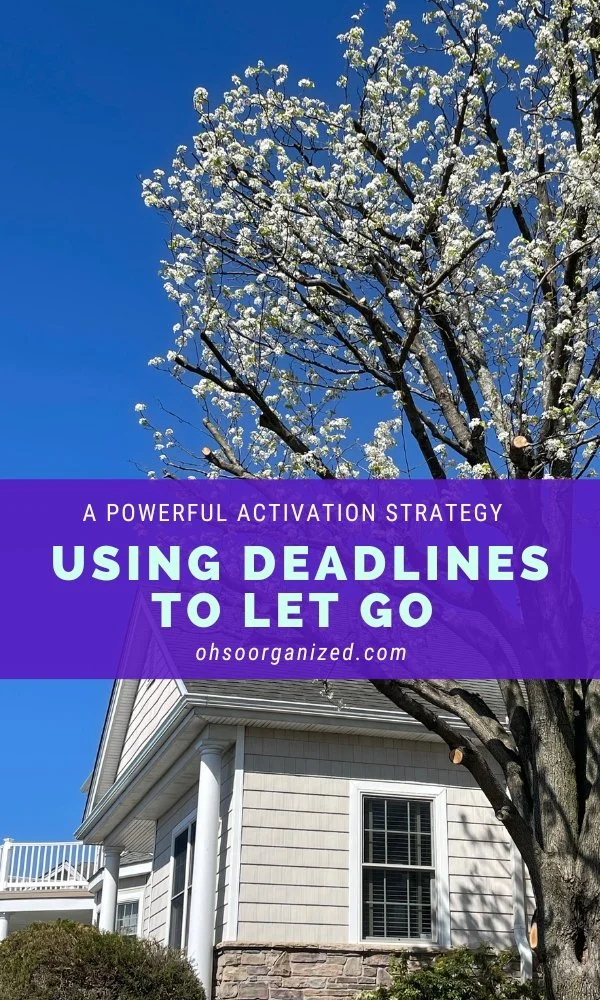
Spring is a fun time of year. It’s a welcome change from grayer winter days. I’m continually amazed by the new beautiful blooms appearing every day. The daffodils are starting to wilt as the tulips and lilacs are emerging. Growth radiates hope and possibilities as the landscape becomes greener and more colorful.

Lightening up and letting go are integral to the spring season. However, sometimes, the letting go process can feel overwhelming. You might be trying to decide what to let go of or are challenged with activating.

There are many ways to work through to the other side. One letting go strategy is so effective that I highly recommend trying it. I’ve used this myself and with clients, and it always works. I’m using this exact strategy now, which I’ll share.


Value of a Deadline

You might want to edit but are having difficulty beginning. Perhaps you want to declutter because guests will be visiting. Maybe you feel like your space is piled with stuff that you no longer want. Or, you’re thinking about downsizing and letting go of the excess. Your “why” is clear, but you’re procrastinating.

One of the best letting go strategies is to combine a deadline with accountability. For example, I have a donation pick-up scheduled this week with GreenDrop®. They are a nationwide resource that accepts donations through pick-up or drop-off locations. Knowing GreenDrop® will be here on a specific date incentivizes me to let go now. I’ve been filling bags and boxes of things I want to release. When I set the deadline, I gave myself enough time by factoring in my other commitments.

Here's the thing. Could I let go of even more? Sure! However, given the time I have to edit, I’m letting go of enough to make a difference. The good news is I can always schedule another pick-up when I’m ready to say goodbye to more.


Letting Go Questions

I often think about letting go. Sometimes, it’s about unhelpful thoughts or time challenges. Yet, right now, I’m focused more on editing the physical stuff- things like clothing, household wares, linens, books, cosmetics, or pantry items.

When decision-making, I ask letting go questions like:

  • Has it overstayed its welcome?

  • Does it fit?

  • Do I still like it?

  • Is it damaged beyond repair or even repair-worthy?

  • Do I use or wear it anymore?

  • Is it expired?

  • Is it taking up space and no longer worth the real estate?

  • Has it served its purpose?

  • Is it necessary?

  • Am I ready to say, “It’s been nice knowing you?”

One of the best letting go strategies is to combine a deadline with accountability.
— Linda Samuels, CPO-CD®, CVOP™

Do I ever get stuck? Of course. I expect it, but I don’t let that deter me. I focus first on the less challenging items. Then, I circle back to the trickier things and make a decision. I might keep those things a little longer or let them go. It’s a low-pressure, fluid process.

Do you use deadlines to facilitate letting go? What works for you? I’d love to hear your thoughts and invite you to join the conversation.

If you need help with letting go, reach out anytime. Please email me, Linda, at linda@ohsorganized.com, call 914-271-5673, or schedule a Discovery Call. Letting go is possible, especially with support.


How can I help?