Posts tagged donating
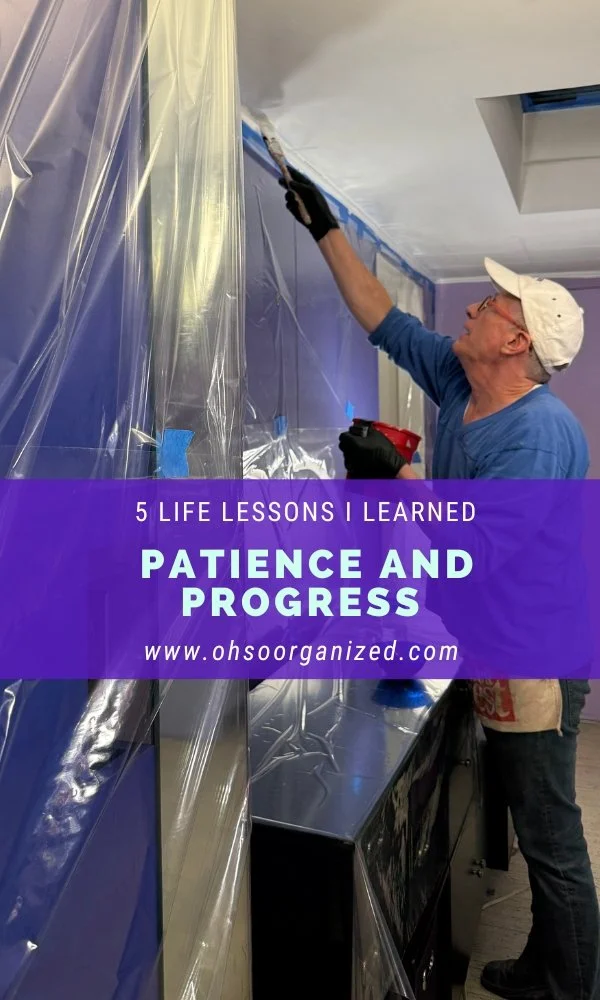
5 Life Lessons I Learned About Patience and Promising Progress

Recently, I reread the first blog post I wrote on waiting. As humans, waiting is something we do, yet we’re not always happy about it. We want things to happen quickly, effortlessly, and painlessly. However, things don’t often go that way. Our patience gets tested as waiting can be a challenging experience.

Maybe you’re working toward a big goal that might take months, years, or even decades. Perhaps your energy is low, and progress looks different from what it did earlier in your life. You might also lack clarity about your goal or what your next step will be.

Developing your internal resources, including patience, resilience, and agency, can be beneficial. You can also enlist help from external resources, such as haulers, handymen, trade specialists, a coach, a therapist, or a professional organizer like myself.

Progress is possible. Reaching your goals is doable. Gathering the resources to get there is essential.

Over the past few months, my husband and I have been working on some home projects. They have taken different amounts of time to complete, and some are still ongoing. The biggest obstacles were setting priorities and managing time constraints. To finish these projects, we had to decide that they were still important enough to pursue. Once we agreed on that, we scheduled the time to complete them. The scheduling was pivotal. Without planning and scheduling, nothing would have happened.

During the process, I reaffirmed and learned a few things. Hopefully, some of these will resonate with you and be useful as you pursue your goals and projects.


5 Life Lessons I Learned About Patience and Promising Progress

Life Lesson #1:  I can tolerate discomfort.
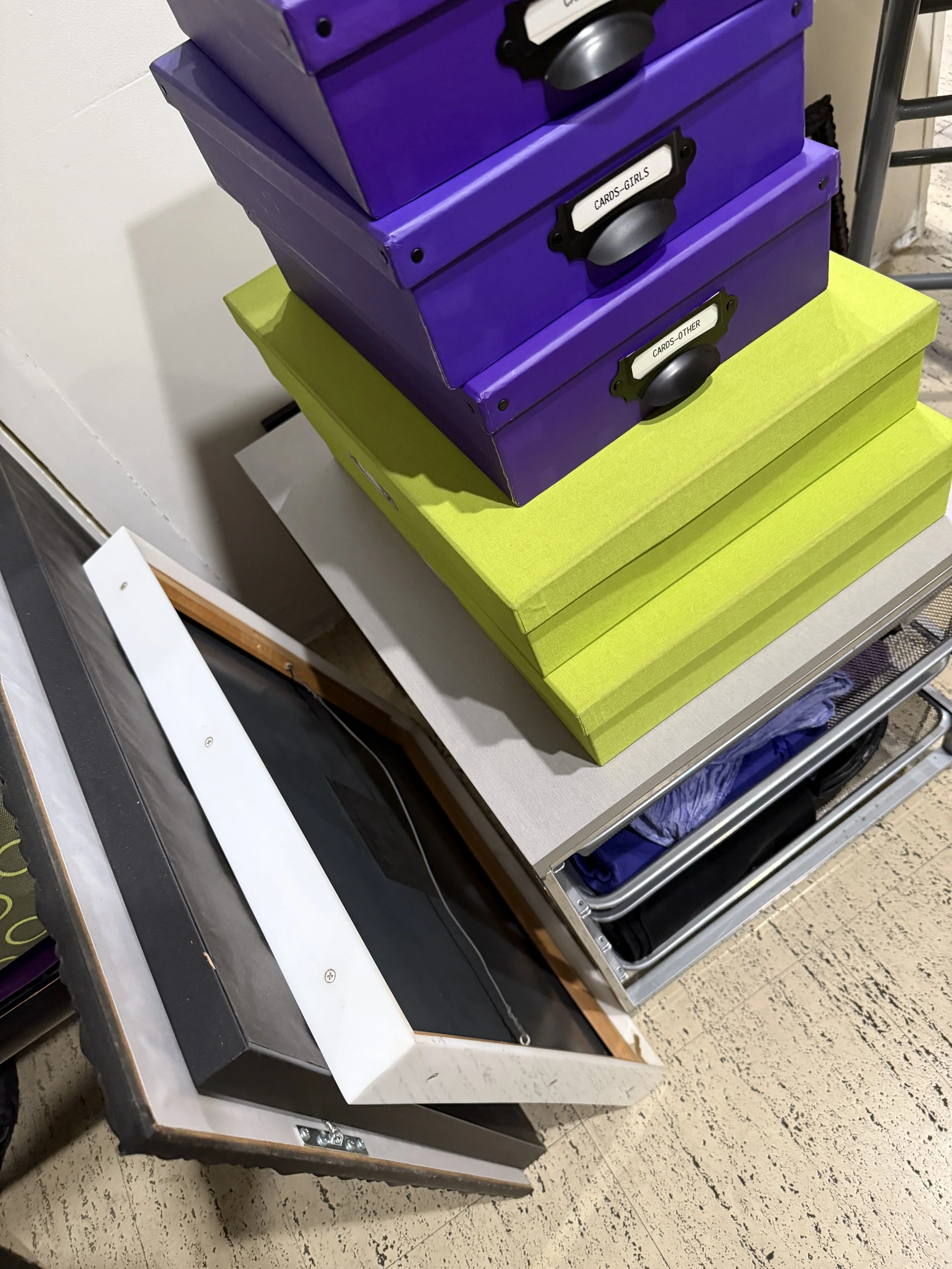
I love the final result when we improve our home. It’s hard for me to tolerate the temporary chaos that happens. Stuff gets pulled out of place, messes spread to multiple areas, and order and organization are disrupted.

I often tell my clients that things usually get worse before they get better. When you’re organizing a closet, for example, and things are pulled out, it doesn’t look great. But as you start editing, rerouting, discarding, and donating, clarity begins to emerge. Once you organize the “keepers,” everything looks and feels better. However, there's a tipping point in the middle of the project where discomfort can surface.

Even though I’m happy when we’re fixing things, I tend to feel more anxious and stressed when we’re in reno mode. That discomfort motivates me to finish what we started as soon as possible. Interestingly, I can easily handle disorder in spaces I don’t live in. But in my own home, I prefer a certain level of order, calmness, and predictability.

Although I prefer not to be uncomfortable, I am capable of tolerating discomfort. This is especially true when it’s temporary or for a good reason. Acknowledging this made me feel less stressed and more accepting of the chaos.


Life Lesson #2: I can transform temporary chaos into an opportunity to reimagine.
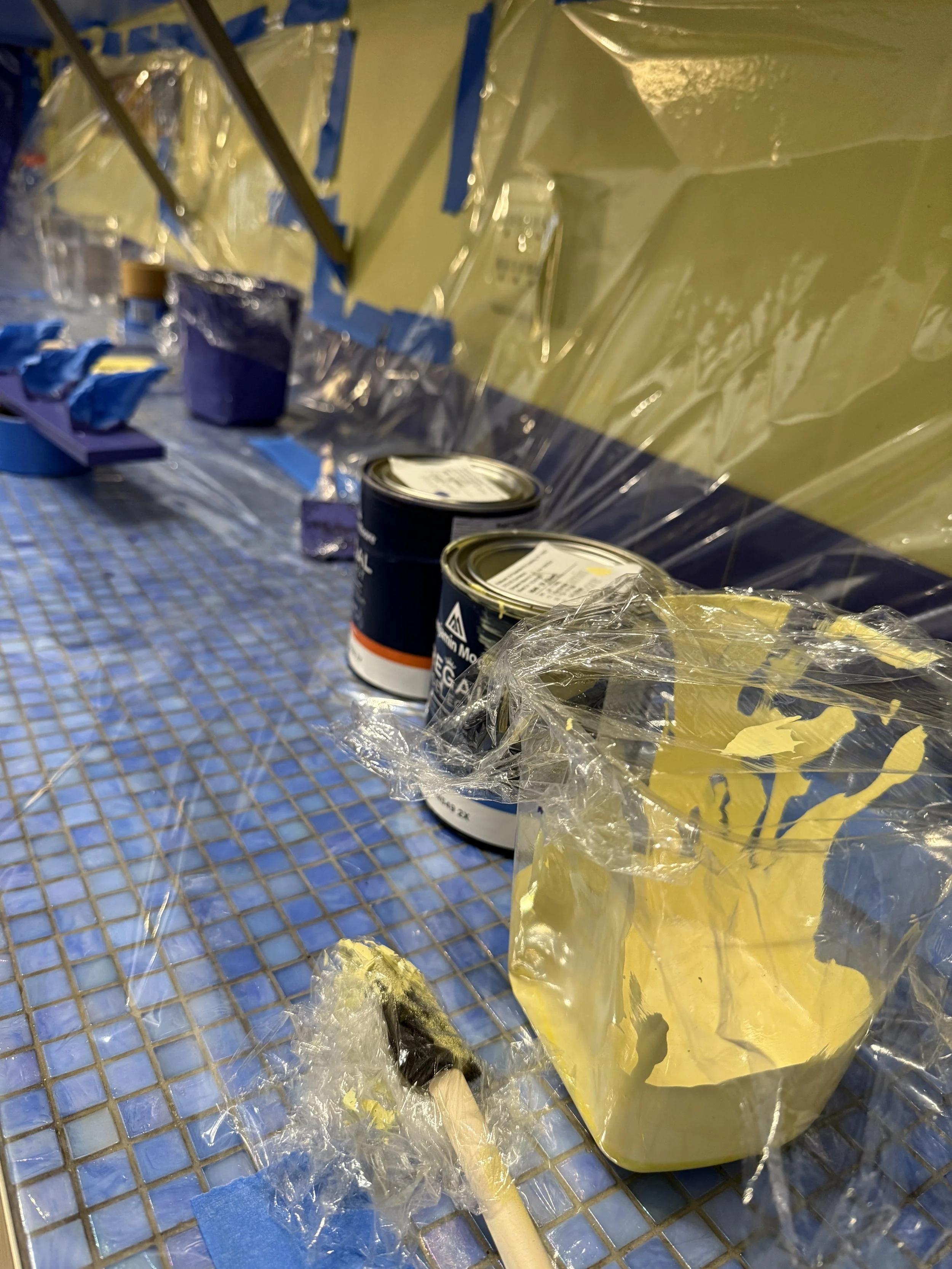
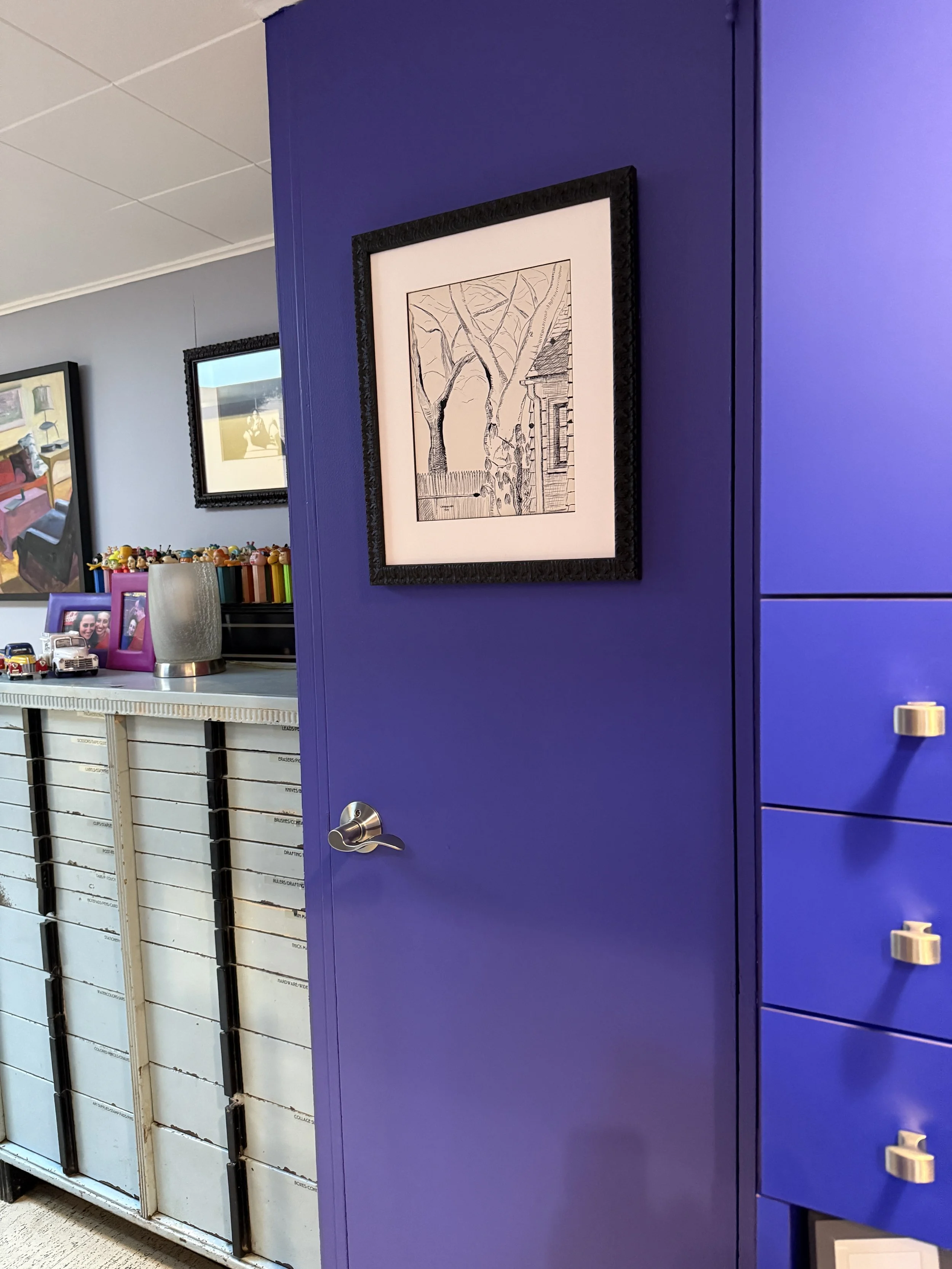
One of the benefits of taking things apart is having time to edit, question, and reimagine. We recently disrupted our entryway to spackle, paint, and do some electrical work. Doing that allowed me to let go of some things and reimagine the placement of certain items, like my Pez collection and one of the rugs.

I also felt inspired to repaint three of the cabinets. One is a big project, which I’ll wait to do in warmer weather. The other two cabinets will be done soon. Without being open to chaos and committing to the entryway project, these other projects might not move forward.

Chaos doesn’t have to be negative. It can be an opportunity to bring positive changes. The temporary chaos stirred my creativity and desire to make more improvements.


Life Lesson #3: I can finish what I start when I prioritize and plan.
This might seem obvious, but when you want to accomplish something, whether it’s organizing, home improvement, or changing a habit, dedicating time and energy to it is essential.

Deciding that something is a priority is the first step. This may involve temporarily setting other things aside while you focus your resources on the main goal. After all, you can accomplish a lot, but not all at once. Something has to give.

Once you've identified your priority, the next step is to schedule and plan dedicated time to work on it. For us, that meant working several evenings and weekends. Again, without blocking out specific calendar dates, it would not have been completed.

I can wish all I want, but without making it a priority and including it in a scheduled plan, it’s unlikely to happen. There is great potential and power in recognizing what I’m capable of when I prioritize and plan.

I can tolerate discomfort.
— Linda Samuels, CPO-CD®, CVOP™

Life Lesson #4: I can feel the joy and satisfaction that come with progress.
Done is great, but so is progress. No goal happens with one step. Progress happens one step, one action, and one commitment at a time. When working on the renovation projects, Steve and I took a moment to appreciate the progress along the way.

Momentum is a powerful force. Taking action motivates you to do more. Experiencing progress encourages further movement. Progress is satisfying and joy-inducing.

Steve and I made sure to see, feel, talk about, and celebrate the progress we've made. It was no small feat to get some of these projects started. We embraced the positive feelings that came with making progress.

Do you know the expression, “Stop and smell the roses?” For this one, let’s pause and celebrate the progress. You took action and worked hard. Now, enjoy it!


Life Lesson #5: I can be awed by my bad-ass husband.

After 42 years of marriage, I am still amazed by my husband. He is a talented man who, among his many skills, knows how to cook, play the drums, coordinate large-scale architectural woodworking projects, and handle almost any type of home improvement or repair project. He’s also a devoted volunteer, a great listener, a wonderful father, and an incredible husband and life partner.

Whether he was finishing the glass tiles in the bathroom, doing electrical work, plumbing, cutting through walls, spackling the ceiling, or painting surfaces, he not only knew what to do but also had the right tools to do it. He also taught me how to do some things, so we could work together on projects. I love that!

I am constantly inspired by Steve’s work ethic, humanity, skills, design sense, dedication, and talent. He was willing to let go of perfection to do his best and finish projects. I’m grateful for and in awe of the incredible human he is. Thank you, Honey!


How Do Patience and Progress Manifest for You?

Patience, or the lack of it, is part of being human. In fact, impatience can sometimes drive progress. When you feel stuck, progress may seem out of reach. However, leaning into that urge to move forward and pushing your patience to its limit can be one way to make progress. Prioritizing and planning are also helpful. What helps you move ahead?

Which ideas resonate most with you? I’d love to hear your thoughts. I invite you to join the conversation.


How Can I Help?

Are you ready to make progress? Do you feel overwhelmed, stuck, or disorganized? I’m here to help! Virtual organizing is an extraordinary path forward – Local feel with a global reach.

Let’s talk. I’m easy to reach.

Getting organized and making progress is possible, especially with support.


New Exciting Bedroom Fun Look Transformation: From Possibility to Reality

It’s a funny thing about possibilities. Dreaming and imagining are part of a possibility-thinking process. Simultaneously, angst, ambivalence, or uncertainty can also be present. Why is that?

You understand and live your current reality. It may not be how you want it, but it’s familiar. Thinking about alternatives can be thrilling, anxiety-producing, or scary. Change requires time, attention, and resources, which you might or might not have.

Something happened to me recently. Who knew a seemingly simple guest bedroom renovation and organizing project would be such an emotional, satisfying, liberating, and poignant experience?

For years, I wanted to reimagine our guest bedroom. Initially, the room was my art studio and office. After our first daughter, Allison, was born, it became her bedroom. When her sister, Cassie, was born, it became their shared space, “the girls’ room.” Fast-forward to them leaving for college, and it turned into a guest room. However, while I made a few minor changes after they left, I never altered the wall colors, window treatments, or closet.

The girls said, “Mom, you can change the room any way you want. It’s OK.” They repeated this message to me for years. The kids had moved on and kept encouraging me to, too. However, part of me wasn’t ready to let go of certain remnants of their living-at-home years. How could I paint over Allison’s murals or cover up the pencil growth chart markings? Also, I didn’t have the mental bandwidth to figure out how I wanted the room to be until now.


Possibilities Meet the Moment

What shifted? We had other home improvement projects happening, and I knew that the guest room’s time had come. My motivation to make this change was heightened. I didn’t want another year to pass without completing this goal. I was finally ready to turn possibilities into reality.


9 Phases of the Guest Bedroom Project

  • Imagine – Envision the possibilities. What do I want the room to look and feel like? How can I make it comfortable for guests and also include functional storage? What will the color scheme be? Can I refer to old vision boards or other visual inspiration sources?

  • Plan – Think through the process. How much time do I need to complete this project? Where can we (my husband, Steve, and I) carve out time in our schedule to work on this? How much of this project can we do ourselves? How much outside help do we need? Should we rip out and install a new closet interior or only paint the existing one?

  • Gather Resources – Identify vendors and resources. Which vendors can I use for painting and construction, purchasing blinds, framing, buying furniture, and redoing the closet? Which vendors are best for buying organizing containers and other products?

  • Budget – Determine the costs. What estimates do I need to get? What will different parts of the project cost (painting, furniture, headboard, bedding, blinds, closet, bins)? What is our overall budget?

  • Empty – Prepare the space for transformation. What must be removed from the room to prepare for painting and construction, and when can we empty it? How can I prepare emotionally for the temporary chaos and disruption?

  • Renovate – Do the work. How many days will the painter need to prepare, demo the closet, patch, and paint? After the room is painted and before we return the contents, when can Steve install the new Elfa® closet? When can Steve install the new window blinds?

  • Edit – Make decisions about room contents. Which items can I let go of by selling, donating, tossing, or giving away? Which things will return to the room? Which items need to be replaced? Which items belong elsewhere?

  • Organize – Return ‘keepers’ in an organized way. How will the contents be organized back into the room? Which items will need new storage containers? Do they need labels?

  • Finish – Complete the final touches. When will all furniture, lights, books, memorabilia, and games be returned to the room? Which bedding will I use? When can we hang the pictures, mount the wall hooks, and add the door stop? When will I consider the room done?


Emotional Surprises

When we emptied the room to prepare for the painter, I was surprised by how emotional I felt. I was physically handling boxes of the kiddos’ memorabilia, photo albums, books, games, and art. Touching, moving, and looking at objects from the past stirred up many emotions. I felt a powerful combination of gratitude, sadness, joy, and love.

I saw photos and objects from the past. Some images were of loved ones who are no longer alive. I looked at the kids’ art, writings, and school projects. I marveled at our detailed records of the milestones and everyday experiences. It was a journey of emotions as I reflected and remembered the beautiful years we spent raising our daughters.

Even when the room was empty, I could feel the love reverberating within its walls. Cherished memories traveled through time and space, which filled my heart and mind.

Bringing possibilities to fruition is gratifying.
— Linda Samuels, CPO-CD®, CVOP™

Practicing Flexibility

During the project, I remained flexible about my options, which was helpful. When a room's contents are removed, many unanticipated things can happen. Gifting yourself the flexibility to make new or different choices is beneficial.

  • Closet – The closet required some thought. Do we paint the existing closet or rip it out to install a new one? It would cost more to have a new closet interior. However, time-wise, it seemed most practical to redo it now. Plus, we would gain more storage space.

  • Furniture – After emptying the room, we liked how spacious it felt with less. While we intended to return the desk, we realized it was unnecessary and took up too much space. I’m letting go of the desk.

  • Art – After emptying the room and painting the interior, Allison’s murals and other framed art were no longer visible. With blank walls, I reimagined the space. We decided to have more blank wall space and only hang a few pieces, including a new one. I printed and framed one of the landscape photos I had taken in the Finger Lakes.

  • Memorabilia – I texted the kiddos photos and asked what they wanted to keep. I respected their responses and either let go or kept things accordingly. I also shared several pictures of their projects, writings, and other memorabilia I thought they’d get a kick out of seeing.


9 Lessons Learned

  • Imagining possibilities is fun and creative.

  • Bringing possibilities to fruition is gratifying.

  • Change is refreshing.

  • Change encourages more change.

  • Emptying one room sparked a reimagining, tweaking, and reorganizing of other areas, such as the pantry and our bedroom.

  • Letting go of things that have overstayed their welcome is liberating.

  • Life has stages. Organizing your space for the phase you’re in is affirming.

  • Embrace gratitude for what was and what is.


The Bedroom Transformation Video


What’s Possible for You?

How does possibility thinking show up for you? What changes have you made or want to make? I’d love to hear your thoughts. I invite you to join the conversation.

Are you ready to get unstuck, plan a new project, or create new organizing systems? If so, I’m here to help. Please email me at linda@ohsorganized.com, call 914-271-5673, or schedule a Discovery Call. Moving forward is possible, especially with support.


How to Joyfully Make Discovering "Small Awe" Your Next Step

What are your days like? Is life moving along smoothly? Or are your days filled with overwhelm, ups and downs, and challenges? There are times when finding your next step flows easily. At other points, the next step feels elusive. What if next included embracing “small awe” moments? How would that change the mood for your day and your experience of next?

Have you ever seen or experienced something that evoked such a sense of awe that you could barely find words to describe it? I remember visiting the Grand Canyon decades ago. My husband and I stood on the edge, looking at the magnificent expanse and feeling that deep awe. We were speechless.

Experiencing big awe because of natural wonders, cosmic events, encounters with wildlife, moments of surprise, spiritual experiences, human achievement, art, scientific discoveries, or personal transformation is amazing yet rare.

Small Awe Concept

The idea of small awe is more readily accessible. I was introduced to the concept when I visited the Dinner Gallery in New York City with my daughter, Allison. We saw the Time Is A Fire exhibit by artist Langdon Graves, who gave a talk about her work. Langdon used the phrase “small awe” to describe the intent behind some of her pieces. I’ve been thinking about that idea ever since. She said these tiny moments of awe are always available to us. However, we often don’t stop long enough to recognize them.


a Small Awe Next Step

What if your next step was discovering and enjoying a small awe moment? That might be . . .

  • Seeing the first purple crocus of the season emerge from the earth

  • Hearing your client declare confidently the progress they are making

  • Crossing off the last task on your to-do list for the day

  • Feeling the sun warm your body after days of gray, gloomy weather

  • Going to the post office to mail your tax packet to your accountant

  • Basking in the post-mindfulness meditation calm

  • Taking in the coffee aroma and flavor from your favorite mug

  • Sensing the warm water cover you as you shower or soak luxuriously in a tub

  • Enjoying the open space you have in your closet after decluttering, organizing, and donating some clothes

  • Hearing the sound of your loved one’s voice on the other end of the phone

  • Climbing into your cozy bed after a long day

  • Making progress on that big project, you were procrastinating about

  • Having a great conversation with dear friends

Be on the lookout for a ‘small awe’ moment.
— Linda Samuels, CPO-CD®, CVOP™

Next can be a grand gesture or something smaller. It can be infused with awe. Are you stuck and unsure about what to do next? Be on the lookout for small awe moments. It might be just what you need to help you joyfully move forward. What moments are available to you? What will be your next step? I’d love to hear your thoughts.

If you want guidance with your next step, I’m here to help. Please email me at linda@ohsoorganized.com, call 914-271-5673, or click here to schedule a Discovery Call. Next is doable, especially with support.


How can I help?