


Posts tagged sensations
How to Meet Change with More Compassion and Ease

When you think of compassion and ease, what sensations do you feel in your body? What images come to mind? What stories or messages do your thoughts reveal?

Now, think about change. Are you experiencing sensations, images, and thoughts that feel quite different from those associated with compassion and ease?

No one has the same experience, and yours will likely differ from mine. For me, thoughts of compassion and ease bring calm, care, and gentleness. My breath feels steady and slow. My mind feels clear. I feel more grounded, present, and better able to navigate in the moment.

When I think about change, my initial reaction is to brace. I can feel my shoulders tense, my jaw clench, and a funny sensation in my stomach. Not all change feels that way. Sometimes, positive anticipation and excitement are present. But rarely with change is my first thought or feeling calm or ease-filled.

What becomes possible when you can meet change with compassion and ease?


Meet Change More Gently
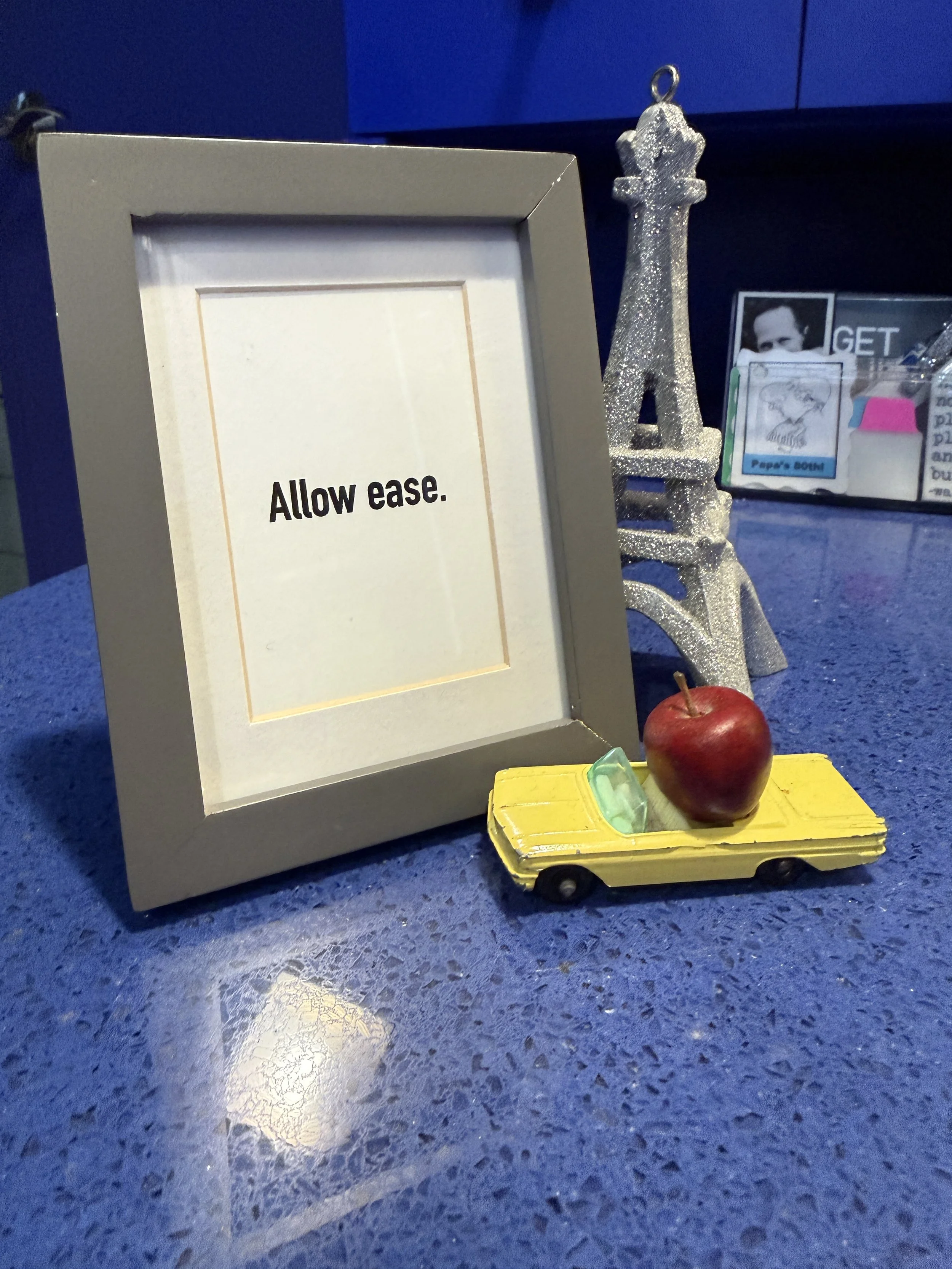
Last week, I wrote about the Tiny Shifts Experience I’ve been participating in, led by Dr. Elisha Goldstein. In one of his prompts, he guided us to “Allow a little more ease” throughout the day.

Before starting the Tiny Shifts program, I had been considering “ease” as my guiding principle, my North Star for 2026. When Elisha encouraged us to “Allow a little more ease,” it confirmed what I was already thinking.

This week, I tweaked the message. My focus for 2026 will be “Allow ease.” I will meet each day, including the challenges, joys, tasks, commitments, and changes I seek, and those thrust upon me, with more compassion and ease.


Engage in Strategies That Encourage Ease

When I notice I’m getting stressed, I will lean on these two strategies.

Strategy 1: Embody Ease with the Breath

This one is so simple. I’ve already used it half a dozen times recently, and it’s incredibly effective. It takes less than a minute.

To Embody Ease:

  • Pause what you’re doing.

  • Gently close your eyes or shift your gaze downwards.

  • Thinking silently, pair these two words while you breathe.

  • Inhale > Allow.

  • Exhale > Ease.

  • Repeat the sequence one or more times until your nervous system calms.

Strategy 2: Ask One Simple Question

You can ask this question on its own, before, or after using the breathing strategy. Listen to what arises and then focus on making a small shift.

Ask this:

Where can I allow more ease right now?

The query will help you identify where your tension or stress lies. How can you change your experience in the moment and lean into more ease? Is there a physical place in your body you can soften? Is there an unhelpful thought loop that needs to be released or noticed? Where is ease possible for you right now?

Where can I allow more ease right now?
— Linda Samuels, CPO-CD®, CVOP™


Can You Shift How You Approach Change?

Change can be exciting or stressful. By integrating strategies that foster compassion and ease, you can move forward with greater grounding and calm. What is your relationship to change? How could creating more ease alter your relationship with change? Which ideas resonate with you?

I’d love to hear your thoughts. I invite you to join the conversation.


How Can I Help?

Do you feel overwhelmed, disorganized, or stressed? Do you want to embrace change this year, yet feel stuck? I’m here to help! Virtual organizing is an extraordinary path forward – Local feel with a global reach.

Let’s connect! I’m easy to reach.

Embracing change and getting organized are possible, especially with support.


3 Blissful Ways to Easily Calm Your Mind Clutter

Having a long holiday weekend is a wonderful way to temporarily change the pace of life. That extra time allows you to engage in fun activities, recharge, and break from your usual schedule. It also presents an array of opportunities to calm your mind clutter.

Perhaps your thoughts aren’t intrusive, and you don’t have unproductive worries and thought loops. However, if you experience these challenges regularly or occasionally, I have some ideas to help.

Reflecting at the end of this long leisurely weekend, I realized how my experiences decreasing mind clutter could be valuable solutions for you.


3 Ways to Calm Your Mind Clutter

1. Observing

One of the things I enjoy doing is taking photographs of nature. I love framing images that capture the larger landscape. I also enjoy taking details, like a bee pollinating a flower. Over the weekend, I felt inspired to take pictures with so many gorgeous flowers in bloom. While these photos only take a moment, intently looking helped me focus like the camera lens I look through. In an instant, I see the vibrant colors nature offers or notice details of leaf veins, flower filaments, or light sparkling on the water’s surface.

And guess what? My mind isn’t racing or cluttered with thoughts when I'm present and observing. Maybe taking photos isn’t your thing. That’s absolutely OK. Activate the skill of observing to calm your mind clutter. What do you see in front of you at this very moment? What details are present?


2. Sensing

I am sensitive to the physicality of how things feel. For instance, I will only wear clothes with smooth, not itchy textures. I love the feel of velvet, velour, and other soft fabrics. I also enjoy the feeling of the sun or a cool, gentle breeze on my skin. If I’m in a store ‘window shopping,’ I like to touch things. It helps me see and interpret them in another way.

This weekend, my husband and I visited Field + Supply’s spring makers' market in Kingston, NY. Our daughter, Allison, had a booth for her Level Up Project with a cohort of eight small businesses. We enjoyed walking around, seeing beautifully crafted pieces, and meeting the makers.

We needed a break from the visual and auditory input at one point, so we sat on the lawn to snack and relax. I took off my sandals, and my feet enjoyed the feeling of the cool grass beneath them. Noticing, touching the grass, and acknowledging that pleasant sensation, helped me be in the moment. My mind clutter disappeared.

What sensations are you experiencing now? When you focus on physical sensations, does it distance you from your thoughts and calm your mind clutter?

Activate the skill of observing to calm your mind clutter.
— Linda Samuels, CPO-CD®, CVOP™

3. Watering

I’m not talking about watering plants or hydrating yourself. Instead, I use ‘watering’ about being near or in the water. I love doing anything water-related, and kayaking is one of my favorites. There is something so grounding about being on the water, sitting low, and in a boat. I can float and drift or actively paddle to locomote from one part of the river to the next. All the while, I’m surrounded by the ambient nature sounds- water whooshing, birds singing, and the breeze blowing.

Paddling through the water becomes a kind of mindfulness meditation. At the same time, it makes me feel strong and calm. My arms pulling the paddle through the river brings me to the present. My thoughts are focused on precisely what I’m doing. There’s no mind clutter, no mind wandering, just pure enjoyment in the kayak on the water.

Does water have a mind-decluttering effect on you? Maybe kayaking isn’t your thing. How about swimming, jumping waves in the ocean, or taking a bubble bath? Can you use water to calm your mind clutter?


There are many ways to reduce your mental clutter. What resonates with you? Are there other strategies you prefer? I’d love to hear your thoughts and invite you to join the conversation.