

Posts tagged toys
Here Are 5 Most Interesting and Best Happy Human Discoveries – v52

Enjoy the latest release (v52) of the “What’s Interesting?” series, which features my most recent finds that inform, inspire, and connect to organizing and life balance. These unique, wonderfully human discoveries reflect this month’s blog theme.

You are an engaged, vibrant, and generous group. I am deeply grateful for your ongoing presence, positive energy, and contributions to this community. I look forward to your participation and further contributions to the collection I’ve sourced.

What do you find interesting?


What’s Interesting? – 5 Best Happy Human Discoveries

1. Interesting Workshop – Human Organizing

Are you feeling burdened and overwhelmed by clutter or disorganization? If you answered, “yes,” you’re not alone.

Research shows that cluttered spaces often contribute to stress, fatigue, anxiety, and even depression. But there’s good news—help is here!

If you’re ready to explore a kind, compassionate, and more human approach to decluttering and organizing, you’ll love this! Join me, Linda Samuels, Professional Organizer, for an engaging and transformative workshop7 Easy Ways to Practice Mindful Organizing.

One workshop with your choice of two dates:

  • December 2nd at 7:00-8:00pm Eastern or

  • December 4th at Noon-1:00pm Eastern

By the end of the one-hour Zoom workshop, you’ll have strategies for immediate change. You will:

  • Gain valuable insights about gentle organizing.

  • Learn seven mindful organizing practices.

  • Receive personalized support.

This is a great opportunity to prepare for the new year. When you bring more mindfulness and purpose to organizing, you can create calm, clarity, and breathing room. Reserve your spot today!


2. Interesting Resource – Human Helping
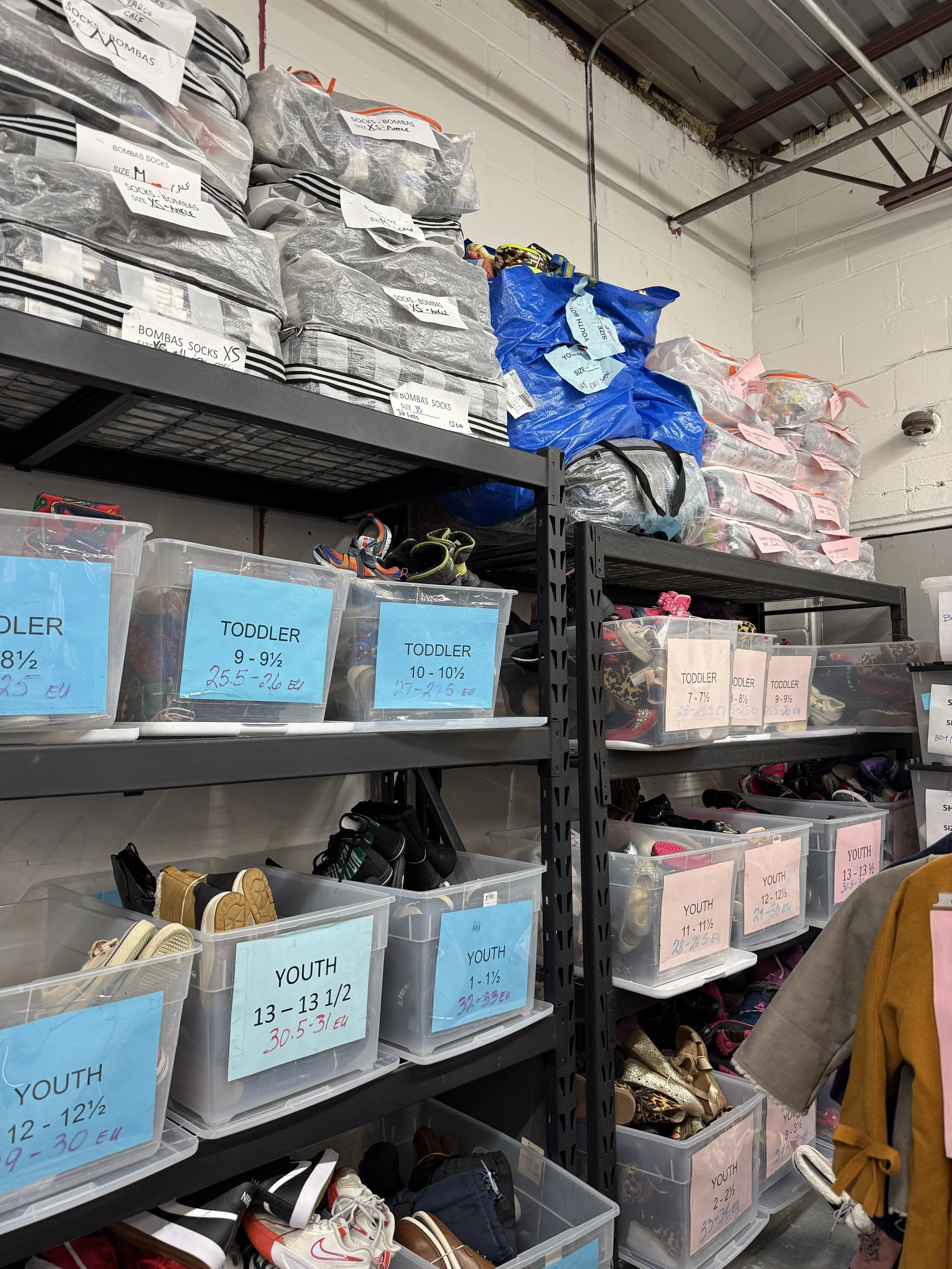
Last month, I went on a field trip with some of my Westchester NAPO Neighborhood group organizing colleagues to The Sharing Shelf in Port Chester, NY.

This remarkable nonprofit provides clothing, school supplies, and other essential necessities, including new socks, shoes, underwear, and hygiene products, to children and teens in Westchester County.

They offer a Wardrobe Pack, which includes a week’s worth of seasonally appropriate clothing tailored to a child’s needs. They also have a Teen Boutique, a free store where teens can “shop and select their own clothing with privacy and respect.”

The Sharing Shelf reports that children facing clothing insecurity “often miss school.” The research shows that “Nearly 14% of Westchester children are chronically absent from school, and clothing is one critical cause.”

Donations of new or gently used clothing in all sizes, from newborn to adult XXL, are accepted. Items should be clean and in good condition. Pieces that are stained or damaged will be sent to textile recycling. The Sharing Shelf has a Target registry and an Amazon wishlist, so you can order items they need.

When you bring more mindfulness and purpose to organizing, you can create calm, clarity, and breathing room.
— Linda Samuels, CPO-CD®, CVOP™


3. Interesting Read – Human Doing

You’ve probably heard of FOMO, the fear of missing out. Have you heard of the opposite, JOMO, which is the joy of missing out?

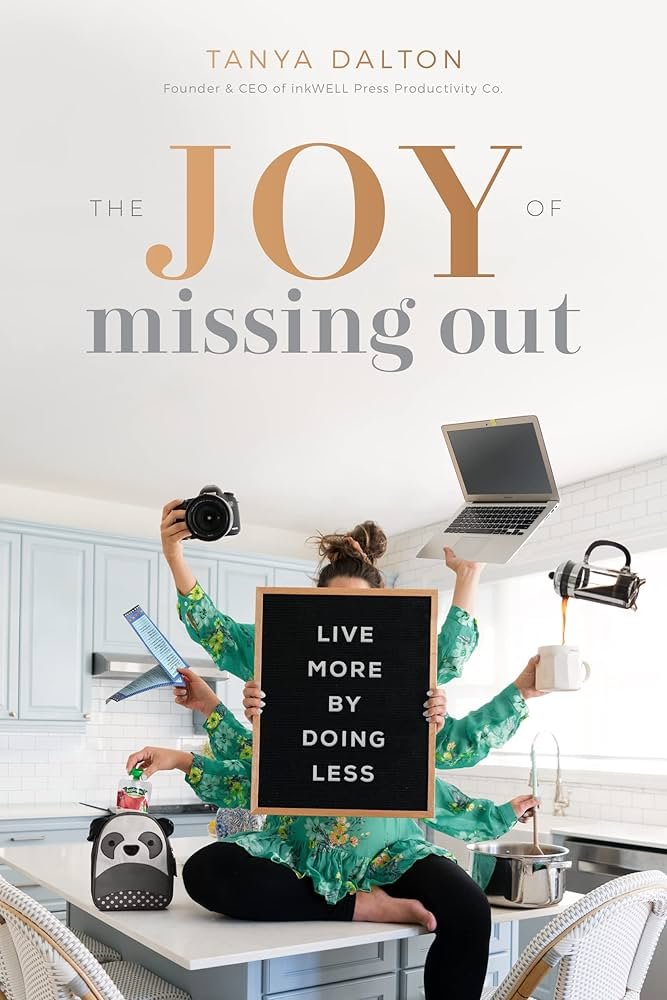
In The Joy of Missing Out – Living More by Doing Less, Tanya Dalton, a productivity expert, author, and speaker, discusses the overwhelm many women experience due to:

  • Striving to do too much

  • Inability to say no

  • Being unclear about priorities

  • Not knowing where to start

Tanya encourages a mindset shift, saying, “We have to begin finding the joy of missing out on that extra noise in our lives and instead find happiness in a life centered around what’s truly important to us.” She encourages us to “stop the glorification of busy” and to stop worrying that we’re not enough or are not doing enough.

In this four-step liveWELL Method, which Tanya developed for herself, she now uses it to help others create a blueprint for reclaiming their time and living the life they desire. The steps are:

  • Discovery – Identify your unique purpose, life priorities, and North Star.

  • Clarity – Align your projects and tasks with your goals and priorities.

  • Simplicity – Design systems that make your life easier, enabling you to manage it with less effort.

  • Harmony – Build upon the first three steps to create harmony and the life you love.

Tanya says, “We need to discover the priorities that are unique to us, but first we have to take hold of the truth: we must be willing to not have it all.”

We have to begin finding the joy of missing out on that extra noise in our lives and instead find happiness in a life centered around what’s truly important to us.
— Tanya Dalton

4. Interesting Product – Human Curating
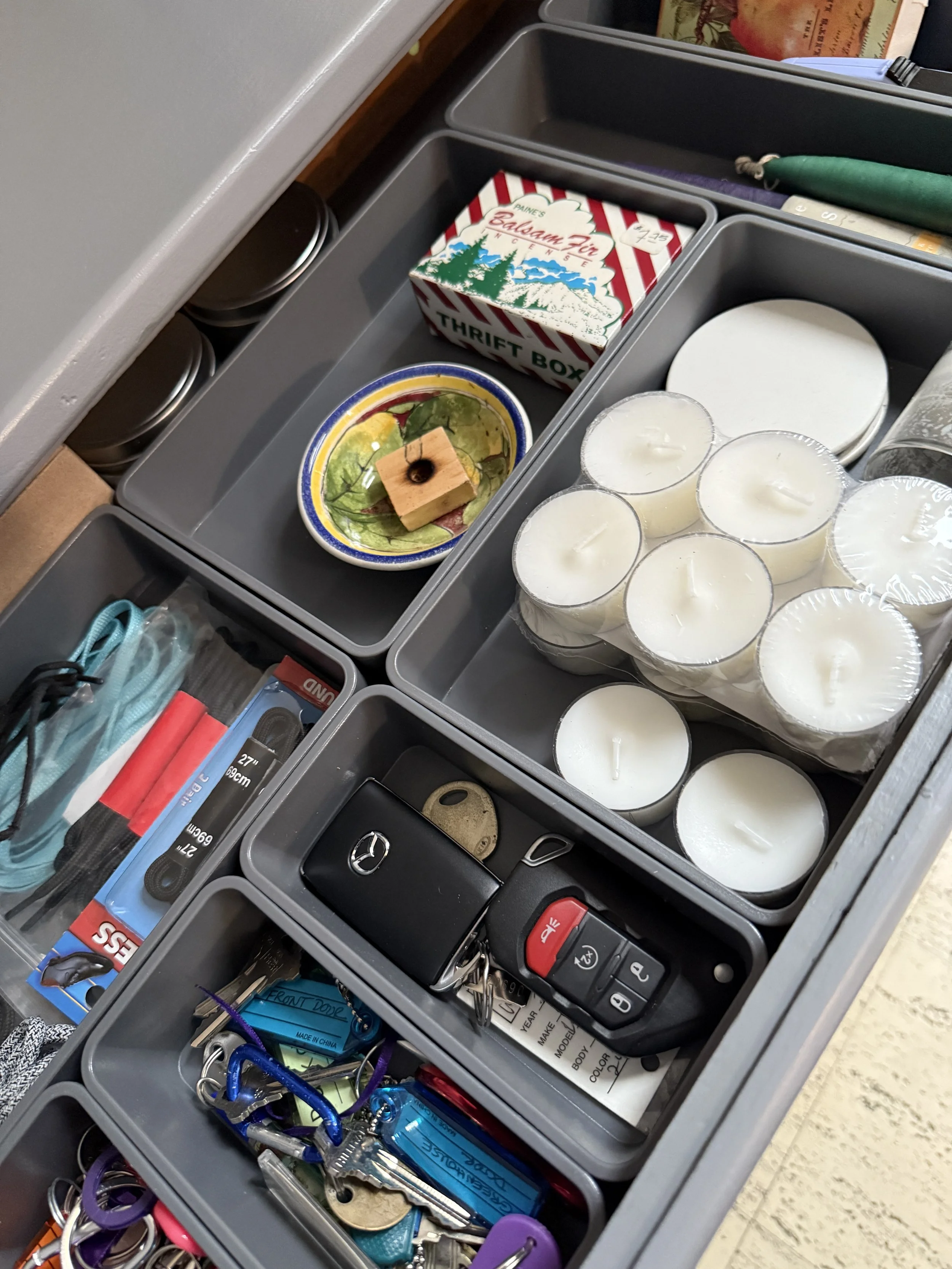
One of my favorite things to organize is cabinet drawers. The more chaotic, the better. A disorganized drawer presents an opportunity to edit, organize, and create order. Why does it matter?

Imagine the feeling of opening a drawer and finding exactly what you need right when you need it. No more searching or stress. It’s a good feeling, and a time-saver, too.

Recently, my husband asked me for drawer organizers and a design for his desk drawer. I recommended these lovely gray open bins, Terra Recycled Drawer Organizers from The Container Store. They also come in white and a variety of sizes. I liked them so much that I purchased more to organize a drawer in our shoe cabinet.


5. Interesting Thought – Human Experiencing
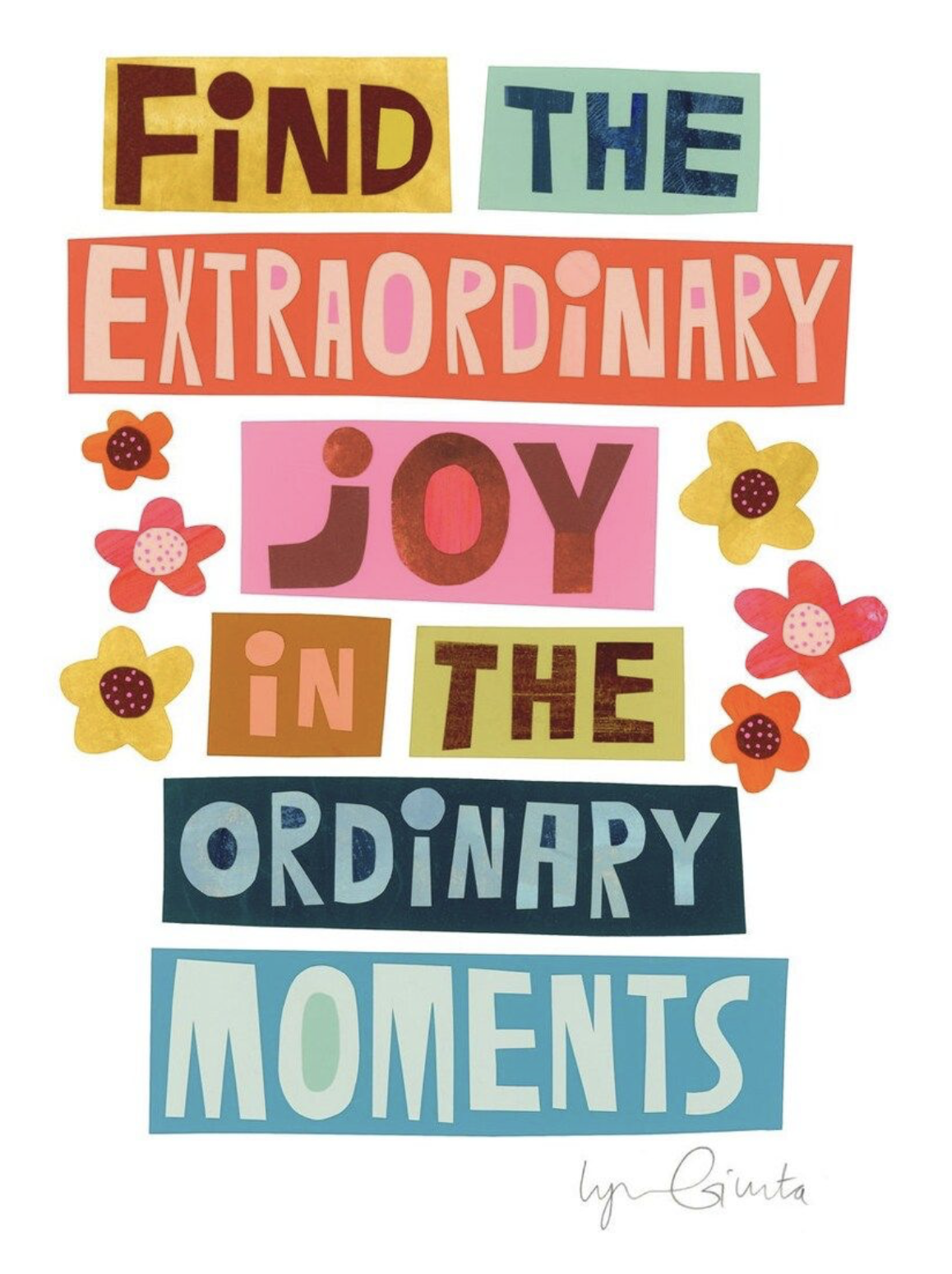
Let’s face it. Life can be stressful and chaotic. You make plans, and things change. You start a project, and something goes wrong. Your schedule is packed with little or no downtime.

However, even knowing this, you can experience joy in everyday moments. Let yourself be open to those tiny, ordinary moments. They can replenish your reserves, reinforce your gratitude wells, and help you feel more alive in a uniquely human way.

What can these joy-infused moments feel or look like? There are a few I recently experienced:

  • Hearing a client acknowledge and feel positive about their progress.

  • Seeing the afternoon sun backlight the red and orange leaves as the gentle breeze moves them softly against the blue sky.

  • Holding hands with my husband.

  • Experiencing progress, completing projects, or making purposeful choices in the service of growth and change.

  • Taking the first flavorful bite of a new vegetarian chili recipe I just made, and it was delicious.

  • Feeling warm water pouring over me as I shower.

  • Seeing the autumn light fill the sky with a soft pink and orange glow.

  • Hearing the voices of my loved ones, seeing their faces, or hugging them.

  • Getting into bed at the end of a long day and feeling the comforting weight and softness of the bedding.


Human Organizing Experience

In a world flooded with AI, it’s important to keep the human connection strong and vibrant. I highlighted several ways to tap into your uniquely human qualities to improve organization, balance, gratitude, and generosity.

Which of these discoveries resonates most with you? Do you have any you’d like to add? I’d love to hear your thoughts and invite you to join the conversation.


How Can I Help?

Do you feel overwhelmed, stuck, or disorganized? I’m here to help. Virtual organizing is an extraordinary path forward – Local feel with a global reach.

Let’s talk. I’m easy to reach.

Getting organized is possible, especially with real human support.


Here Are 5 Most Interesting and Best Finding Help Discoveries – v51

Enjoy the latest release (v51) of the “What’s Interesting?” series, which features my most recent finds that inform, inspire, and relate to organizing and life balance. These unique enlisting help discoveries reflect this month’s blog theme.

You are an engaged, vibrant, and generous group. I am deeply grateful for your ongoing presence, positive energy, and contributions to this community. I look forward to your participation and additional contributions to the collection I’ve sourced.

What do you find interesting?


What’s Interesting? – 5 Best Finding Help Discoveries

1. Interesting Read – To Do Help

Do you have a project you’re procrastinating on or a to-do list that’s a mile long? Life requires you to get sh*t done. That’s all fine when you’re in the flow, checking off the ‘done’ tasks, and making progress. But what happens when you feel paralyzed before getting started or completing your goal?

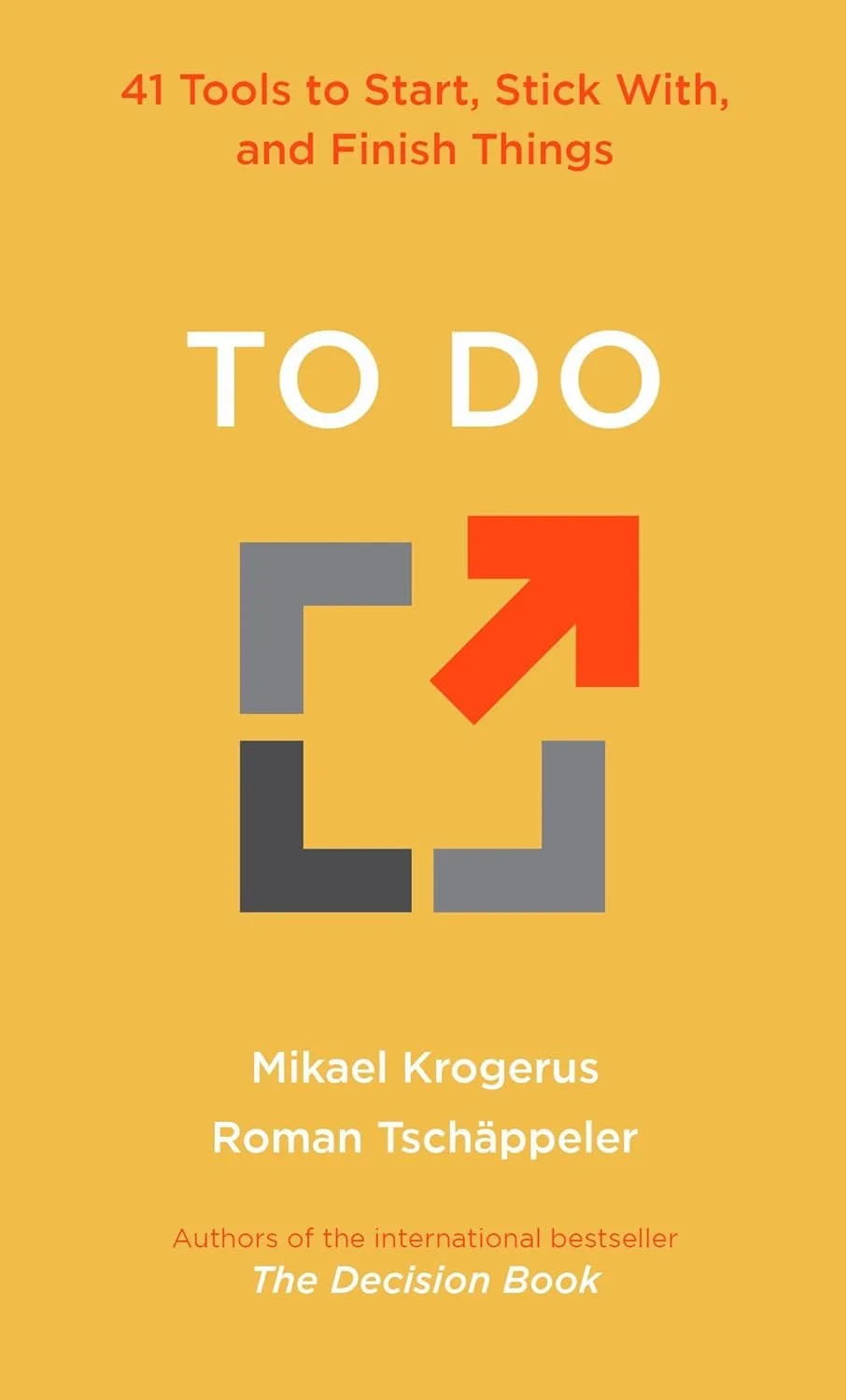
In To Do – 41 Tools to Start, Stick With, and Finish Things, authors Mikael Krogerus and Roman Tschäppeler share many techniques to help you be more productive and fulfilled. They encourage you to choose the strategy that best fits your unique situation. Some will help enhance your work when you’re highly motivated, while other tools will give you the push you need to get started when you’re procrastinating.

They say, “…we don’t ‘get things done’ the same way every time. Sometimes we’re bursting with energy…at other times we falter, unsure if we’re on the right path, even questioning the whole project.”

Some of the techniques covered include:

  • The Pomodoro Technique – Use focused, time-limited ‘work’ sessions, which help you “avoid distractions and get started on something.”

  • Rapid Prototyping – Apply the approach for building models or prototypes to your tasks. Focus on “good enough,” release perfection, solicit input as needed, and make adjustments as needed.

  • Kanban – Use this tool when you experience “to-do overload.” It’s a visual method to clarify “what you’re planning to do, what you’re doing right now, and what you’ve already done.”

  • The 5-Second Rule – Use it when you need help with “activation energy.” Do a simple “countdown: 5, 4, 3, 2, 1 … and do the right thing.”

  • The 5/25 Rule – This tool helps you identify the five most important goals you want to achieve in life and let go of the other twenty you won't have time for.

  • The Law of Reversed Effort – Apply this approach when your goal feels like an obstacle. Instead of chasing that goal now, let it go and focus your attention on something else. After at least six months, revisit your goal to decide if you still want to pursue it, or if there’s another way to accomplish it.

Which task or project are you currently stuck on?


2. Interesting Resource – Repair Help

Living in a “throwaway culture” means that repairing broken items happens less frequently. People often prefer the convenience of buying something new, rather than fixing what’s broken. Also, since getting broken things fixed isn’t as easy as it once was, discarding and buying something new can seem like the only option.

However, if you are committed to keeping things out of landfills and getting more use out of your stuff, I have some good news. A client of mine recently shared this resource with me, and I couldn’t wait to tell you about it.

Repair Cafe community events happen locally and internationally. Bring your broken item, and a volunteer repair coach will help you fix it. Not only will your belongings get repaired, but you’ll also gain hands-on experience.

Repair coaches can help fix a variety of items, including lamps, clocks, chairs, small appliances, digital devices, clothing, textiles, toys, jewelry, and more.

The next time something breaks, consider seeking help and engaging in the repair revolution.

Which of your things could be repaired?

Asking for help is valuable and shows strength, not weakness.
— Linda Samuels, CPO-CD®, CVOP™


3. Interesting Study – Activation Help

Several years ago, Real Simple published an article about clever ways to increase your energy. One of the suggestions was to “shake up your routine.” They referenced a brain study in Nature Communications. The experiment found that when the nucleus accumbens, the part of the brain linked to motivation and pleasure, isn’t stimulated in a particular way, a signal is sent that causes drowsiness.

Alice Boyes, PhD, author of The Healthy Mind Toolkit, said, Changing your routine in the tiniest ways can have an effect on sluggishness.” The routine shift can also “spark creativity.” Small changes can include “Rearrange the furniture. Sit somewhere different. Pour the milk into the bowl before your cereal.”

Are you feeling tired and struggling to activate? If so, what small change can you make to your routine?


Life requires you to get sh*t done.
— Linda Samuels, CPO-CD®, CVOP™


4. Interesting Product – Storage Help

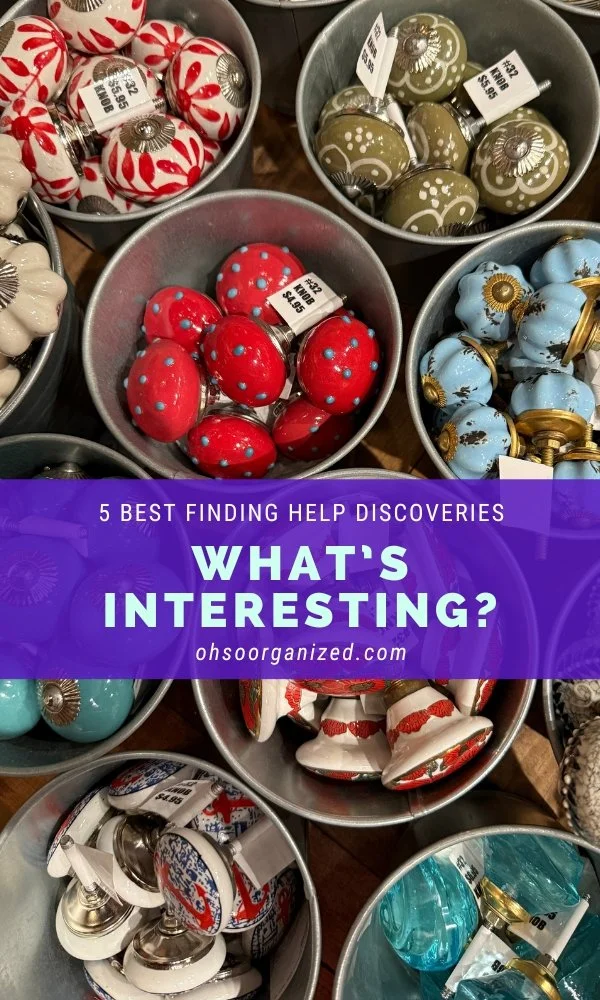
One of my favorite organizing tools is the mesh zipper bag. They are:

  • Versatile

  • Lightweight

  • Durable

  • Colorful

  • Affordable

The bags featured here have handles, making them even easier to carry. You can use them to store books, puzzle pieces, small toys, board games, craft projects, office supplies, papers, and more. Use these pouches at school, home, office, or while traveling.

What could you store in your mesh bags?


5. Interesting Thought – Getting Help

Do you ask for help when you’re stuck, or do you tend to remain stuck and frustrated on your own?

It’s remarkable how much progress and growth can occur when you find the right support. Asking for help is valuable and shows strength, not weakness.

Everyone needs assistance at times, especially if you’re:

What kind of help do you need right now?


Finding the Right Help

Sure, you can go it alone. However, there are times when reaching out for help can make an enormous difference to your sanity and progress. It’s worth creating a go-to list of people, strategies, and product resources to support you in pursuing your goals and tackling tasks. That way, you won’t have to struggle by yourself.

Who or what is your favorite source of support? Which of these discoveries resonates most with you? I’d love to hear your thoughts and invite you to join the conversation.


How Can I Help?

Do you feel overwhelmed, stuck, or disorganized? I’m here to help. Virtual organizing is an extraordinary path forward – Local feel with a global reach.

Let’s talk. I’m easy to reach.

Getting organized is possible, especially with support.


How to Embrace Decluttering Magic for a Mindful Edit Now

When my organizing clients describe how they feel about their clutter, the word they use most frequently is “overwhelm.”  Their accumulation of papers, magazines, clothing, toys, gadgets, housewares, or collections has turned into what they perceive as “overwhelming clutter.”  Clutter tolerance varies. For some, a small pile of papers will feel overwhelming, and for others, a closet bursting with clothing will tip their overwhelm scale. Response to clutter can make you feel stuck or motivated to take action. Both reactions are normal. 

If your clutter is making it hard to focus, move through your space, or adding extra stress, this is an excellent time to use a simple strategy.  I use it regularly with my virtual organizing clients. We activate the decluttering magic of the mindful edit. What’s that? I was hoping you would ask. 


Clutter is an accumulation of stuff. It represents postponed decisions, objects without homes, misplaced items, or things that have overstayed their welcome. Editing happens first, which clears the clutter so that getting organized can begin. The beauty of the mindful edit is that it can be done in tiny time blocks- five, ten, or twenty minutes. Using small blocks of time to ask quality questions, edit, and declutter makes the process doable and less overwhelming.

The beauty of the mindful edit is that it can be done in tiny time blocks.
— Linda Samuels, CPO-CD®, CVPO™

Especially when you are overwhelmed, instead of creating a big plan, making you feel more overwhelmed, think small. It’s OK to allow the editing process to be more organic rather than defining every step. Begin in a tiny area like a kitchen drawer, a closet rack, or a single paper pile. The goal is to edit a little section and then move on to the next.


Ask mindful editing questions:

  • Does this item belong in this room?

  • Can I reroute it to another location?

  • Do I need this?

  • Do I like it?

  • Is it still useful?

  • Can I donate, trash, or recycle it? 

  • Does it need to occupy primary real estate?

  • Has it expired?

  • Do I have to be the keeper of this paper, information, or can I easily find it on the Internet?

  • Is it enhancing or detracting from my life, space, or area?

  • Is it adding to overwhelm and clutter?

  • Can I release it now?

  • Is it time to part ways and let it go?


You might have other questions that you love to ask. The better your questions are, the more successful the edit, and the less clutter you will have.

There is tremendous power in the mindful edit and the positive feelings you will experience when you let go. What are your favorite editing questions for reducing clutter? Do you have a recent editing experience you want to share? I’d love to hear your thoughts. I invite you to join the conversation.


5 Incredibly Useful Strategies to Calm Your Mind Clutter

Clutter can creep into our lives and consume valuable energy. It can show up physically as paper piles on desks or kitchen counters, clothing flowing out of closets and drawers, or bins full of toys the kids no longer play with. There is also mind clutter, which can consume your thoughts. Physical clutter and mind clutter are closely connected. Have you ever noticed how challenging it is to think, be productive, or relax when your physical environment feels cluttered?

In the same way that I begin writing with a blank page, I engage more successfully in daily life when my space is clear with few distractions. For example, when I’m about to cook, I prefer the kitchen to be clean with uncluttered surfaces and an empty sink. When I work on a project like writing or developing a workshop, I focus better when my desk is clear of paper scraps and other projects. At night, I sleep better, getting into a made bed with clean sheets. Being in a clear, uncluttered place can be energizing or relaxing. 

However, when our mind clutter is dominating the internal conversation, what can you do? There are five effective strategies I regularly use for calming mind clutter. Some of these simultaneously address physical clutter.


5 Useful Strategies to Calm Your Mind Clutter

1. Get Out!

Yes. You guessed it. To clear the mind, getting outside for a walk is highly effective. Even a small dose of fresh air, be it five, ten, or sixty minutes, can do wonders for the cluttered mind. It’s even more beneficial if you can walk in nature. The fragrances of spring are intoxicating- lilacs and Lily of the Valley scent the air.


2. Free Write

Grab a pen and your favorite journal or pad of paper, then download the swirl of thoughts onto paper. Don’t worry about editing or organizing your thoughts in any way. Just allow them to flow. You might be surprised what comes out. Writing is an excellent way to unclutter the mind. 


Writing is an excellent way to unclutter the mind.
— Linda Samuels, CPO-CD®, CVPO™

3. Just Meditate
Practicing mindfulness meditation is a gentle way to work with a full mind. The idea isn’t to empty your mind during the practice. The quiet allows a place to let thoughts float by without judging or engaging in the content. You can also experiment with focusing on the breath while meditating. This will calm the mind and switch you into the rest and digest mode.


4. Shred It!

Shredding paper is so cathartic. As you release and shred physical piles and files, the mind unclutters too. The physical act of releasing enables the mind to also let go. Shredding is one way to unclutter. Any type of letting go of physical objects that have overstayed their welcome work wonders in releasing your mind clutter.


5. Take Care

Having jumbled thoughts can be connected to sleeping too few hours, not eating nutritiously, or ignoring self-care. When was the last time you took care of yourself? What did that look like? It’s not selfish to take a bubble bath or extra long shower, get a massage or pedicure, or sleep for eight hours. Relaxation time is essential to reducing mind clutter.


When your mind is cluttered, what strategy is most effective for you? I would love to hear your thoughts. I invite you to join the conversation.

 
LSamuels Signature.jpg